University of Edinburgh Centre for Inflammation Research, Queen's Medical Research Institute, Edinburgh BioQuarter, UK.
Division of Allergy and Immunology, Cincinnati Children's Hospital Medical Centre, Cincinnati, Ohio, USA.
Thorax. 2020 Jul;75(7):600-605. doi: 10.1136/thoraxjnl-2019-213204. Epub 2020 Apr 17.
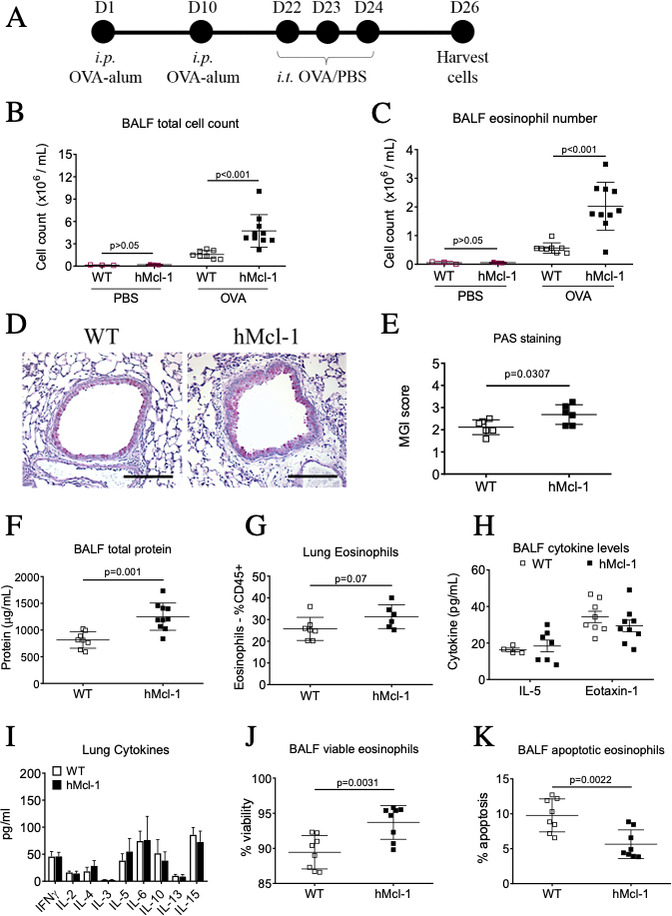
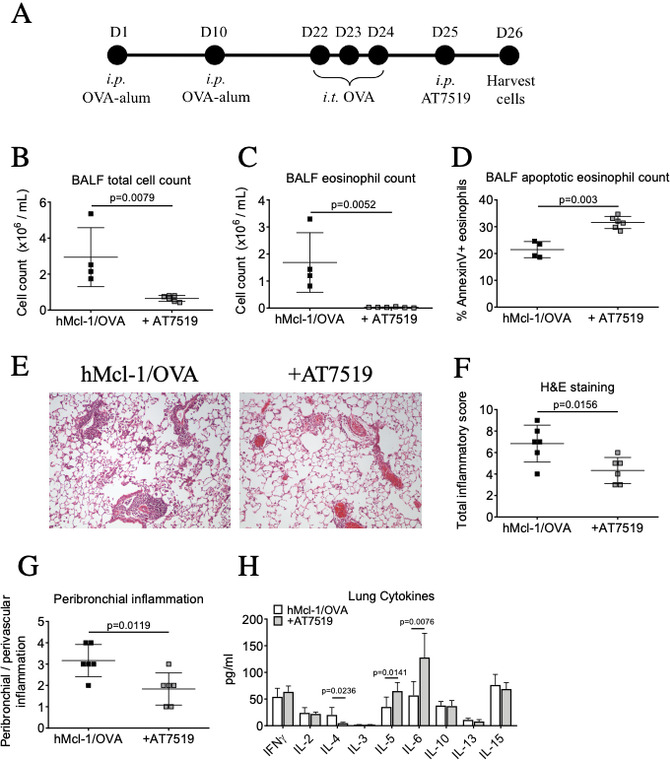
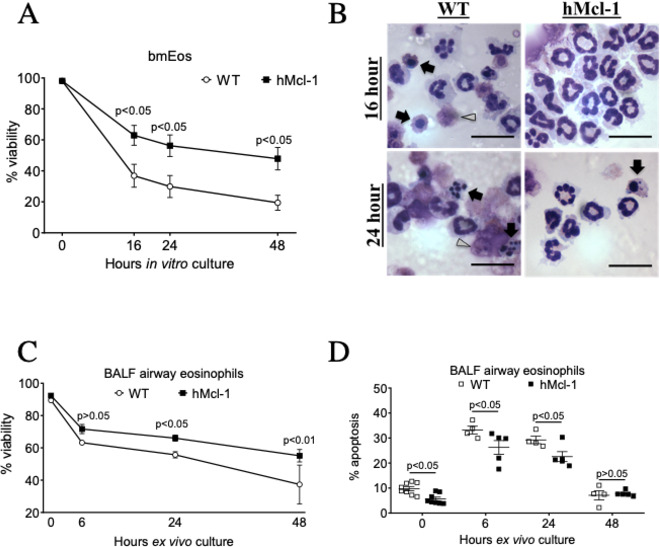
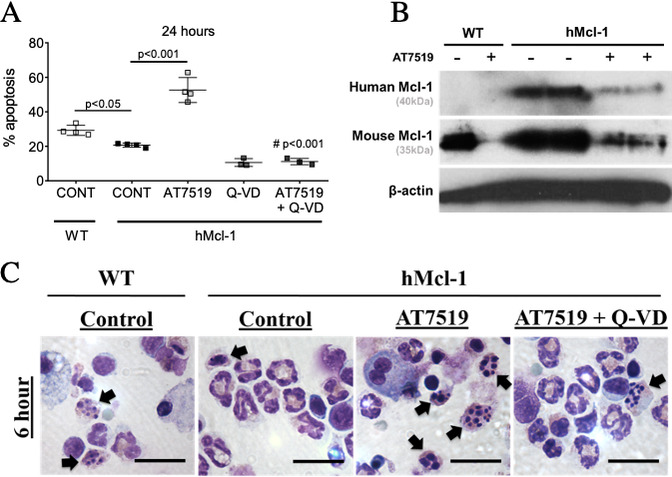
Eosinophils are key effector cells in allergic diseases. Here we investigated Mcl-1 (an anti-apoptotic protein) in experimental allergic airway inflammation using transgenic overexpressing human Mcl-1 mice (hMcl-1) and reducing Mcl-1 by a cyclin-dependent kinase inhibitor. Overexpression of Mcl-1 exacerbated allergic airway inflammation, with increased bronchoalveolar lavage fluid cellularity, eosinophil numbers and total protein, and an increase in airway mucus production. Eosinophil apoptosis was suppressed by Mcl-1 overexpression, with this resistance to apoptosis attenuated by cyclin-dependent kinase inhibition which also rescued Mcl-1-exacerbated allergic airway inflammation. We propose that targeting Mcl-1 may be beneficial in treatment of allergic airway disease.
嗜酸性粒细胞是过敏疾病的关键效应细胞。在这里,我们使用过表达人 Mcl-1 的转基因小鼠(hMcl-1)和细胞周期蛋白依赖性激酶抑制剂降低 Mcl-1 来研究实验性变应性气道炎症中的 Mcl-1(一种抗凋亡蛋白)。Mcl-1 的过表达加重了变应性气道炎症,支气管肺泡灌洗液细胞增多、嗜酸性粒细胞数量和总蛋白增加,气道粘液生成增加。Mcl-1 的过表达抑制了嗜酸性粒细胞凋亡,而细胞周期蛋白依赖性激酶抑制减轻了这种凋亡抵抗,同时也挽救了 Mcl-1 加重的变应性气道炎症。我们提出,靶向 Mcl-1 可能有益于治疗变应性气道疾病。