• 文献检索
  • 文档翻译
  • 深度研究
  • 学术资讯
  • Suppr Zotero 插件Zotero 插件
  • 邀请有礼
  • 套餐&价格
  • 历史记录
应用&插件
Suppr Zotero 插件Zotero 插件浏览器插件Mac 客户端Windows 客户端微信小程序
定价
高级版会员购买积分包购买API积分包
服务
文献检索文档翻译深度研究API 文档MCP 服务
关于我们
关于 Suppr公司介绍联系我们用户协议隐私条款
关注我们

Suppr 超能文献

核心技术专利:CN118964589B侵权必究
粤ICP备2023148730 号-1Suppr @ 2026

文献检索

告别复杂PubMed语法,用中文像聊天一样搜索,搜遍4000万医学文献。AI智能推荐,让科研检索更轻松。

立即免费搜索

文件翻译

保留排版,准确专业,支持PDF/Word/PPT等文件格式,支持 12+语言互译。

免费翻译文档

深度研究

AI帮你快速写综述,25分钟生成高质量综述,智能提取关键信息,辅助科研写作。

立即免费体验

二氧化钛纳米颗粒通过上调TXNIP加剧哮喘小鼠模型中的过敏性气道炎症。

Titanium Dioxide Nanoparticles Exacerbate Allergic Airway Inflammation via TXNIP Upregulation in a Mouse Model of Asthma.

作者信息

Lim Je-Oh, Lee Se-Jin, Kim Woong-Il, Pak So-Won, Moon Changjong, Shin In-Sik, Heo Jeong-Doo, Ko Je-Won, Kim Jong-Choon

机构信息

College of Veterinary Medicine (BK21 FOUR Program), Chonnam National University, Gwangju 61186, Korea.

Bioenvironmental Science & Technology Division, Korea Institute of Toxicology, Jinju 52834, Korea.

出版信息

Int J Mol Sci. 2021 Sep 14;22(18):9924. doi: 10.3390/ijms22189924.

DOI:10.3390/ijms22189924
PMID:34576095
原文链接:https://pmc.ncbi.nlm.nih.gov/articles/PMC8471251/
Abstract

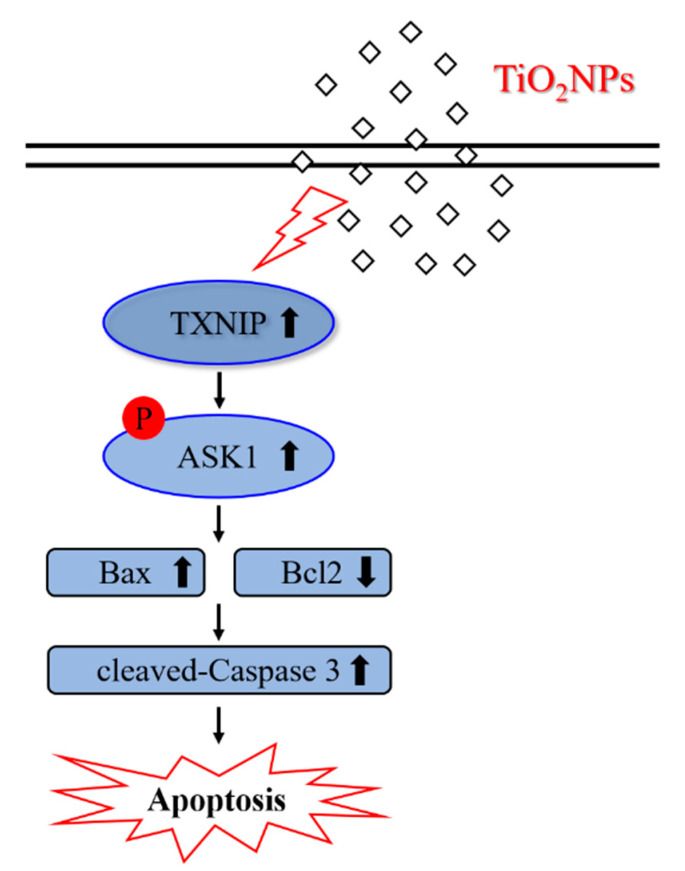
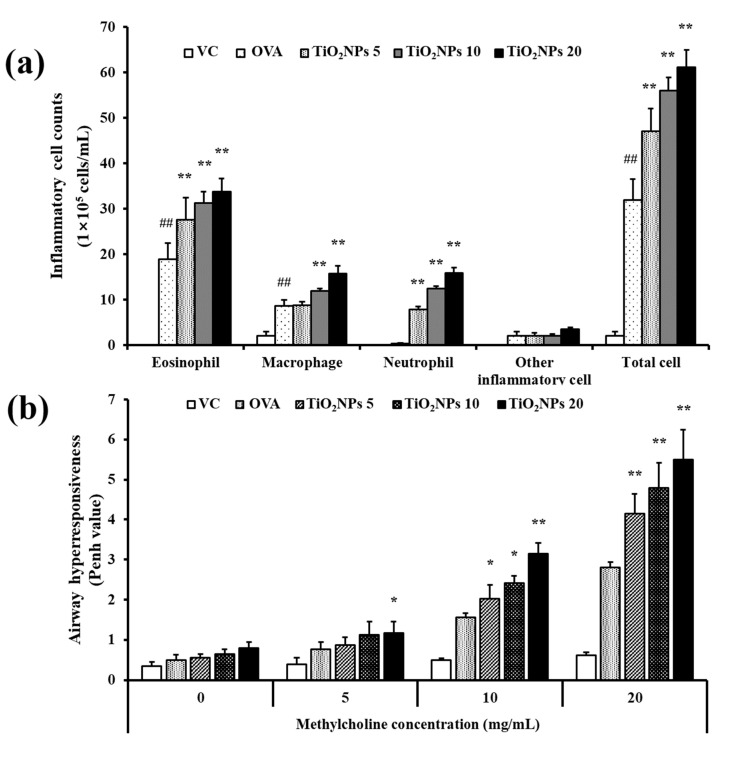
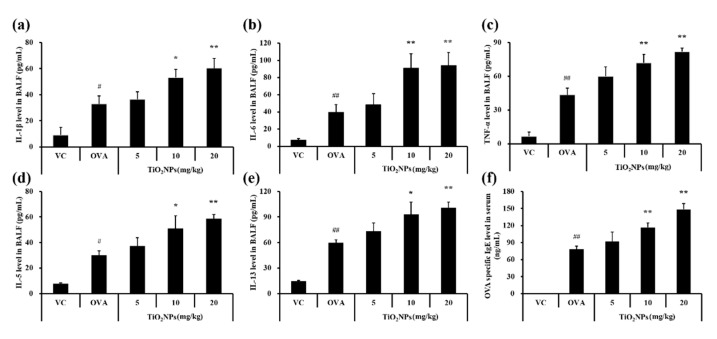
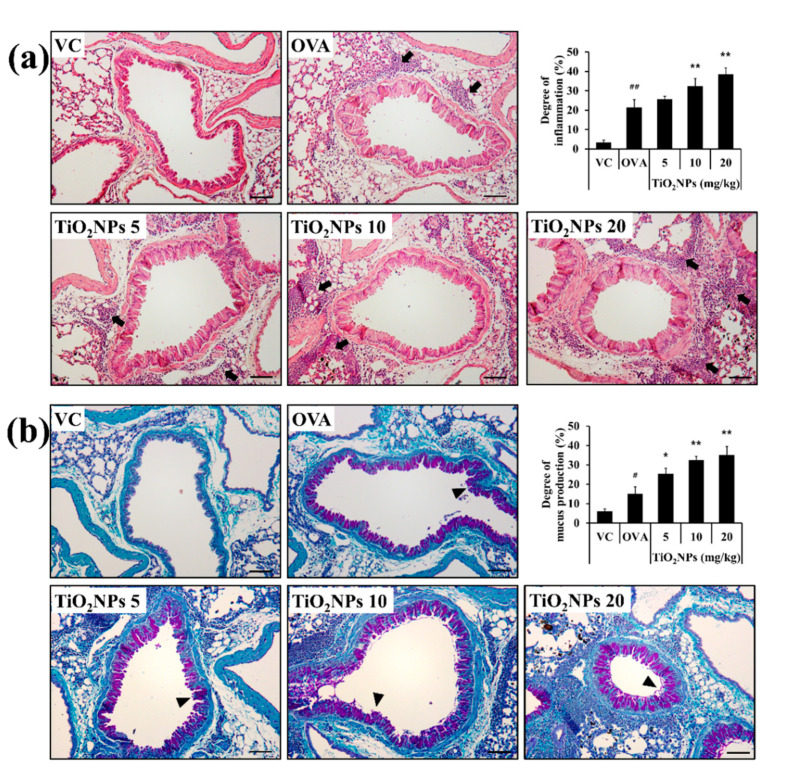
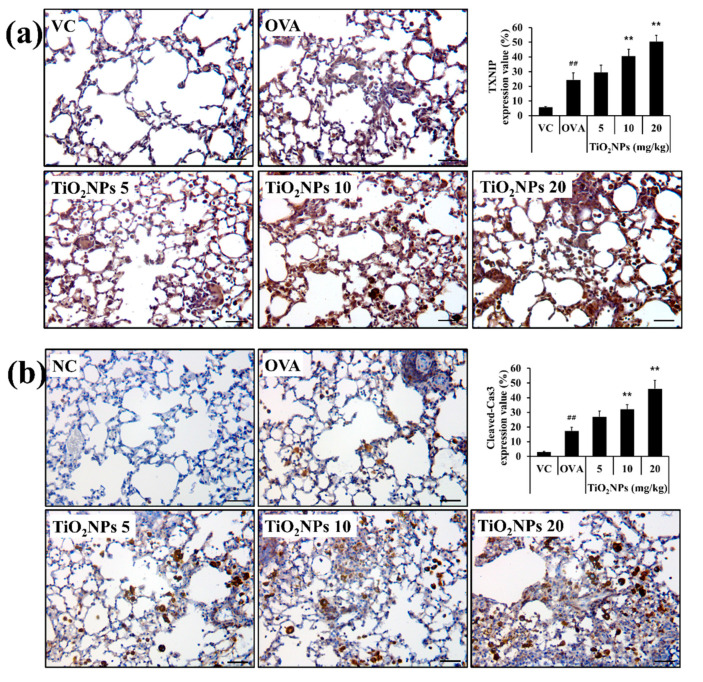
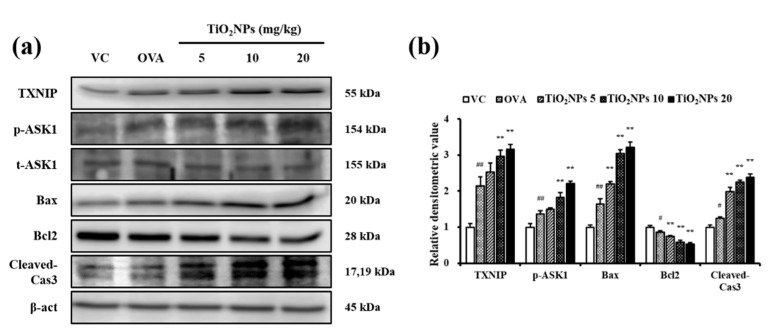
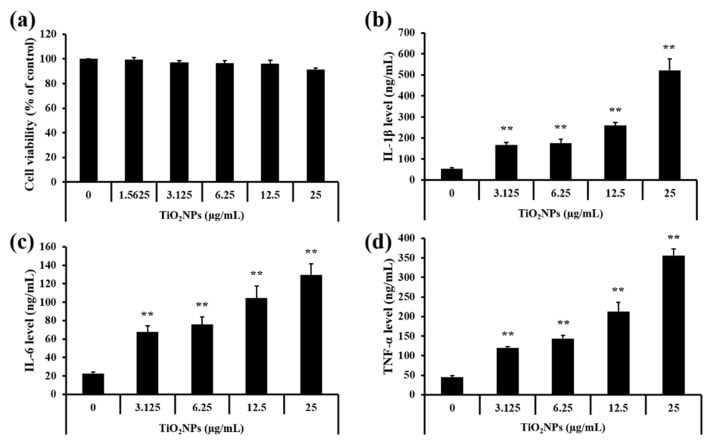
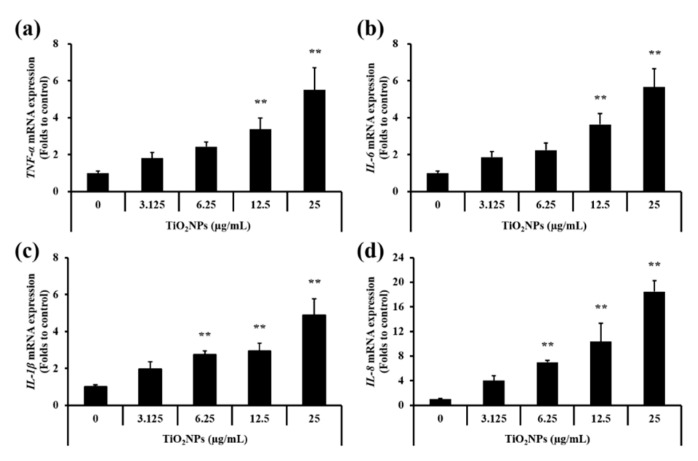
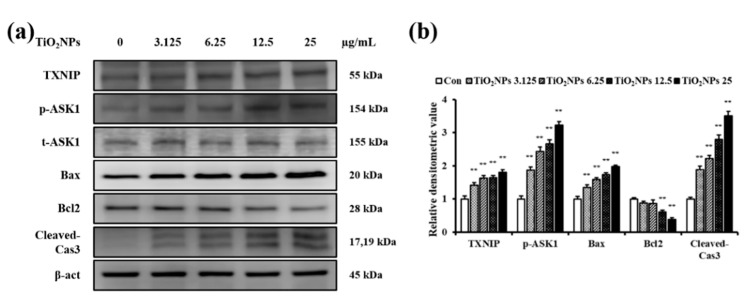
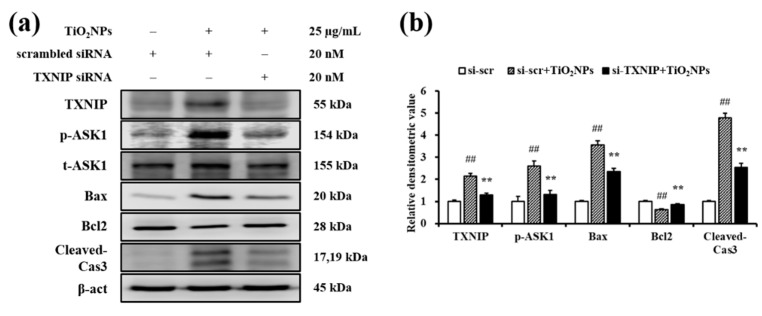
Titanium dioxide nanoparticles (TiONPs) are widely used in industrial and medicinal fields and in various consumer products, and their increasing use has led to an increase in the number of toxicity studies; however, studies investigating the underlying toxicity mechanism have been rare. In this study, we evaluated potential toxic effects of TiONPs exposure on lungs as well as the development of asthma through the ovalbumin (OVA)-induced mouse model of asthma. Furthermore, we also investigated the associated toxic mechanism. TiONPs caused pulmonary toxicity by exacerbating the inflammatory response, indicated by an increase in the number and level of inflammatory cells and mediators, respectively. OVA-induced asthma exposed mice to TiONPs led to significant increases in inflammatory mediators, cytokines, and airway hyperresponsiveness compared with those in non-exposed asthmatic mice. This was also accompanied by increased inflammatory cell infiltration and mucus production in the lung tissues. Additionally, TiONPs decreased the expression of B-cell lymphoma 2 (Bcl2) and the expressions of thioredoxin-interacting protein (TXNIP), phospho-apoptosis signal-regulating kinase 1, Bcl2-associated X, and cleaved-caspase 3 were escalated in the lungs of asthmatic mice compared with those in non-exposed asthmatic mice. These responses were consistent with in vitro results obtained using human airway epithelial cells. TiONPs treated cells exhibited an increase in the mRNA and protein expression of interleukin (IL)-1β, IL-6, and tumor necrosis factor-α with an elevation of TXNIP signaling compared to non-treated cells. Moreover, pathophysiological changes induced by TiONP treatment were significantly decreased by TXNIP knockdown in airway epithelial cells. Overall, TiONP exposure induced toxicological changes in the respiratory tract and exacerbated the development of asthma via activation of the TXNIP-apoptosis pathway. These results provide insights into the underlying mechanism of TiONP-mediated respiratory toxicity.

摘要

二氧化钛纳米颗粒(TiONPs)广泛应用于工业、医药领域以及各类消费品中,其使用量的不断增加使得毒性研究的数量也随之增多;然而,探究潜在毒性机制的研究却较为罕见。在本研究中,我们通过卵清蛋白(OVA)诱导的小鼠哮喘模型,评估了暴露于TiONPs对肺部的潜在毒性作用以及哮喘的发展情况。此外,我们还研究了相关的毒性机制。TiONPs通过加剧炎症反应导致肺部毒性,炎症细胞数量和炎症介质水平的增加分别表明了这一点。与未暴露于TiONPs的哮喘小鼠相比,暴露于TiONPs的OVA诱导哮喘小鼠的炎症介质、细胞因子和气道高反应性显著增加。这还伴随着肺组织中炎症细胞浸润和黏液分泌的增加。此外,与未暴露于TiONPs的哮喘小鼠相比,TiONPs降低了哮喘小鼠肺部B细胞淋巴瘤2(Bcl2)的表达,而硫氧还蛋白相互作用蛋白(TXNIP)、磷酸化凋亡信号调节激酶1、Bcl2相关X蛋白和裂解的半胱天冬酶3的表达则有所升高。这些反应与使用人气道上皮细胞获得的体外结果一致。与未处理的细胞相比,经TiONPs处理的细胞白细胞介素(IL)-1β、IL-6和肿瘤坏死因子-α的mRNA和蛋白表达增加,且TXNIP信号传导升高。此外,气道上皮细胞中TXNIP基因敲低可显著降低TiONP处理诱导的病理生理变化。总体而言,暴露于TiONPs会引起呼吸道的毒理学变化,并通过激活TXNIP-凋亡途径加剧哮喘的发展。这些结果为TiONP介导的呼吸毒性潜在机制提供了见解。
https://cdn.ncbi.nlm.nih.gov/pmc/blobs/9d18/8471251/70166e16af6e/ijms-22-09924-g011.jpg
https://cdn.ncbi.nlm.nih.gov/pmc/blobs/9d18/8471251/0d01dc4030c9/ijms-22-09924-g001.jpg
https://cdn.ncbi.nlm.nih.gov/pmc/blobs/9d18/8471251/0dfbe4edb9c8/ijms-22-09924-g002.jpg
https://cdn.ncbi.nlm.nih.gov/pmc/blobs/9d18/8471251/3c841e99c089/ijms-22-09924-g003.jpg
https://cdn.ncbi.nlm.nih.gov/pmc/blobs/9d18/8471251/fbdec9d93a6c/ijms-22-09924-g004.jpg
https://cdn.ncbi.nlm.nih.gov/pmc/blobs/9d18/8471251/f3b0c0ca3a98/ijms-22-09924-g005.jpg
https://cdn.ncbi.nlm.nih.gov/pmc/blobs/9d18/8471251/10efa7fd43f9/ijms-22-09924-g006.jpg
https://cdn.ncbi.nlm.nih.gov/pmc/blobs/9d18/8471251/e4e6545eb9a3/ijms-22-09924-g007.jpg
https://cdn.ncbi.nlm.nih.gov/pmc/blobs/9d18/8471251/f48eb41f232c/ijms-22-09924-g008.jpg
https://cdn.ncbi.nlm.nih.gov/pmc/blobs/9d18/8471251/27bc95fa7d29/ijms-22-09924-g009.jpg
https://cdn.ncbi.nlm.nih.gov/pmc/blobs/9d18/8471251/d3083a7fc987/ijms-22-09924-g010.jpg
https://cdn.ncbi.nlm.nih.gov/pmc/blobs/9d18/8471251/70166e16af6e/ijms-22-09924-g011.jpg
https://cdn.ncbi.nlm.nih.gov/pmc/blobs/9d18/8471251/0d01dc4030c9/ijms-22-09924-g001.jpg
https://cdn.ncbi.nlm.nih.gov/pmc/blobs/9d18/8471251/0dfbe4edb9c8/ijms-22-09924-g002.jpg
https://cdn.ncbi.nlm.nih.gov/pmc/blobs/9d18/8471251/3c841e99c089/ijms-22-09924-g003.jpg
https://cdn.ncbi.nlm.nih.gov/pmc/blobs/9d18/8471251/fbdec9d93a6c/ijms-22-09924-g004.jpg
https://cdn.ncbi.nlm.nih.gov/pmc/blobs/9d18/8471251/f3b0c0ca3a98/ijms-22-09924-g005.jpg
https://cdn.ncbi.nlm.nih.gov/pmc/blobs/9d18/8471251/10efa7fd43f9/ijms-22-09924-g006.jpg
https://cdn.ncbi.nlm.nih.gov/pmc/blobs/9d18/8471251/e4e6545eb9a3/ijms-22-09924-g007.jpg
https://cdn.ncbi.nlm.nih.gov/pmc/blobs/9d18/8471251/f48eb41f232c/ijms-22-09924-g008.jpg
https://cdn.ncbi.nlm.nih.gov/pmc/blobs/9d18/8471251/27bc95fa7d29/ijms-22-09924-g009.jpg
https://cdn.ncbi.nlm.nih.gov/pmc/blobs/9d18/8471251/d3083a7fc987/ijms-22-09924-g010.jpg
https://cdn.ncbi.nlm.nih.gov/pmc/blobs/9d18/8471251/70166e16af6e/ijms-22-09924-g011.jpg

相似文献

1
Titanium Dioxide Nanoparticles Exacerbate Allergic Airway Inflammation via TXNIP Upregulation in a Mouse Model of Asthma.二氧化钛纳米颗粒通过上调TXNIP加剧哮喘小鼠模型中的过敏性气道炎症。
Int J Mol Sci. 2021 Sep 14;22(18):9924. doi: 10.3390/ijms22189924.
2
Titanium dioxide nanoparticles augment allergic airway inflammation and Socs3 expression via NF-κB pathway in murine model of asthma.二氧化钛纳米颗粒通过 NF-κB 通路增强哮喘小鼠模型中的过敏性气道炎症和 Socs3 表达。
Biomaterials. 2016 Jun;92:90-102. doi: 10.1016/j.biomaterials.2016.03.016. Epub 2016 Mar 19.
3
Copper oxide nanoparticles aggravate airway inflammation and mucus production in asthmatic mice via MAPK signaling.氧化铜纳米颗粒通过丝裂原活化蛋白激酶信号通路加重哮喘小鼠的气道炎症和黏液分泌。
Nanotoxicology. 2016;10(4):445-52. doi: 10.3109/17435390.2015.1078851. Epub 2015 Oct 15.
4
SP600125 promotes resolution of allergic airway inflammation via TLR9 in an OVA-induced murine acute asthma model.在卵清蛋白诱导的小鼠急性哮喘模型中,SP600125通过Toll样受体9(TLR9)促进过敏性气道炎症的消退。
Mol Immunol. 2015 Oct;67(2 Pt B):311-6. doi: 10.1016/j.molimm.2015.06.016. Epub 2015 Jun 29.
5
Connexin 43 Upregulation in Mouse Lungs during Ovalbumin-Induced Asthma.卵清蛋白诱导的哮喘小鼠肺中连接蛋白43的上调
PLoS One. 2015 Dec 2;10(12):e0144106. doi: 10.1371/journal.pone.0144106. eCollection 2015.
6
High-dose intranasal application of titanium dioxide nanoparticles induces the systemic uptakes and allergic airway inflammation in asthmatic mice.高剂量经鼻给予二氧化钛纳米颗粒可引起哮喘小鼠的全身摄取和过敏性气道炎症。
Respir Res. 2020 Jul 2;21(1):168. doi: 10.1186/s12931-020-01386-0.
7
Ursolic acid, a potential PPARγ agonist, suppresses ovalbumin-induced airway inflammation and Penh by down-regulating IL-5, IL-13, and IL-17 in a mouse model of allergic asthma.熊果酸作为一种潜在的过氧化物酶体增殖物激活受体 γ(PPARγ)激动剂,通过下调变应性哮喘小鼠模型中白细胞介素-5(IL-5)、白细胞介素-13(IL-13)和白细胞介素-17(IL-17)的表达,抑制卵清蛋白(OVA)诱导的气道炎症和气道高反应性(Penh)。
Eur J Pharmacol. 2013 Feb 15;701(1-3):131-43. doi: 10.1016/j.ejphar.2012.11.033. Epub 2012 Nov 28.
8
Panax notoginseng saponin R1 modulates TNF-α/NF-κB signaling and attenuates allergic airway inflammation in asthma.三七总皂苷 R1 通过调节 TNF-α/NF-κB 信号通路减轻哮喘气道炎症反应
Int Immunopharmacol. 2020 Nov;88:106860. doi: 10.1016/j.intimp.2020.106860. Epub 2020 Aug 6.
9
Conciliatory Anti-Allergic Decoction Attenuates Pyroptosis in RSV-Infected Asthmatic Mice and Lipopolysaccharide (LPS)-Induced 16HBE Cells by Inhibiting TLR3/NLRP3/NF-B/IRF3 Signaling Pathway.和解抗过敏汤通过抑制 TLR3/NLRP3/NF-B/IRF3 信号通路减轻 RSV 感染哮喘小鼠和 LPS 诱导的 16HBE 细胞中的细胞焦亡。
J Immunol Res. 2022 Sep 29;2022:1800401. doi: 10.1155/2022/1800401. eCollection 2022.
10
Pycnogenol-Assisted Alleviation of Titanium Dioxide Nanoparticle-Induced Lung Inflammation via Thioredoxin-Interacting Protein Downregulation.碧萝芷通过下调硫氧还蛋白相互作用蛋白减轻二氧化钛纳米颗粒诱导的肺部炎症
Antioxidants (Basel). 2024 Aug 9;13(8):972. doi: 10.3390/antiox13080972.

引用本文的文献

1
Nano-Titanium Dioxide Induces Ovarian Function Damage in Mice by Mediating Granulosa Cell Apoptosis.纳米二氧化钛通过介导颗粒细胞凋亡诱导小鼠卵巢功能损伤。
Int J Mol Sci. 2025 Jul 20;26(14):6981. doi: 10.3390/ijms26146981.
2
Titanium Dioxide Nanoparticle Exposure Provokes Greater Lung Inflammation in Females Than Males in the Context of Obesity.在肥胖背景下,二氧化钛纳米颗粒暴露对女性肺部引发的炎症比男性更严重。
Int J Nanomedicine. 2025 Apr 24;20:5321-5336. doi: 10.2147/IJN.S508676. eCollection 2025.
3
Copper oxide nanoparticles exacerbate chronic obstructive pulmonary disease by activating the TXNIP-NLRP3 signaling pathway.

本文引用的文献

1
The impact of COVID-19 on patients with asthma.COVID-19 对哮喘患者的影响。
Eur Respir J. 2021 Mar 4;57(3). doi: 10.1183/13993003.03142-2020. Print 2021 Mar.
2
Glucagon-like peptide-1 receptor mediates the beneficial effect of liraglutide in an acute lung injury mouse model involving the thioredoxin-interacting protein.胰高血糖素样肽-1 受体介导利拉鲁肽在急性肺损伤小鼠模型中的有益作用,涉及硫氧还蛋白相互作用蛋白。
Am J Physiol Endocrinol Metab. 2020 Sep 1;319(3):E568-E578. doi: 10.1152/ajpendo.00292.2020. Epub 2020 Jul 29.
3
Berberine Inhibits Pro-inflammatory Cytokine-induced IL-6 and CCL11 Production via Modulation of STAT6 Pathway in Human Bronchial Epithelial Cells.
氧化铜纳米颗粒通过激活 TXNIP-NLRP3 信号通路加重慢性阻塞性肺疾病。
Part Fibre Toxicol. 2024 Nov 11;21(1):46. doi: 10.1186/s12989-024-00608-3.
4
TXNIP regulates pulmonary inflammation induced by Asian sand dust.硫氧还蛋白相互作用蛋白(TXNIP)调节亚洲沙尘引起的肺部炎症。
Redox Biol. 2024 Dec;78:103421. doi: 10.1016/j.redox.2024.103421. Epub 2024 Nov 6.
5
Copper Oxide Nanoparticles Induce Pulmonary Inflammation and Exacerbate Asthma via the TXNIP Signaling Pathway.氧化铜纳米颗粒通过 TXNIP 信号通路诱导肺部炎症并加重哮喘。
Int J Mol Sci. 2024 Oct 24;25(21):11436. doi: 10.3390/ijms252111436.
6
Rapid and Accurate Ecotoxicological Assessment of Heavy Metals Using Cells.利用细胞对重金属进行快速准确的生态毒理学评估
Life (Basel). 2024 Sep 5;14(9):1119. doi: 10.3390/life14091119.
7
Pycnogenol-Assisted Alleviation of Titanium Dioxide Nanoparticle-Induced Lung Inflammation via Thioredoxin-Interacting Protein Downregulation.碧萝芷通过下调硫氧还蛋白相互作用蛋白减轻二氧化钛纳米颗粒诱导的肺部炎症
Antioxidants (Basel). 2024 Aug 9;13(8):972. doi: 10.3390/antiox13080972.
8
Advanced Nanostructured Coatings Based on Doped TiO for Various Applications.基于掺杂二氧化钛的先进纳米结构涂层在各种应用中的研究
Molecules. 2023 Nov 28;28(23):7828. doi: 10.3390/molecules28237828.
9
Toxicity and Mechanisms of Engineered Nanoparticles in Animals with Established Allergic Asthma.在已患有过敏性哮喘的动物中,工程纳米颗粒的毒性和作用机制。
Int J Nanomedicine. 2023 Jun 29;18:3489-3508. doi: 10.2147/IJN.S411804. eCollection 2023.
10
Physiological and Pathophysiological Roles of Thioredoxin Interacting Protein: A Perspective on Redox Inflammation and Metabolism.硫氧还蛋白相互作用蛋白的生理和病理生理学作用:氧化还原炎症和代谢的一个视角。
Antioxid Redox Signal. 2023 Feb;38(4-6):442-460. doi: 10.1089/ars.2022.0022.
小檗碱通过调节人支气管上皮细胞 STAT6 通路抑制促炎细胞因子诱导的 IL-6 和 CCL11 产生。
Int J Med Sci. 2020 Jun 8;17(10):1464-1473. doi: 10.7150/ijms.45400. eCollection 2020.
4
High-dose intranasal application of titanium dioxide nanoparticles induces the systemic uptakes and allergic airway inflammation in asthmatic mice.高剂量经鼻给予二氧化钛纳米颗粒可引起哮喘小鼠的全身摄取和过敏性气道炎症。
Respir Res. 2020 Jul 2;21(1):168. doi: 10.1186/s12931-020-01386-0.
5
Distinct functions of eosinophils in severe asthma with type 2 phenotype: clinical implications.嗜酸粒细胞在 2 型表型严重哮喘中的不同功能:临床意义。
Korean J Intern Med. 2020 Jul;35(4):823-833. doi: 10.3904/kjim.2020.022. Epub 2020 May 29.
6
Silibinin Attenuates Silica Dioxide Nanoparticles-Induced Inflammation by Suppressing TXNIP/MAPKs/AP-1 Signaling.水飞蓟宾通过抑制TXNIP/MAPKs/AP-1信号通路减轻二氧化硅纳米颗粒诱导的炎症。
Cells. 2020 Mar 10;9(3):678. doi: 10.3390/cells9030678.
7
Histone deacetylase inhibitor OBP‑801 and amrubicin synergistically inhibit the growth of squamous cell lung carcinoma by inducing mitochondrial ASK1‑dependent apoptosis.组蛋白去乙酰化酶抑制剂 OBP-801 和氨柔比星通过诱导线粒体 ASK1 依赖性细胞凋亡协同抑制鳞状细胞肺癌的生长。
Int J Oncol. 2020 Mar;56(3):848-856. doi: 10.3892/ijo.2020.4969. Epub 2020 Jan 24.
8
Silica dioxide nanoparticles aggravate airway inflammation in an asthmatic mouse model via NLRP3 inflammasome activation.二氧化硅纳米颗粒通过 NLRP3 炎性小体激活加重哮喘小鼠模型中的气道炎症。
Regul Toxicol Pharmacol. 2020 Apr;112:104618. doi: 10.1016/j.yrtph.2020.104618. Epub 2020 Feb 19.
9
Oxidative Stress Attenuates TLR3 Responsiveness and Impairs Anti-viral Mechanisms in Bronchial Epithelial Cells From COPD and Asthma Patients.氧化应激可减弱 COPD 和哮喘患者支气管上皮细胞中 TLR3 的反应性并损害抗病毒机制。
Front Immunol. 2019 Nov 29;10:2765. doi: 10.3389/fimmu.2019.02765. eCollection 2019.
10
Resveratrol Attenuates Allergic Asthma and Associated Inflammation in the Lungs Through Regulation of miRNA-34a That Targets FoxP3 in Mice.白藜芦醇通过调节靶向 FoxP3 的 microRNA-34a 减轻小鼠肺部过敏性哮喘和相关炎症。
Front Immunol. 2018 Dec 20;9:2992. doi: 10.3389/fimmu.2018.02992. eCollection 2018.