Verboon Jeffrey M, Mahmut Dilnar, Kim Ah Ram, Nakamura Mitsutoshi, Abdulhay Nour J, Nandakumar Satish K, Gupta Namrata, Akie Thomas E, Geddis Amy E, Manes Becky, Kapp Meghan E, Hofmann Inga, Gabriel Stacey B, Klein Daryl E, Williams David A, Frangoul Haydar A, Parkhurst Susan M, Crane Genevieve M, Cantor Alan B, Sankaran Vijay G
Division of Hematology/Oncology, Boston Children's Hospital and Department of Pediatric Oncology, Dana-Farber Cancer Institute, Harvard Medical School, Boston, MA, USA.
Broad Institute of MIT and Harvard, Cambridge, MA, USA.
J Clin Immunol. 2020 May;40(4):554-566. doi: 10.1007/s10875-020-00778-7. Epub 2020 Apr 17.
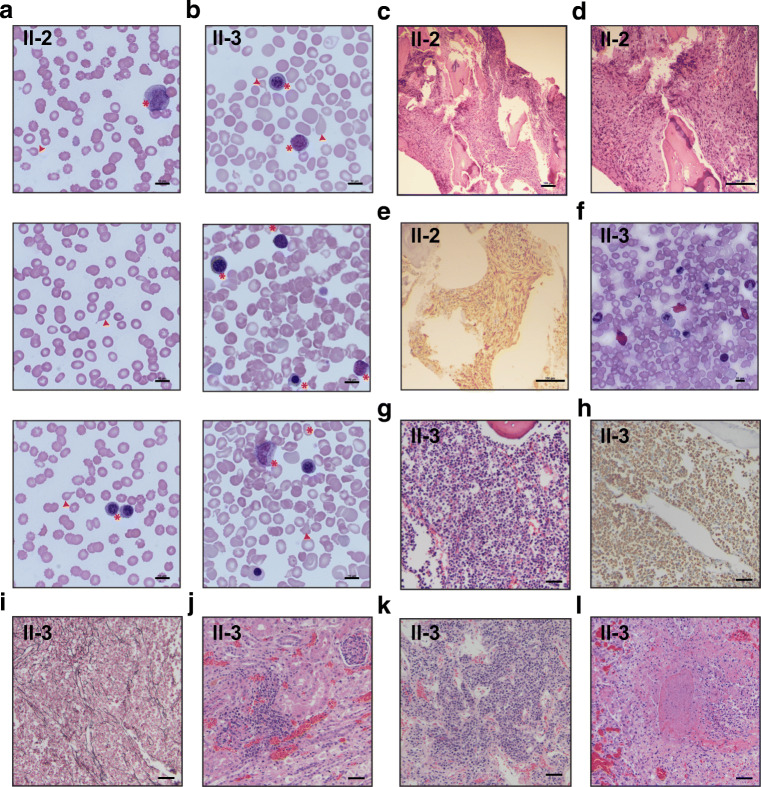
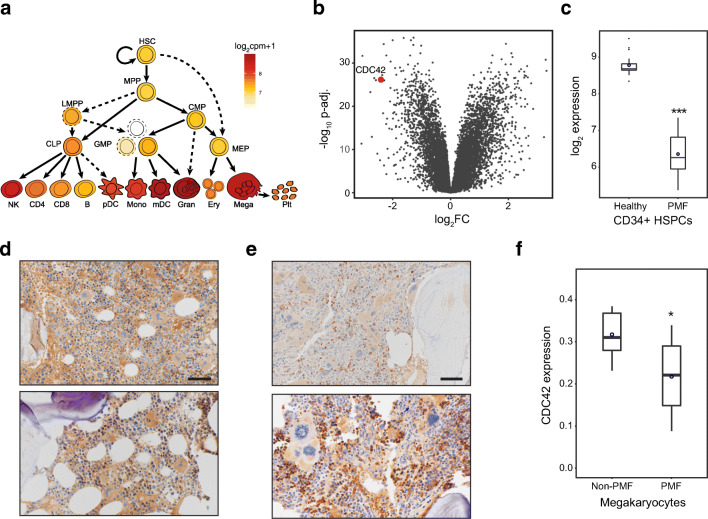
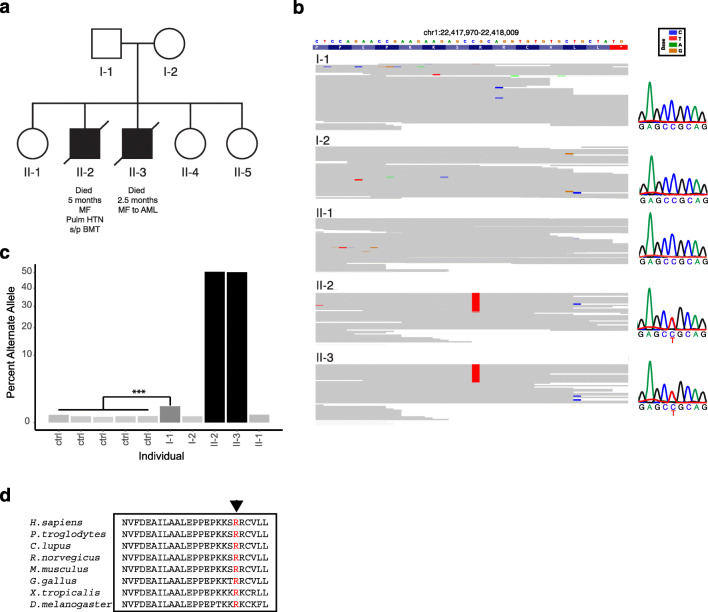
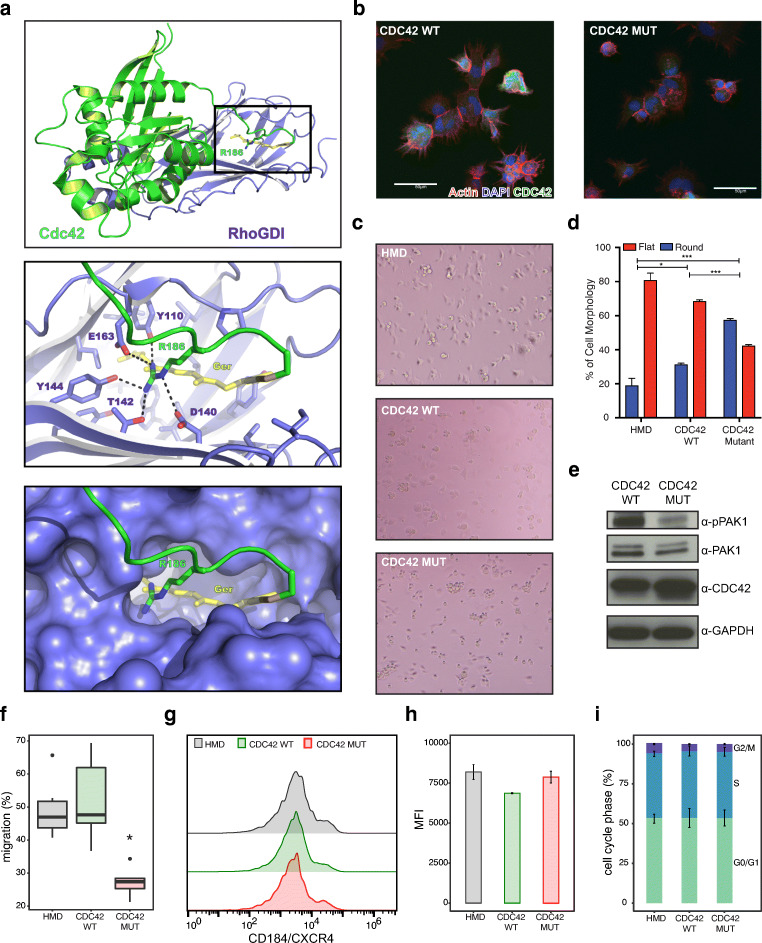
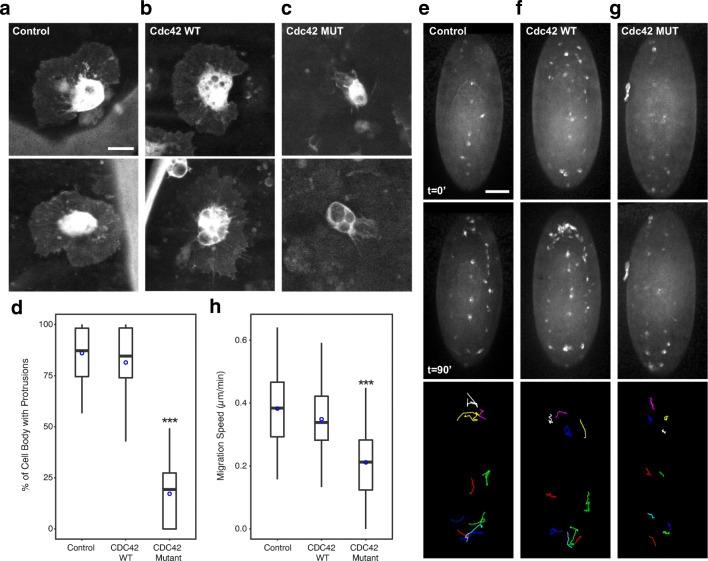
Studies of genetic blood disorders have advanced our understanding of the intrinsic regulation of hematopoiesis. However, such genetic studies have only yielded limited insights into how interactions between hematopoietic cells and their microenvironment are regulated. Here, we describe two affected siblings with infantile myelofibrosis and myeloproliferation that share a common de novo mutation in the Rho GTPase CDC42 (Chr1:22417990:C>T, p.R186C) due to paternal germline mosaicism. Functional studies using human cells and flies demonstrate that this CDC42 mutant has altered activity and thereby disrupts interactions between hematopoietic progenitors and key tissue microenvironmental factors. These findings suggest that further investigation of this and other related disorders may provide insights into how hematopoietic cell-microenvironment interactions play a role in human health and can be disrupted in disease. In addition, we suggest that deregulation of CDC42 may underlie more common blood disorders, such as primary myelofibrosis.
对遗传性血液疾病的研究增进了我们对造血内在调节机制的理解。然而,此类遗传学研究对于造血细胞与其微环境之间的相互作用是如何调控的,所提供的见解仍较为有限。在此,我们描述了两名患有婴儿型骨髓纤维化和骨髓增殖的患病同胞,他们因父系生殖系嵌合现象,在Rho GTP酶CDC42(1号染色体:22417990:C>T,p.R186C)中存在一个共同的新生突变。使用人类细胞和果蝇进行的功能研究表明,这种CDC42突变体具有改变的活性,从而破坏了造血祖细胞与关键组织微环境因子之间的相互作用。这些发现表明,对这种及其他相关疾病的进一步研究,可能会为造血细胞 - 微环境相互作用在人类健康中如何发挥作用以及在疾病中如何被破坏提供见解。此外,我们认为CDC42的失调可能是更常见的血液疾病,如原发性骨髓纤维化的潜在病因。