Zhuo Chuanjun, Li Gongying, Lin Xiaodong, Jiang Deguo, Xu Yong, Tian Hongjun, Wang Wenqiang, Song Xueqin
Department of Psychiatry, The First Affiliated Hospital of Zhengzhou University, 450000, Zhengzhou, China.
Department of Psychiatry Pattern Recognition, Department of Genetics Laboratory of Schizophrenia, School of Mental Health, Jining Medical University, 272119, Jining, China.
Brain Imaging Behav. 2021 Apr;15(2):1115-1133. doi: 10.1007/s11682-020-00284-9.
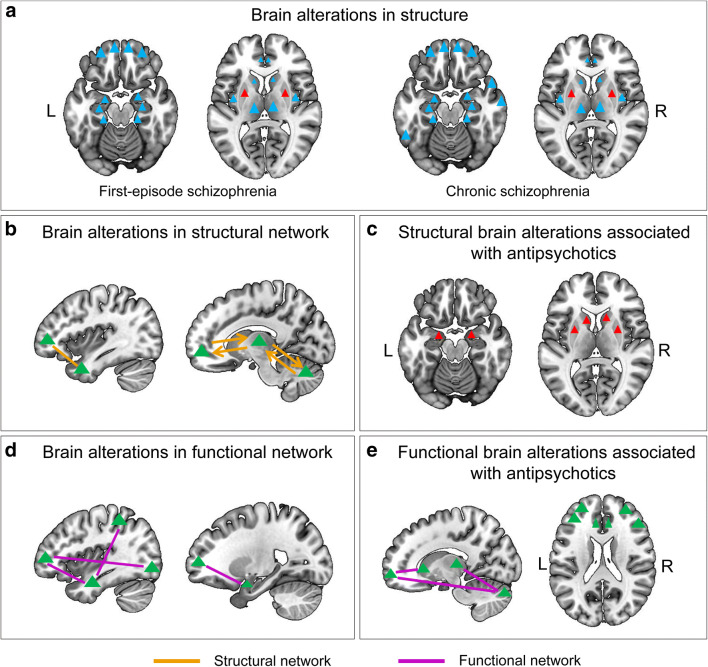
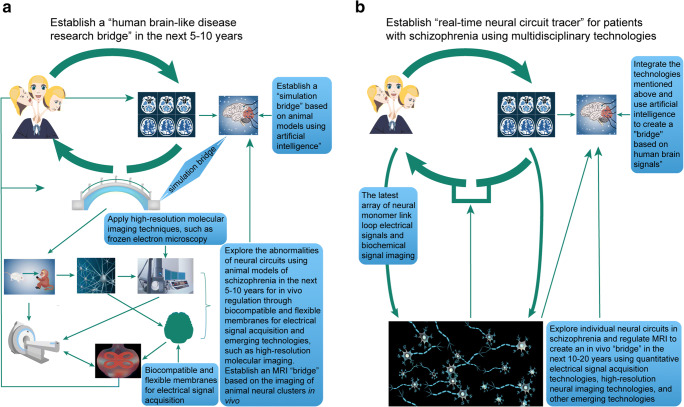
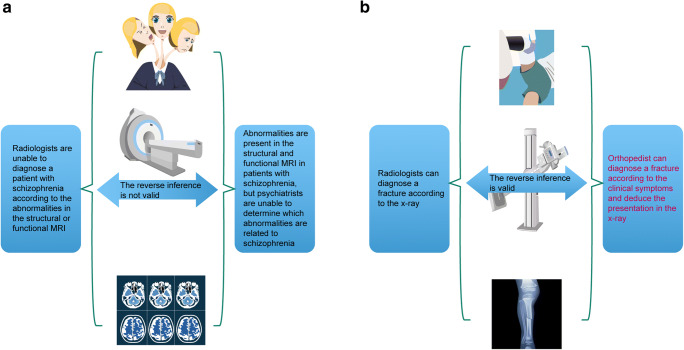
Few advances in schizophrenia research have been translated into clinical practice, despite 60 years of serum biomarkers studies and 50 years of genetic studies. During the last 30 years, neuroimaging studies on schizophrenia have gradually increased, partly due to the beautiful prospect that the pathophysiology of schizophrenia could be explained entirely by the Human Connectome Project (HCP). However, the fallacy of reverse inference has been a critical problem of the HCP. For this reason, there is a dire need for new strategies or research "bridges" to further schizophrenia at the biological level. To understand the importance of research "bridges," it is vital to examine the strengths and weaknesses of the recent literature. Hence, in this review, our team has summarized the recent literature (1995-2018) about magnetic resonance imaging (MRI) of schizophrenia in terms of regional and global structural and functional alterations. We have also provided a new proposal that may supplement the HCP for studying schizophrenia. As postulated, despite the vast number of MRI studies in schizophrenia, the lack of homogeneity between the studies, along with the relatedness of schizophrenia with other neurological disorders, has hindered the study of schizophrenia. In addition, the reverse inference cannot be used to diagnose schizophrenia, further limiting the clinical impact of findings from medical imaging studies. We believe that multidisciplinary technologies may be used to develop research "bridges" to further investigate schizophrenia at the single neuron or neuron cluster levels. We have postulated about future strategies for overcoming the current limitations and establishing the research "bridges," with an emphasis on multimodality imaging, molecular imaging, neuron cluster signals, single transmitter biomarkers, and nanotechnology. These research "bridges" may help solve the reverse inference fallacy and improve our understanding of schizophrenia for future studies.
尽管有60年的血清生物标志物研究和50年的遗传学研究,但精神分裂症研究的进展很少转化为临床实践。在过去30年中,关于精神分裂症的神经影像学研究逐渐增加,部分原因是人们憧憬精神分裂症的病理生理学可以完全由人类连接组计划(HCP)来解释。然而,反向推理的谬误一直是HCP的一个关键问题。因此,迫切需要新的策略或研究“桥梁”,以便在生物学层面进一步研究精神分裂症。为了理解研究“桥梁”的重要性,审视近期文献的优缺点至关重要。因此,在本综述中,我们团队总结了近期(1995 - 2018年)关于精神分裂症磁共振成像(MRI)在区域和整体结构及功能改变方面的文献。我们还提出了一项新的建议,可能会补充HCP对精神分裂症的研究。正如所假设的,尽管在精神分裂症方面有大量的MRI研究,但研究之间缺乏同质性,以及精神分裂症与其他神经系统疾病的相关性,阻碍了对精神分裂症的研究。此外,反向推理不能用于诊断精神分裂症,这进一步限制了医学影像学研究结果的临床影响。我们认为多学科技术可用于构建研究“桥梁”,以便在单个神经元或神经元簇水平进一步研究精神分裂症。我们推测了克服当前局限性并建立研究“桥梁”的未来策略,重点是多模态成像、分子成像、神经元簇信号、单一递质生物标志物和纳米技术。这些研究“桥梁”可能有助于解决反向推理谬误,并增进我们对精神分裂症的理解以便未来研究。