Turton Nadia, Heaton Robert A, Ismail Fahima, Roberts Sioned, Nelder Sian, Phillips Sue, Hargreaves Iain P
School of Pharmacy and Biomolecular Sciences, Liverpool John Moores University, Liverpool, UK.
The Royal Liverpool University Hospital, Royal Liverpool and Broadgreen NHS Trust, Prescot Street, Liverpool, UK.
Neurochem Res. 2021 Jan;46(1):131-139. doi: 10.1007/s11064-020-03033-y. Epub 2020 Apr 18.
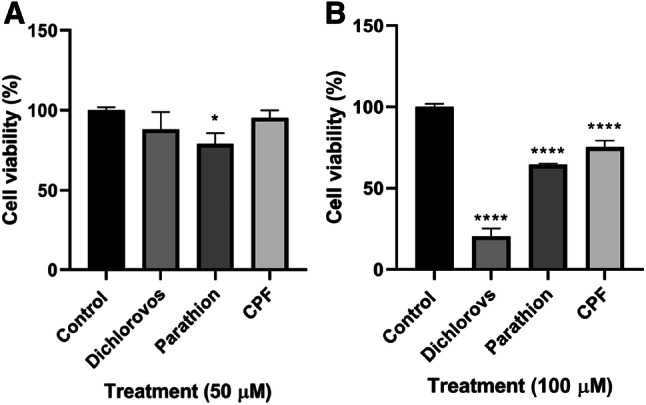
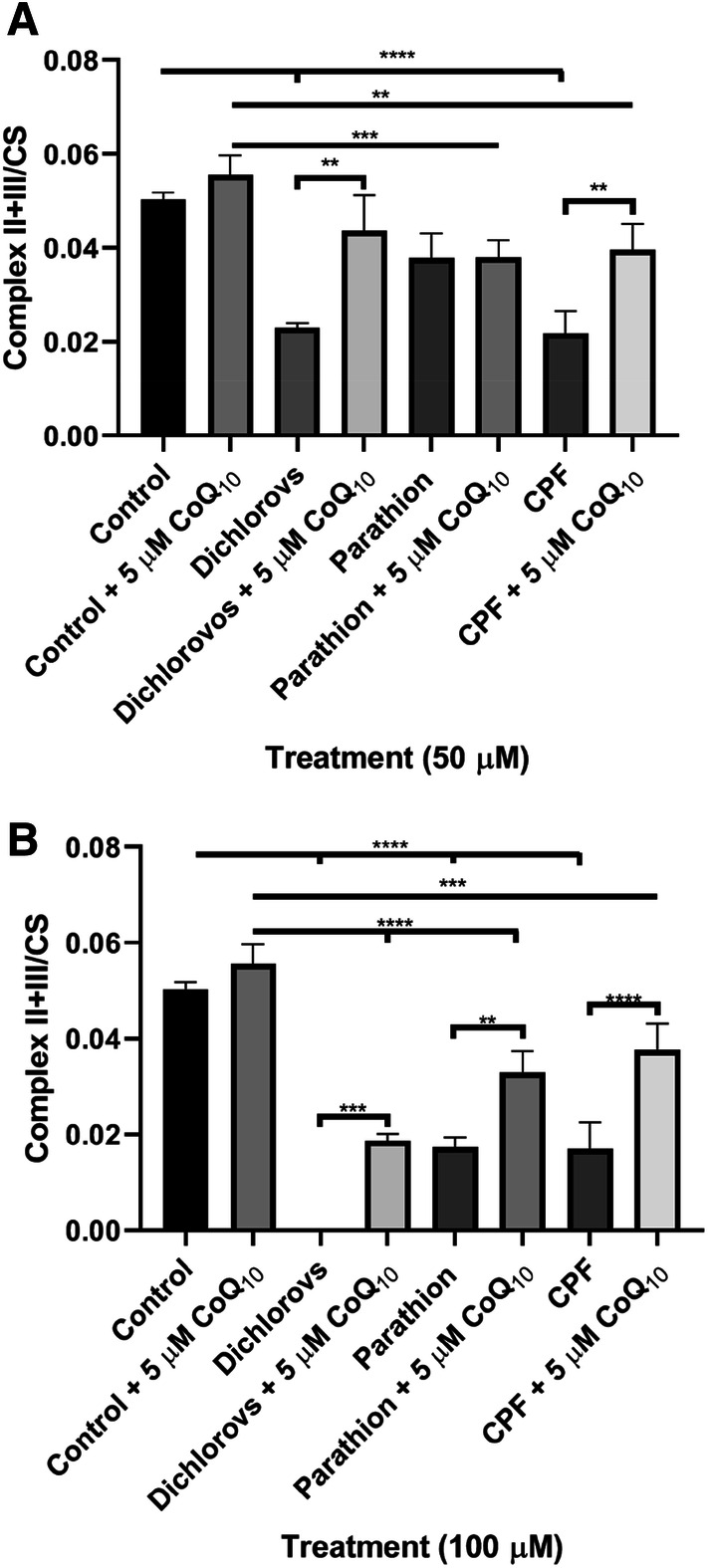
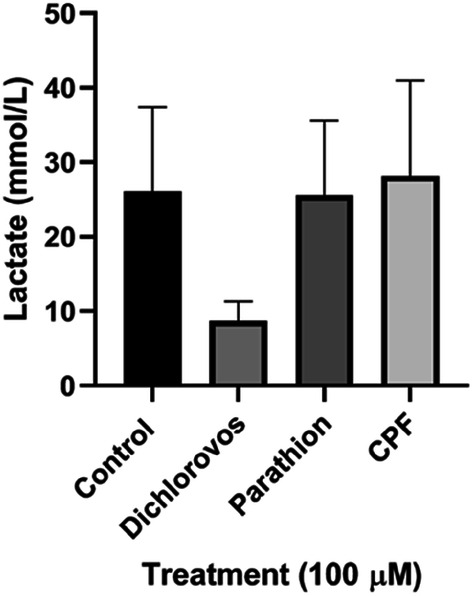
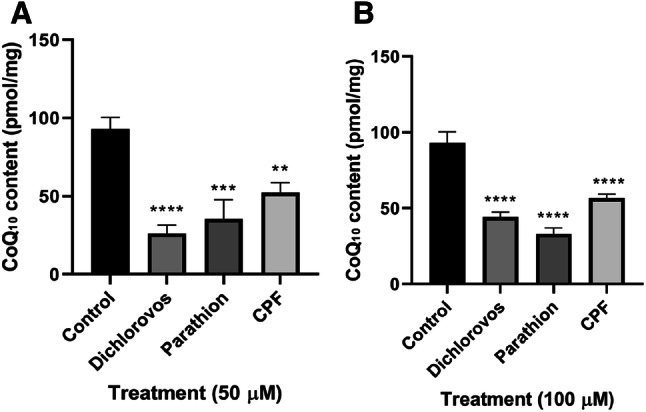
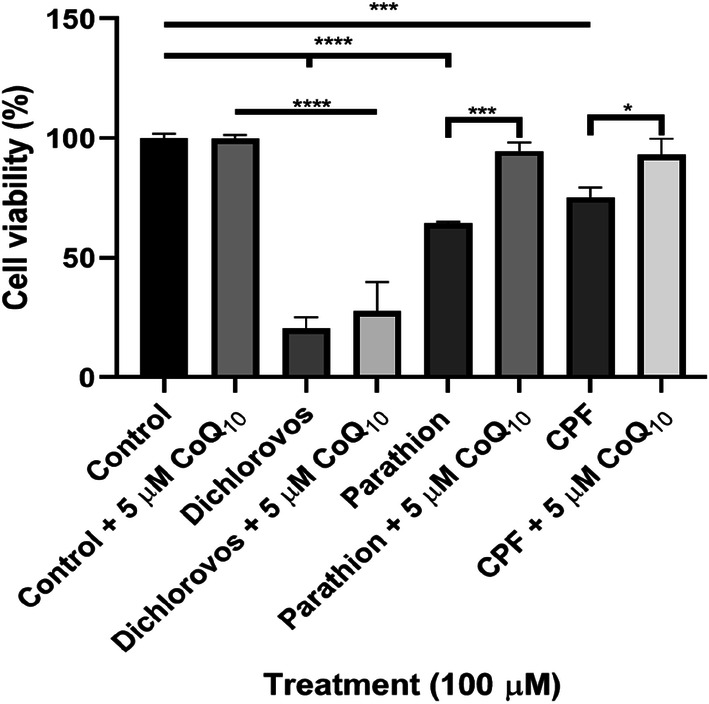
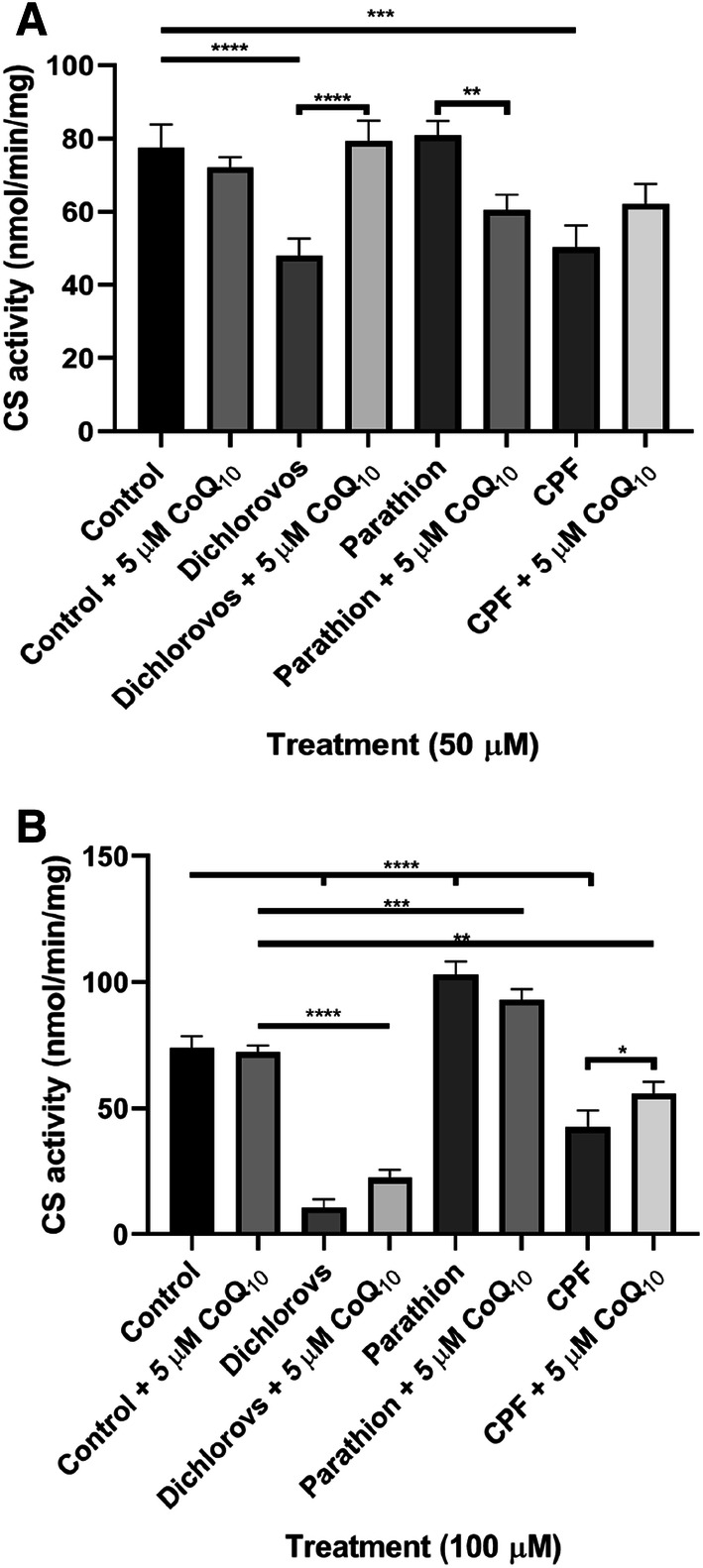
Organophosphate (OP) compounds are widely used as pesticides and herbicides and exposure to these compounds has been associated with both chronic and acute forms of neurological dysfunction including cognitive impairment, neurophysiological problems and cerebral ataxia with evidence of mitochondrial impairment being associated with this toxicity. In view of the potential mitochondrial impairment, the present study aimed to investigate the effect of exposure to commonly used OPs, dichlorvos, methyl-parathion (parathion) and chloropyrifos (CPF) on the cellular level of the mitochondrial electron transport chain (ETC) electron carrier, coenzyme Q (CoQ) in human neuroblastoma SH-SY5Y cells. The effect of a perturbation in CoQ status was also evaluated on mitochondrial function and cell viability. A significant decreased (P < 0.0001) in neuronal cell viability was observed following treatment with all three OPs (100 µM), with dichlorvos appearing to be the most toxic to cells and causing an 80% loss of viability. OP treatment also resulted in a significant diminution in cellular CoQ status, with levels of this isoprenoid being decreased by 72% (P < 0.0001), 62% (P < 0.0005) and 43% (P < 0.005) of control levels following treatment with dichlorvos, parathion and CPF (50 µM), respectively. OP exposure was also found to affect the activities of the mitochondrial enzymes, citrate synthase (CS) and mitochondrial electron transport chain (ETC) complex II+III. Dichlorvos and CPF (50 µM) treatment significantly decreased CS activity by 38% (P < 0.0001) and 35% (P < 0.0005), respectively compared to control levels in addition to causing a 54% and 57% (P < 0.0001) reduction in complex II+III activity, respectively. Interestingly, although CoQ supplementation (5 μM) was able to restore cellular CoQ status and CS activity to control levels following OP treatment, complex II+III activity was only restored to control levels in neuronal cells exposed to dichlorvos (50 µM). However, post supplementation with CoQ, complex II+III activity significantly increased by 33% (P < 0.0005), 25% (P < 0.005) and 35% (P < 0.0001) in dichlorvos, parathion and CPF (100 µM) treated cells respectively compared to non-CoQ supplemented cells. In conclusion, the results of this study have indicated evidence of neuronal cell CoQ deficiency with associated mitochondrial dysfunction following OP exposure. Although CoQ supplementation was able to ameliorate OP induced deficiencies in CS activity, ETC complex II+III activity appeared partially refractory to this treatment. Accordingly, these results indicate the therapeutic potential of CoQ supplementation in the treatment of OP poisoning. However, higher doses may be required to engender therapeutic efficacy.
有机磷酸酯(OP)化合物被广泛用作杀虫剂和除草剂,接触这些化合物与慢性和急性神经功能障碍有关,包括认知障碍、神经生理问题和大脑共济失调,有证据表明线粒体损伤与这种毒性有关。鉴于潜在的线粒体损伤,本研究旨在探讨接触常用的有机磷酸酯敌敌畏、甲基对硫磷(对硫磷)和毒死蜱(CPF)对人神经母细胞瘤SH-SY5Y细胞中线粒体电子传递链(ETC)电子载体辅酶Q(CoQ)细胞水平的影响。还评估了CoQ状态扰动对线粒体功能和细胞活力的影响。用所有三种有机磷酸酯(100μM)处理后,观察到神经元细胞活力显著下降(P<0.0001),敌敌畏似乎对细胞毒性最大,导致活力丧失80%。OP处理还导致细胞CoQ状态显著降低,在用敌敌畏、对硫磷和CPF(50μM)处理后,这种类异戊二烯的水平分别降至对照水平的72%(P<0.0001)、62%(P<0.0005)和43%(P<0.005)。还发现OP暴露会影响线粒体酶柠檬酸合酶(CS)和线粒体电子传递链(ETC)复合物II+III的活性。与对照水平相比,敌敌畏和CPF(50μM)处理分别使CS活性显著降低38%(P<0.0001)和35%(P<0.0005),此外还分别使复合物II+III活性降低54%和57%(P<0.0001)。有趣的是,尽管补充CoQ(5μM)能够在OP处理后将细胞CoQ状态和CS活性恢复到对照水平,但复合物II+III活性仅在暴露于敌敌畏(50μM)的神经元细胞中恢复到对照水平。然而,补充CoQ后,与未补充CoQ的细胞相比,在敌敌畏、对硫磷和CPF(100μM)处理的细胞中,复合物II+III活性分别显著增加33%(P<0.0005)、25%(P<0.005)和35%(P<0.0001)。总之,本研究结果表明,OP暴露后存在神经元细胞CoQ缺乏及相关线粒体功能障碍迹象。尽管补充CoQ能够改善OP诱导的CS活性缺乏,但ETC复合物II+III活性似乎对此治疗部分难治。因此,这些结果表明补充CoQ在治疗OP中毒方面具有治疗潜力。然而,可能需要更高剂量才能产生治疗效果。