Elmorsy Ekramy, Al-Ghafari Ayat, Al Doghaither Huda, Salama Mohamed, Carter Wayne G
Department of Forensic Medicine and Clinical Toxicology, Faculty of Medicine, Mansoura University, Mansoura 35516, Egypt.
Pathology Department, Faculty of Medicine, Northern Border University, Arar 91431, Saudi Arabia.
Brain Sci. 2022 Jul 24;12(8):975. doi: 10.3390/brainsci12080975.
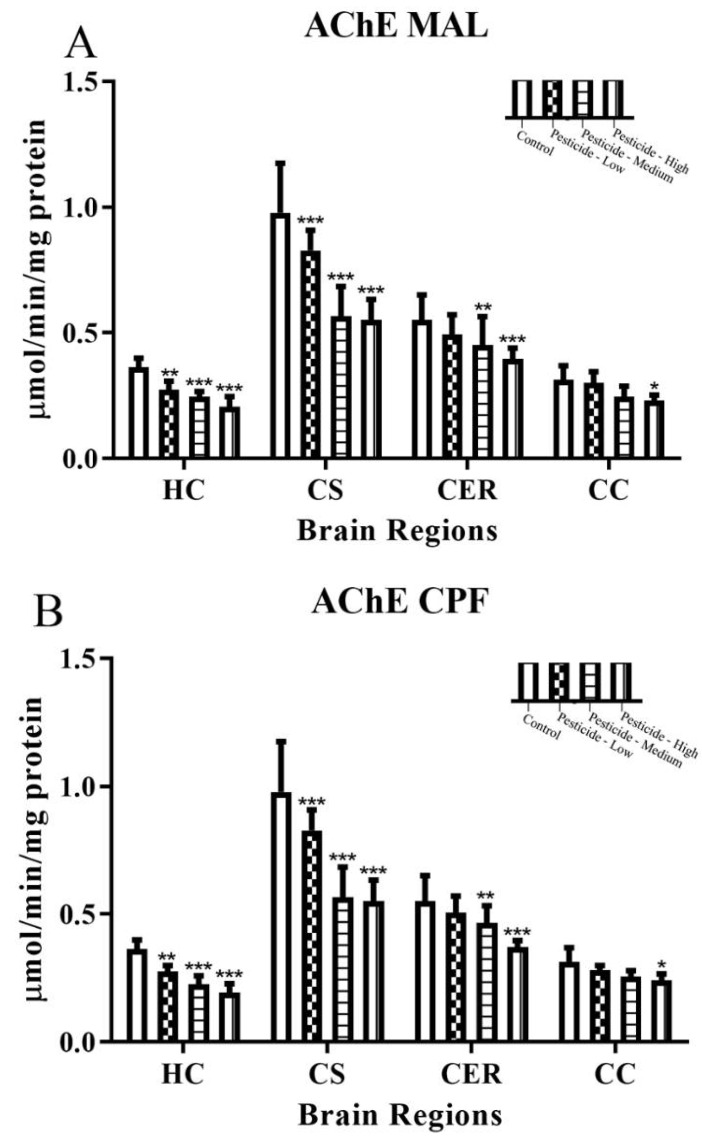
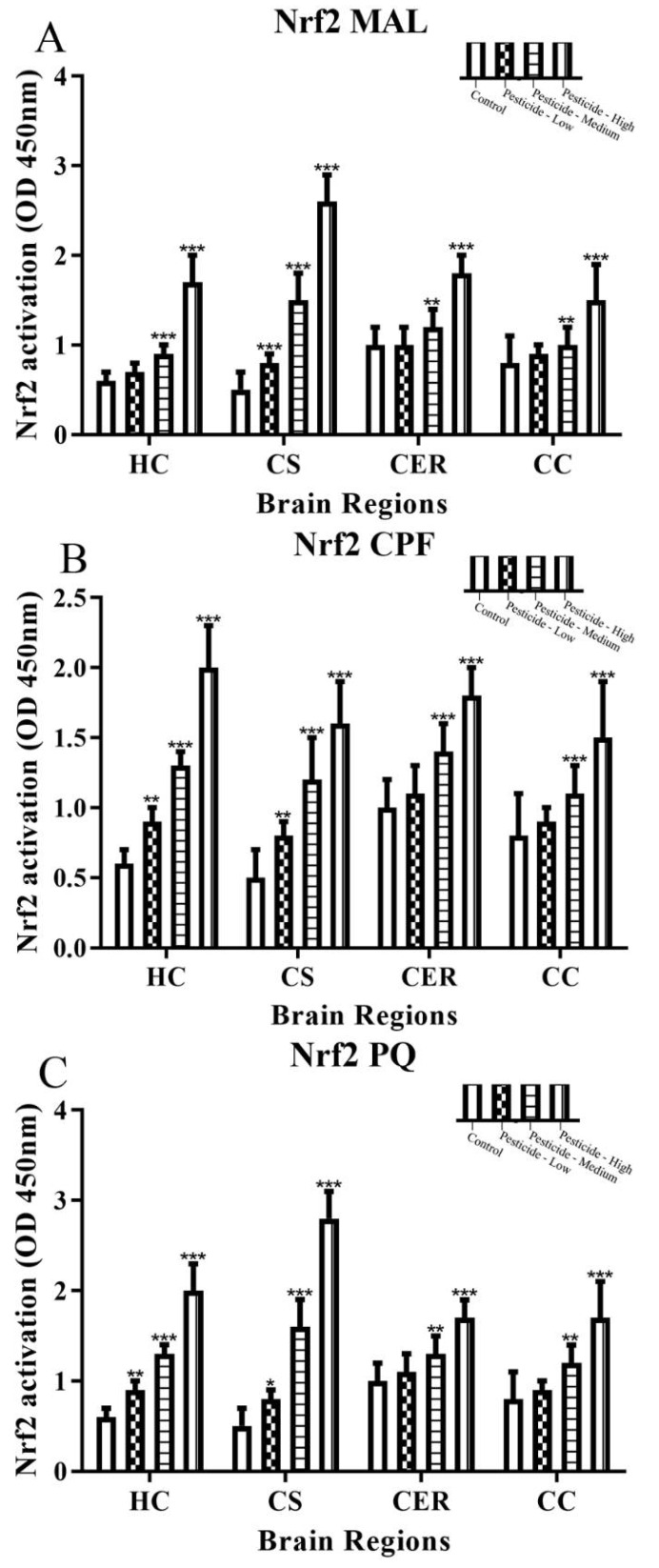
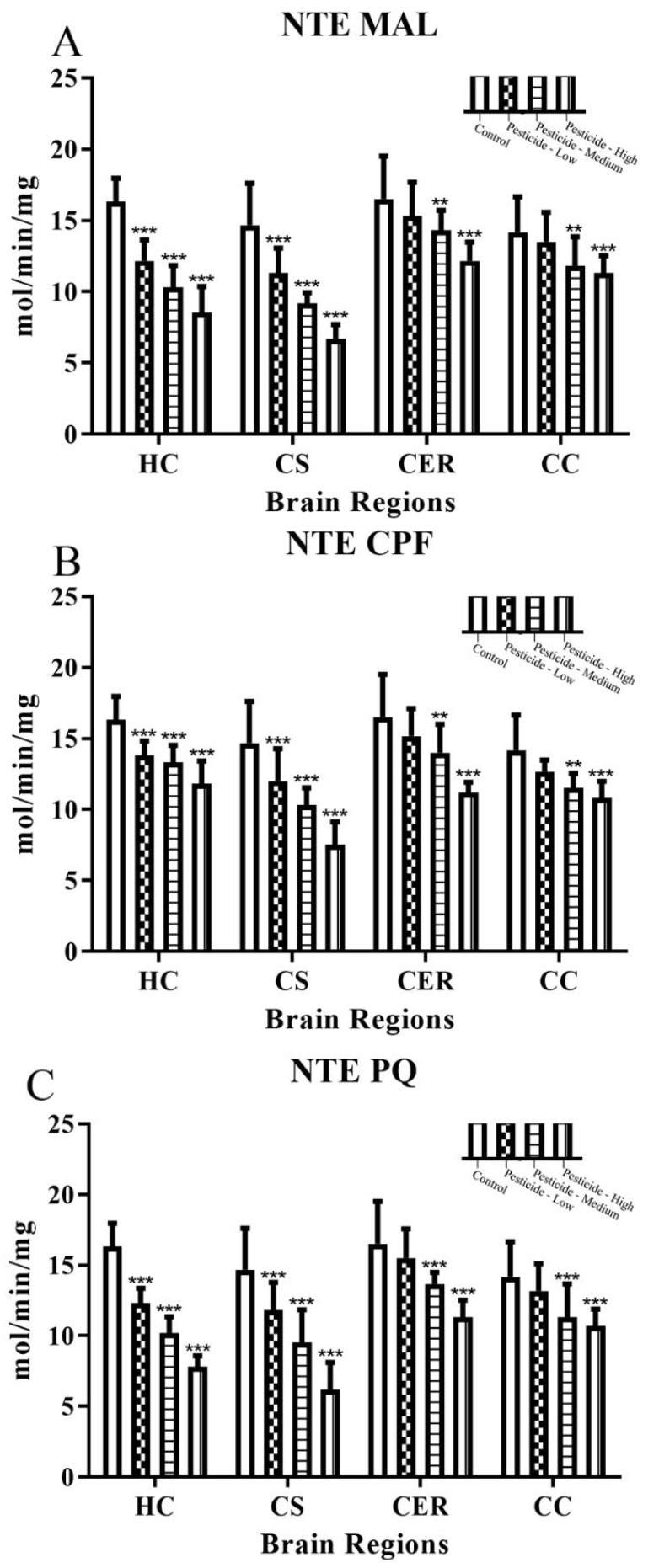
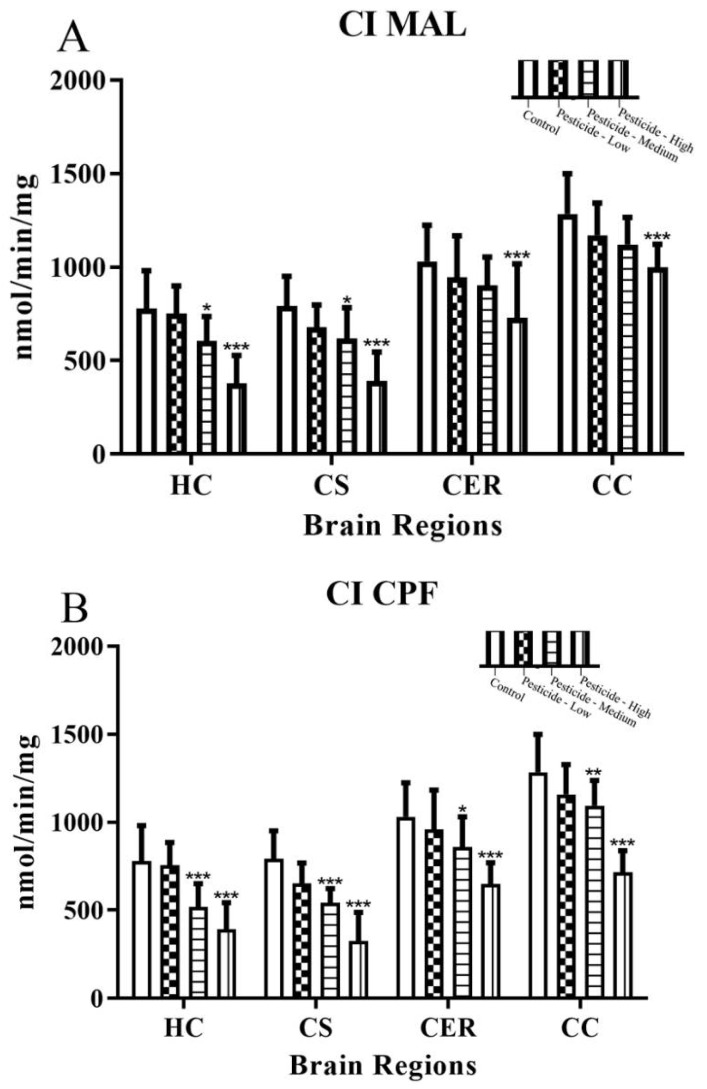
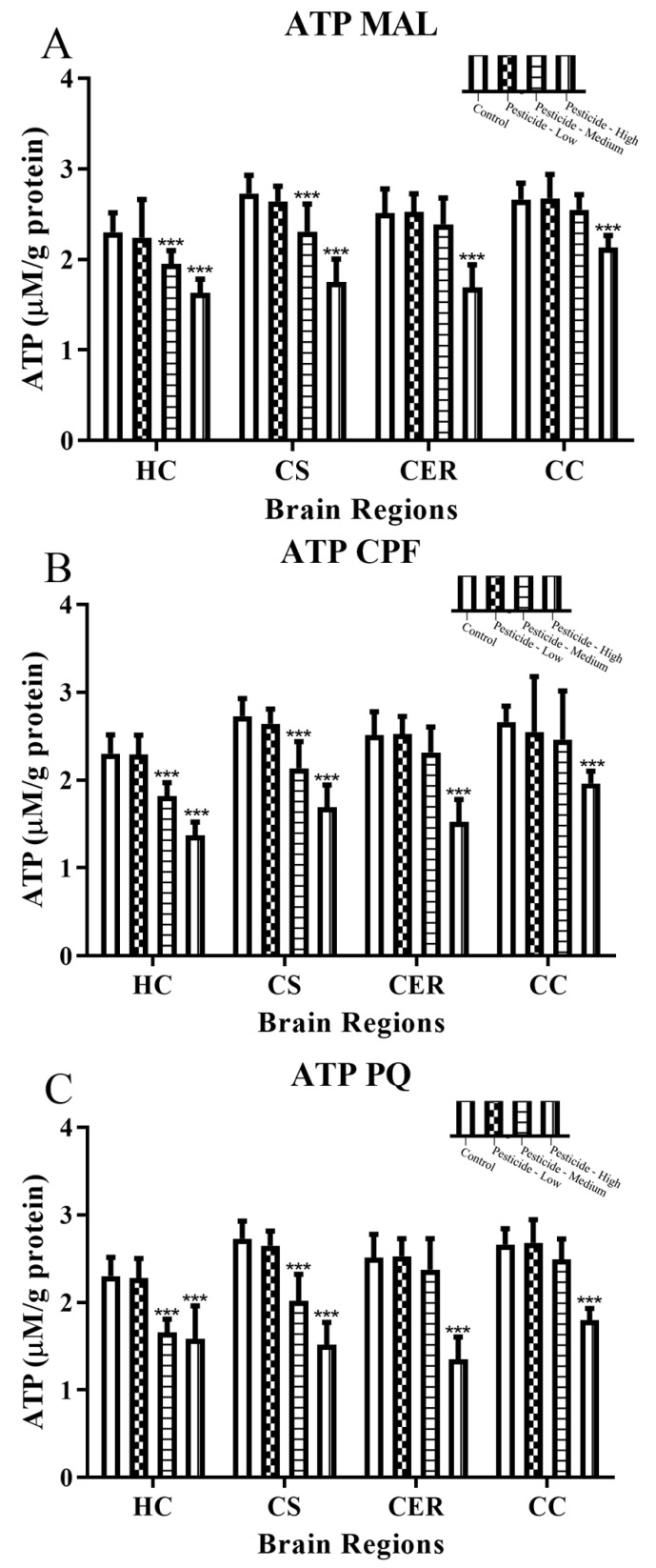
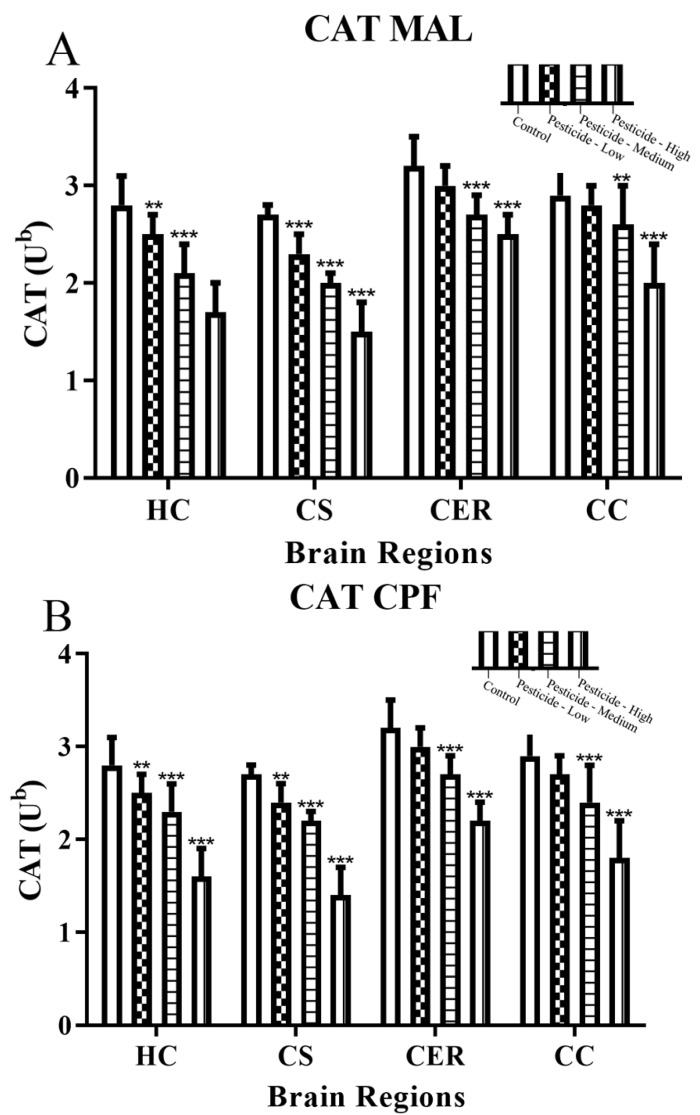
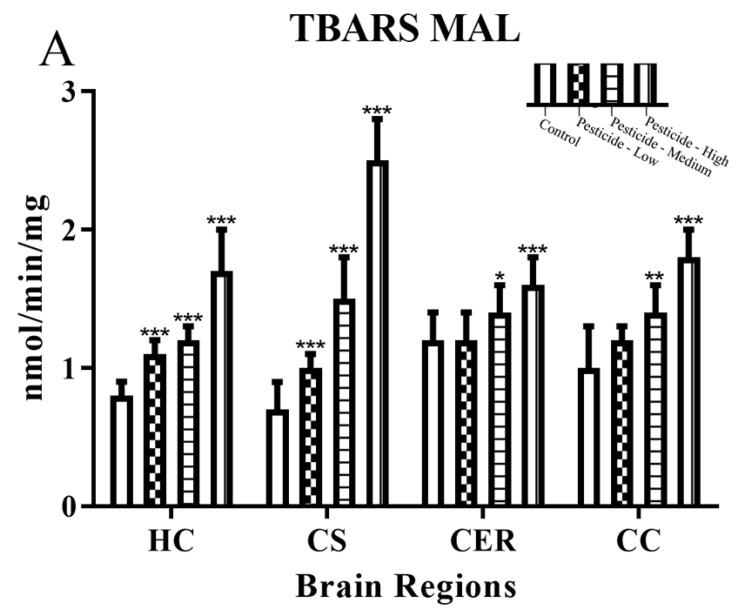
Acute or chronic exposures to pesticides have been linked to neurotoxicity and the potential development of neurodegenerative diseases (NDDs). This study aimed to consider the neurotoxicity of three widely utilized pesticides: malathion, chlorpyrifos, and paraquat within the hippocampus (HC), corpus striatum (CS), cerebellum (CER), and cerebral cortex (CC). Neurotoxicity was evaluated at relatively low, medium, and high pesticide dosages. All pesticides inhibited acetylcholinesterase (AChE) and neuropathy target esterase (NTE) in each of the brain regions, but esterase inhibition was greatest in the HC and CS. Each of the pesticides also induced greater disruption to cellular bioenergetics within the HC and CS, and this was monitored via inhibition of mitochondrial complex enzymes I and II, reduced ATP levels, and increased lactate production. Similarly, the HC and CS were more vulnerable to redox stress, with greater inhibition of the antioxidant enzymes catalase and superoxide dismutase and increased lipid peroxidation. All pesticides induced the production of nuclear Nrf2 in a dose-dependent manner. Collectively, these results show that pesticides disrupt cellular bioenergetics and that the HC and CS are more susceptible to pesticide effects than the CER and CC.
急性或慢性接触农药与神经毒性以及神经退行性疾病(NDDs)的潜在发展有关。本研究旨在探讨三种广泛使用的农药:马拉硫磷、毒死蜱和百草枯在海马体(HC)、纹状体(CS)、小脑(CER)和大脑皮层(CC)中的神经毒性。在相对低、中、高农药剂量下评估神经毒性。所有农药均抑制每个脑区中的乙酰胆碱酯酶(AChE)和神经病变靶标酯酶(NTE),但酯酶抑制在海马体和纹状体中最为明显。每种农药还对海马体和纹状体中的细胞生物能量学造成更大破坏,这通过抑制线粒体复合酶I和II、降低ATP水平以及增加乳酸生成来监测。同样,海马体和纹状体对氧化还原应激更敏感,过氧化氢酶和超氧化物歧化酶等抗氧化酶受到更大抑制,脂质过氧化增加。所有农药均以剂量依赖方式诱导核Nrf2的产生。总体而言,这些结果表明农药会破坏细胞生物能量学,并且海马体和纹状体比小脑和大脑皮层更容易受到农药影响。