Roos Annerine, Fouche Jean-Paul, Ipser Jonathan C, Narr Katherine L, Woods Roger P, Zar Heather J, Stein Dan J, Donald Kirsten A
SU/UCT MRC Unit on Risk and Resilience in Mental Disorders, Department of Psychiatry, Stellenbosch University, PO Box 241, 8000, Cape Town, South Africa.
Department of Paediatrics and Child Health, University of Cape Town, Cape Town, South Africa.
Brain Imaging Behav. 2021 Apr;15(2):689-699. doi: 10.1007/s11682-020-00277-8.
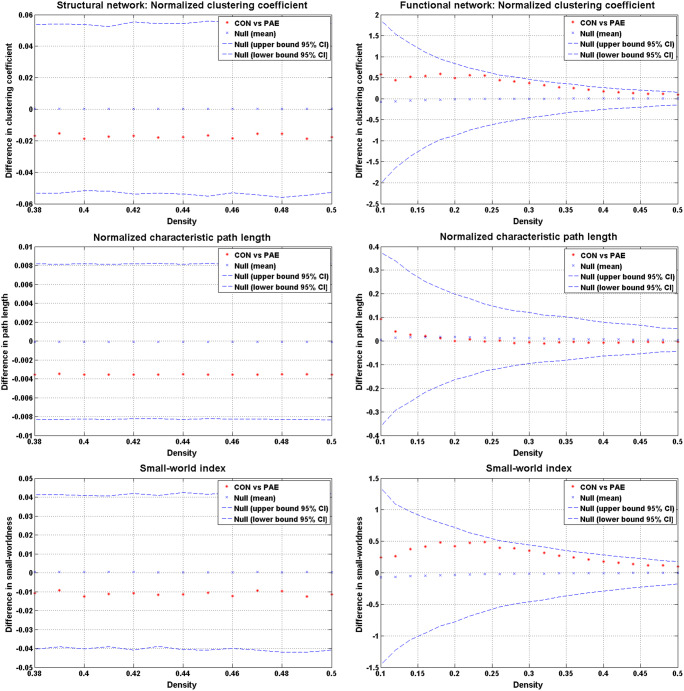
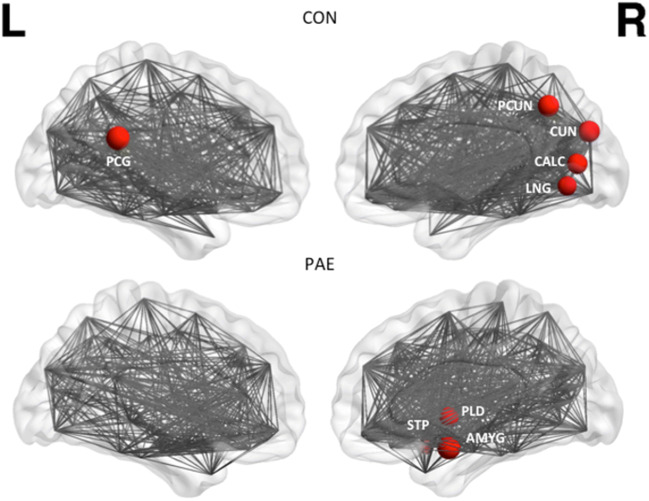
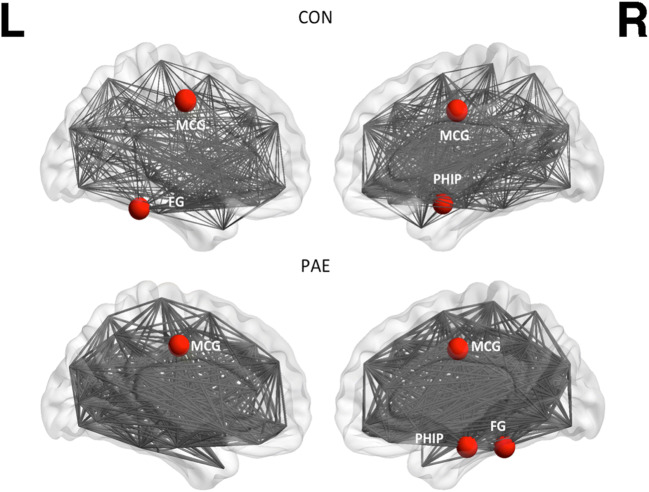
Prenatal alcohol exposure leads to alterations in cognition, behavior and underlying brain architecture. However, prior studies have not integrated structural and functional imaging data in children with prenatal alcohol exposure. The aim of this study was to characterize disruptions in both structural and functional brain network organization after prenatal alcohol exposure in very early life. A group of 11 neonates with prenatal alcohol exposure and 14 unexposed controls were investigated using diffusion weighted structural and resting state functional magnetic resonance imaging. Covariance networks were created using graph theoretical analyses for each data set, controlling for age and sex. Group differences in global hub arrangement and regional connectivity were determined using nonparametric permutation tests. Neonates with prenatal alcohol exposure and controls exhibited similar global structural network organization. However, global functional networks of neonates with prenatal alcohol exposure comprised of temporal and limbic hubs, while hubs were more distributed in controls representing an early default mode network. On a regional level, controls showed prominent structural and functional connectivity in parietal and occipital regions. Neonates with prenatal alcohol exposure showed regionally, predominant structural and functional connectivity in several subcortical regions and occipital regions. The findings suggest early functional disruption on a global and regional level after prenatal alcohol exposure and indicate suboptimal organization of functional networks. These differences likely underlie sensory dysregulation and behavioral difficulties in prenatal alcohol exposure.
产前酒精暴露会导致认知、行为及潜在脑结构的改变。然而,既往研究尚未将产前酒精暴露儿童的结构和功能成像数据整合起来。本研究的目的是描述生命早期产前酒精暴露后大脑结构和功能网络组织的破坏情况。使用扩散加权结构磁共振成像和静息态功能磁共振成像对一组11名产前酒精暴露的新生儿和14名未暴露的对照儿童进行了研究。对每个数据集使用图论分析创建协方差网络,并对年龄和性别进行控制。使用非参数置换检验确定全局枢纽排列和区域连通性的组间差异。产前酒精暴露的新生儿和对照儿童表现出相似的全局结构网络组织。然而,产前酒精暴露新生儿的全局功能网络由颞叶和边缘枢纽组成,而在对照儿童中枢纽分布更广泛,代表早期默认模式网络。在区域水平上,对照儿童在顶叶和枕叶区域表现出显著的结构和功能连通性。产前酒精暴露的新生儿在区域上,在几个皮质下区域和枕叶区域表现出主要的结构和功能连通性。这些发现表明产前酒精暴露后在全局和区域水平上存在早期功能破坏,并表明功能网络组织欠佳。这些差异可能是产前酒精暴露中感觉调节障碍和行为困难的基础。