Surgical Research Laboratory, Institute of Cancer and Genomic Sciences, University of Birmingham, Vincent Drive, Birmingham, B15 2TT, UK.
Queen Elizabeth Hospital Birmingham, Birmingham, UK.
Mol Diagn Ther. 2020 Jun;24(3):339-349. doi: 10.1007/s40291-020-00462-x.
The identification of tumour mutational burden (TMB) as a biomarker of response to programmed cell death protein 1 (PD-1) immunotherapy has necessitated the development of genomic assays to measure this. We carried out comprehensive molecular profiling of cancers using the Illumina TruSight Oncology 500 (TSO500) panel and compared these to whole-genome sequencing (WGS).
Cancer samples derived from formalin-fixed material were profiled on the TSO500 panel, sequenced on an Illumina NextSeq 500 instrument and processed through the TSO500 Docker pipeline. Either FASTQ files (PierianDx) or vcf files (OncoKDM) were processed to understand clinical actionability.
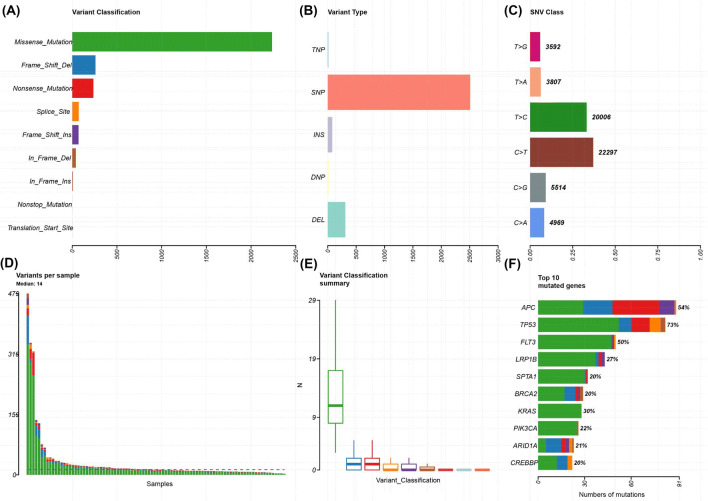
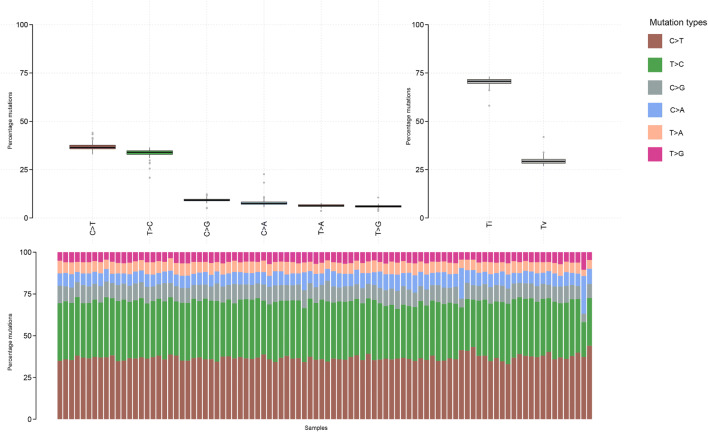
In total, 108 samples (a mixture of colorectal, lung, oesophageal and control samples) were processed via the DNA panel. There was good correlation between TMB, single-nucleotide variants (SNVs), indels and copy-number variations as predicted by TSO500 and WGS (R > 0.9) and good reproducibility, with less than 5% variability between repeated controls. For the RNA panel, 13 samples were processed, with all known fusions observed via orthogonal techniques. For clinical actionability, 72 tier 1 variants and 297 tier 2 variants were detected, with clinical trials identified for all patients.
The TSO500 assay accurately measures TMB, microsatellite instability, SNVs, indels, copy-number/structural variation and gene fusions when compared to WGS and orthogonal technologies. Coupled with a clinical annotation pipeline, this provides a powerful methodology for identification of clinically actionable variants.
肿瘤突变负担(TMB)作为程序性细胞死亡蛋白 1(PD-1)免疫治疗反应的生物标志物已得到确认,这就需要开发基因组检测来测量 TMB。我们使用 Illumina TruSight Oncology 500(TSO500)面板对癌症进行了全面的分子谱分析,并将其与全基因组测序(WGS)进行了比较。
从福尔马林固定材料中提取的癌症样本在 TSO500 面板上进行分析,在 Illumina NextSeq 500 仪器上进行测序,并通过 TSO500 Docker 管道进行处理。FASTQ 文件(PierianDx)或 vcf 文件(OncoKDM)经过处理以了解临床可行性。
共对 108 个样本(包括结直肠、肺、食管和对照样本)进行了 DNA 面板处理。通过 TSO500 预测的 TMB、单核苷酸变异(SNVs)、插入缺失和拷贝数变异与 WGS 之间存在良好的相关性(R>0.9),并且具有良好的重现性,重复对照之间的变化小于 5%。对于 RNA 面板,处理了 13 个样本,所有已知的融合都通过正交技术观察到。对于临床可行性,检测到 72 个一级变体和 297 个二级变体,所有患者都确定了临床试验。
与 WGS 和正交技术相比,TSO500 检测准确测量 TMB、微卫星不稳定性、SNVs、插入缺失、拷贝数/结构变异和基因融合。与临床注释管道相结合,这为鉴定具有临床意义的变体提供了一种强大的方法。