Felsenstein Medical Research Center, Sackler School of Medicine, Tel Aviv University, Rabin Medical Center, Beilinson Campus, 49100, Petach Tikva, Israel.
Davidoff Cancer Center, Rabin Medical Center, Beilinson Campus, 49100, Petach Tikva, Israel.
BMC Cancer. 2020 Apr 19;20(1):333. doi: 10.1186/s12885-020-06835-z.
Breast cancer treatment is tailored to the specific cancer subtype. Often, systemic treatment is given prior to surgery. Chemotherapy induces significant endoplasmic reticulum (ER) stress-mediated cell death and upregulation of 78-kDa glucose-regulated protein (GRP78). We hypothesized that chemotherapy induces ER stress not only in the tumor tissue but also in immune cells, which may affect the response to anti-cancer treatment.
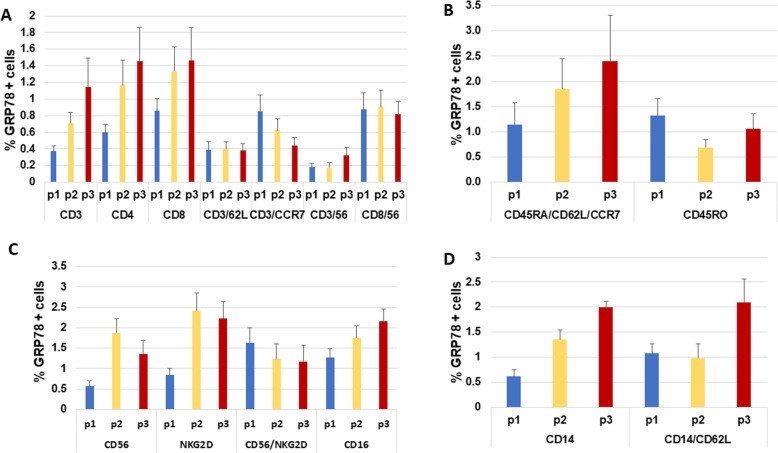
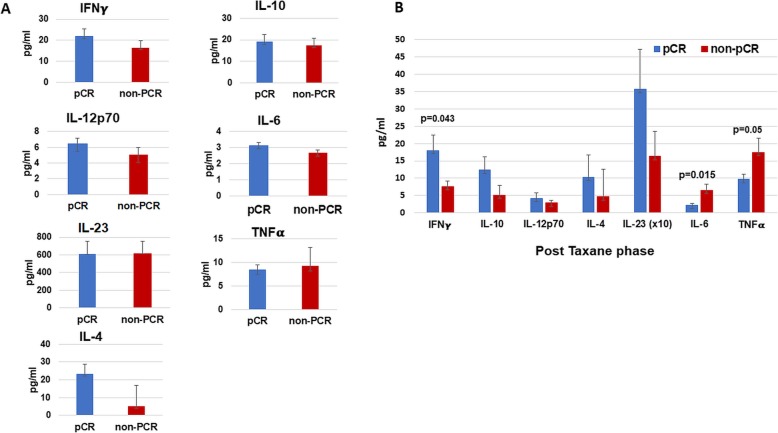
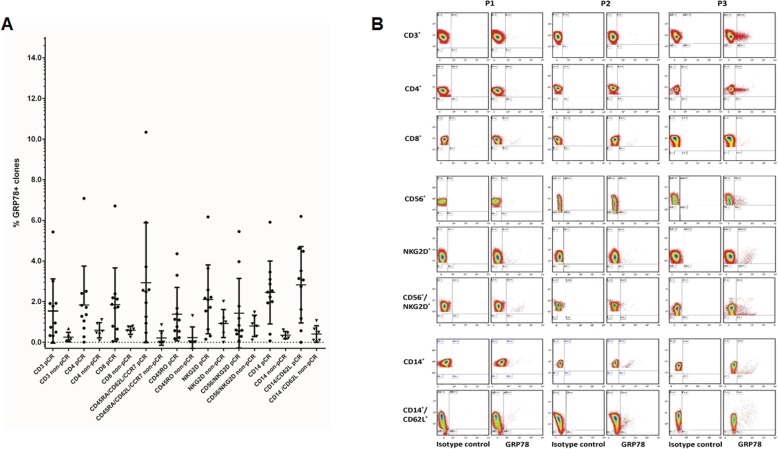
We determined the surface expression of GRP78 on 15 different peripheral blood mononuclear cell (PBMC) subpopulations in 20 breast cancer patients at three time points of the neoadjuvant treatment, i.e., at baseline, after anthracycline treatment, and after taxanes treatment. For this purpose, we performed flow cytometric analyses and analyzed the data using ANOVA and the Tukey test. Serum cytokine levels were also evaluated, and their levels were correlated with response to treatment using the t-test after log transformation and Mann-Whitney U Wilcoxon W test.
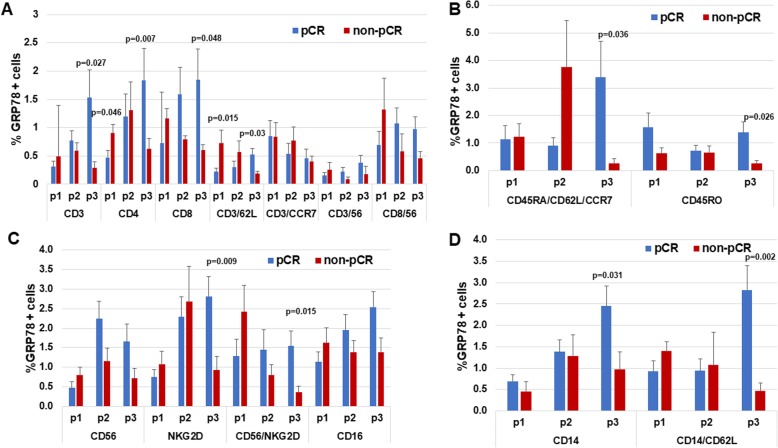
A significant increase in GRP78 expression in PBMCs was documented during the taxane phase, only in patients who achieved pathological complete response (pCR). GRP78-positive clones correlated with increased serum levels of interferon gamma (IFNγ).
The presence of GRP78-positive clones in certain PBMC subpopulations in pCR patients suggests a dynamic interaction between ER stress and immune responsiveness. The correlation of GRP78-positive clones with increased levels of IFNγ supports the idea that GRP78 expression in PBMCs might serve as a new predictive marker to identify the possible benefits of taxanes in the neoadjuvant setting.
乳腺癌的治疗是根据特定的癌症亚型进行定制的。通常,在手术前会给予全身性治疗。化疗会引起显著的内质网(ER)应激介导的细胞死亡和 78kDa 葡萄糖调节蛋白(GRP78)的上调。我们假设化疗不仅会在肿瘤组织中引起 ER 应激,还会在免疫细胞中引起 ER 应激,这可能会影响对抗癌治疗的反应。
我们在 20 名接受新辅助治疗的乳腺癌患者的三个时间点(基线、蒽环类药物治疗后和紫杉烷类药物治疗后)确定了 15 种不同的外周血单核细胞(PBMC)亚群表面 GRP78 的表达。为此,我们进行了流式细胞分析,并使用 ANOVA 和 Tukey 检验分析数据。还评估了血清细胞因子水平,并在对数转换后使用 t 检验和 Mann-Whitney U Wilcoxon W 检验将其与治疗反应相关联。
仅在达到病理完全缓解(pCR)的患者中,在紫杉烷阶段记录到 PBMC 中 GRP78 表达的显著增加。GRP78 阳性克隆与干扰素γ(IFNγ)血清水平的增加相关。
在 pCR 患者的某些 PBMC 亚群中存在 GRP78 阳性克隆表明 ER 应激和免疫反应性之间存在动态相互作用。GRP78 阳性克隆与 IFNγ 水平升高的相关性支持这样一种观点,即 PBMC 中 GRP78 的表达可以作为一种新的预测标志物,以确定紫杉烷类药物在新辅助治疗中的可能益处。