Department of Pharmacy, University of Peshawar, Peshawar, Khyber Pakhtunkhwa, Pakistan.
BMC Cancer. 2020 Apr 19;20(1):335. doi: 10.1186/s12885-020-06855-9.
Cancer patients often receive multiple drugs to maximize their therapeutic benefit, treat co-morbidities and counter the adverse effects of chemotherapy. Concomitant administration of multiple drugs increases the risk of drug interactions leading to compromised therapeutic efficacy or safety of therapy. The purpose of this study was to identify the prevalence, levels and predictors of potential drug-drug interactions (pDDIs) among cancer patients.
Six hundred and 78 patients receiving chemotherapy from two tertiary care hospitals were included in this cross-sectional study. Patient medication profiles were screened for pDDIs using the Micromedex® database. Logistic regression analysis was performed to identify the predictors of pDDIs.
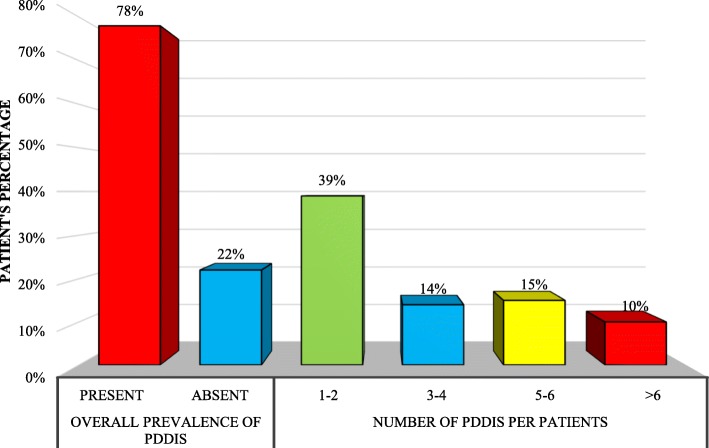
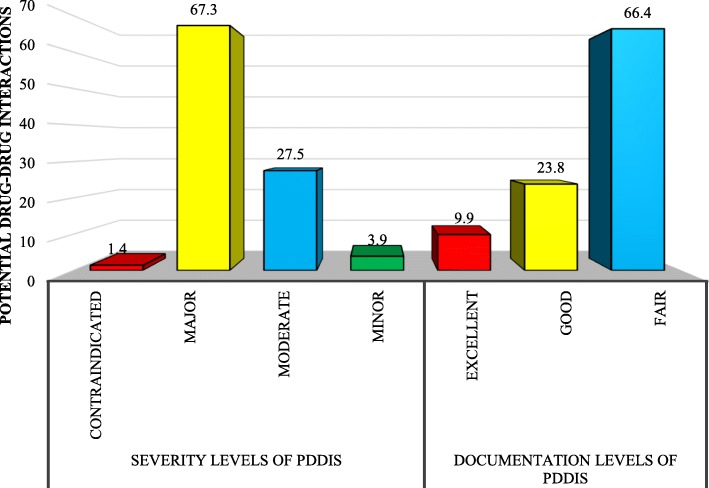
The overall prevalence of pDDIs was 78%, majority of patients had 1-2 pDDIs (39.2%). A total of 1843 pDDIs were detected. Major-pDDIs were most frequent (67.3%) whereas, a significant association of pDDIs was found between > 7 all prescribed drugs (p < 0.001) and ≥ 3 anti-cancer drugs (p < 0.001). Potential adverse outcomes of these interactions include reduced therapeutic effectiveness, QT interval prolongation, tendon rupture, bone marrow suppression and neurotoxicity.
Major finding of this study is the high prevalence of pDDIs signifying the need of strict patient monitoring for pDDIs among cancer patients. Patients at higher risk to pDDIs include those prescribed with > 7 any types of drugs or ≥ 3 anticancer drugs. Moreover, list of most frequently identified major and moderate interactions will aid health care professional in timely identification and prevention of pDDIs.
癌症患者常需同时接受多种药物治疗,以最大化疗效、治疗合并症并抵消化疗的不良反应。同时使用多种药物会增加药物相互作用的风险,导致治疗效果受损或治疗安全性降低。本研究旨在确定癌症患者潜在药物-药物相互作用(pDDIs)的发生率、水平和预测因素。
本横断面研究纳入了来自两家三级保健医院的 678 名接受化疗的患者。使用 Micromedex®数据库筛选患者的药物治疗方案以确定 pDDIs。采用逻辑回归分析确定 pDDIs 的预测因素。
pDDIs 的总体发生率为 78%,大多数患者有 1-2 种 pDDIs(39.2%)。共检测到 1843 种 pDDIs。主要 pDDIs 最常见(67.3%),且与>7 种所有处方药物(p<0.001)和≥3 种抗癌药物(p<0.001)之间存在显著相关性。这些相互作用的潜在不良后果包括治疗效果降低、QT 间期延长、肌腱断裂、骨髓抑制和神经毒性。
本研究的主要发现是 pDDIs 的高发生率,这表明需要对癌症患者进行严格的 pDDIs 监测。pDDIs 风险较高的患者包括同时接受>7 种任何类型药物或≥3 种抗癌药物治疗的患者。此外,最常识别出的主要和中度相互作用列表将有助于医疗保健专业人员及时识别和预防 pDDIs。