Department of Anesthesiology, Xiamen Haicang Hospital, Xiamen 361000, People's Republic of China.
Department of Anesthesiology, Women and Children's Hospital Affiliated to Xiamen University, Xiamen 361000, People's Republic of China.
Drug Des Devel Ther. 2020 Apr 3;14:1351-1362. doi: 10.2147/DDDT.S223742. eCollection 2020.
Kidney is sensitive to ischemia-reperfusion (I/R) injury because of its special structure and function. In this study, we aimed to explore the mechanism of desflurane (DFE) preconditioning effecting on renal I/R injury in rats.
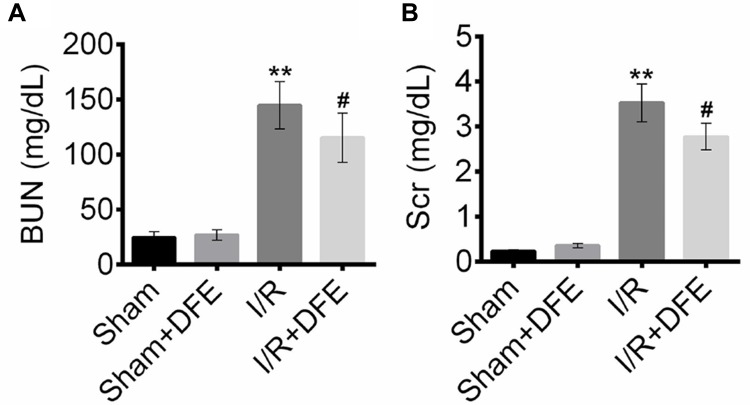
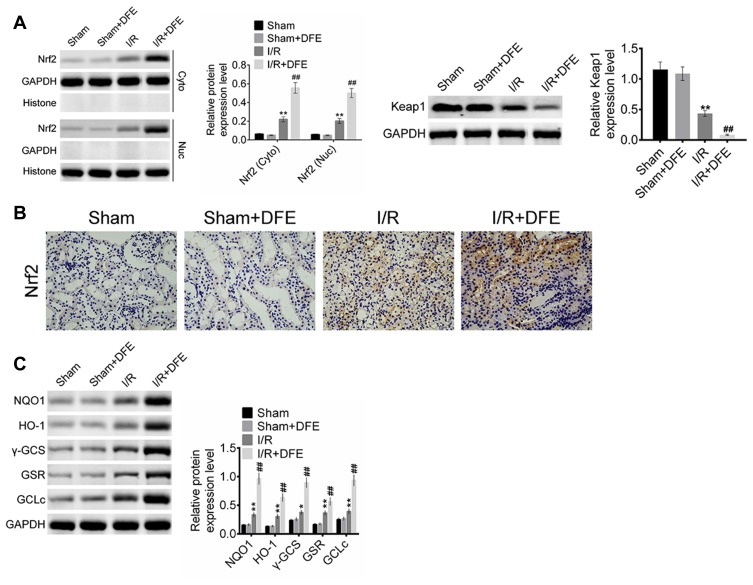
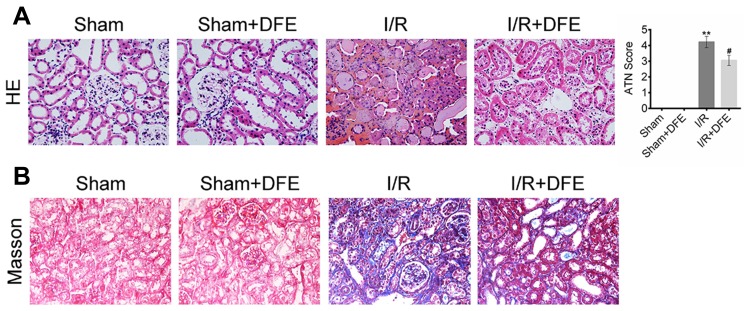
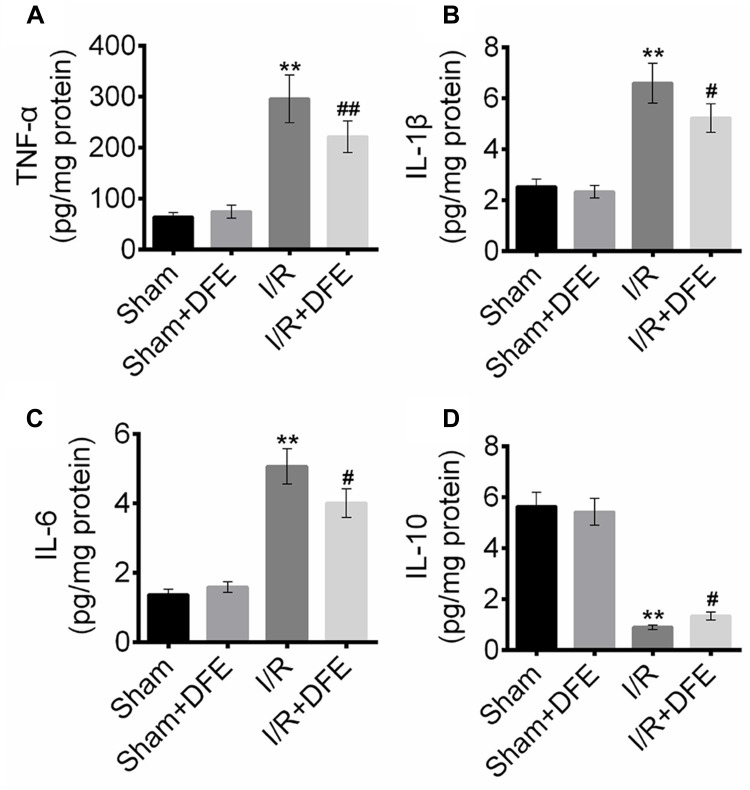
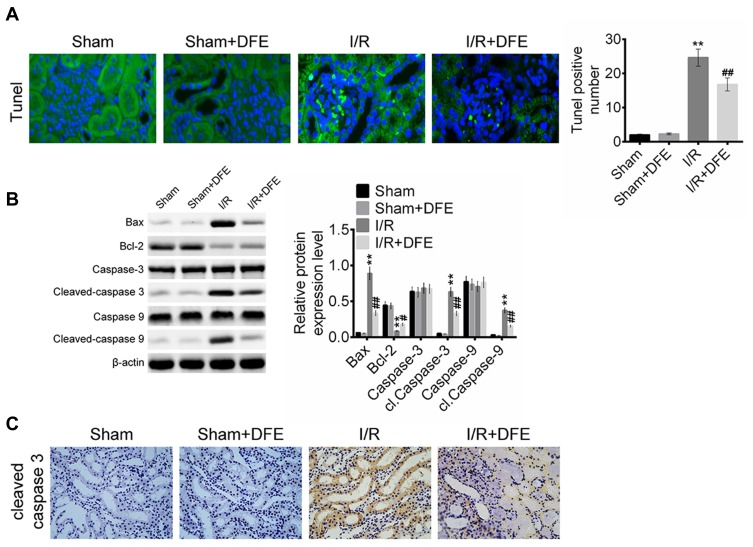
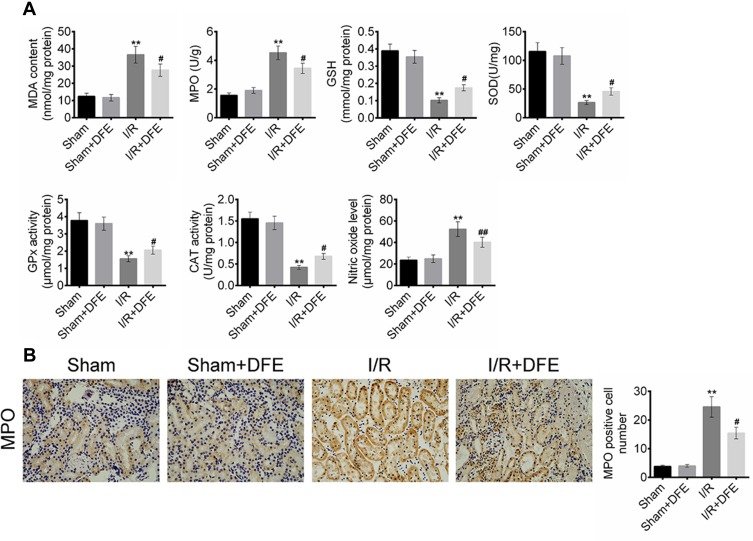
Renal I/R injury rats model was constructed, and the expressions of serum renal function parameters (blood urea nitrogen (BUN) and serum creatinine (SCr)) and lipid peroxidation-related factors were detected using corresponding commercial kits to assess the degrees of renal functional damage and oxidative stress. Hematoxylin--eosin (HE) staining and Masson trichrome staining were applied to measure the renal histologic damage. The expressions of inflammation-related factors were determined by ELISA assay. The cell apoptosis was analyzed using TUNEL, Western blot and immunohistochemistry (IHC). IHC was also used to detect the number of myeloperoxidase (MPO)-positive cells. The expressions of proteins associated with the Nrf2-Keap1-ARE pathway were assessed by Western blot and IHC.
DFE preconditioning inhibited I/R injury-induced BUN and SCr increase and renal histologic injury in rats. Also, DFE suppressed the inflammation, apoptosis and oxidative stress caused by renal I/R injury in vivo. In addition, DFE preconditioning repressed peroxide-related factors (MDA, MPO and NO) expressions and promoted antioxidant-related factors (GSH, SOD, GPx and CAT) expressions. In addition, DFE promoted Nrf2-Keap1-ARE-related proteins including Nrf2, NQO1, HO-1, γ-GCS, GSR and GCLc expressions.
DFE preconditioning protected the kidney as well as inhibited the inflammation, cell apoptosis and oxidative stress in renal I/R injury rats by activating the Nrf2-Keap1-ARE signaling pathway.
由于肾脏特殊的结构和功能,其对缺血再灌注(I/R)损伤敏感。本研究旨在探讨地氟醚(DFE)预处理对大鼠肾 I/R 损伤的作用机制。
构建肾 I/R 损伤大鼠模型,采用相应的商业试剂盒检测血清肾功能参数(血尿素氮(BUN)和血清肌酐(SCr))和脂质过氧化相关因子的表达,评估肾功能损伤和氧化应激程度。苏木精-伊红(HE)染色和 Masson 三色染色用于测量肾组织学损伤。酶联免疫吸附试验(ELISA)测定炎症相关因子的表达。TUNEL、Western blot 和免疫组织化学(IHC)分析细胞凋亡。IHC 还用于检测髓过氧化物酶(MPO)阳性细胞的数量。Western blot 和 IHC 评估与 Nrf2-Keap1-ARE 通路相关的蛋白表达。
DFE 预处理抑制了 I/R 损伤诱导的大鼠 BUN 和 SCr 升高和肾组织学损伤。此外,DFE 抑制了肾 I/R 损伤引起的体内炎症、细胞凋亡和氧化应激。此外,DFE 预处理抑制了过氧化物相关因子(MDA、MPO 和 NO)的表达,促进了抗氧化相关因子(GSH、SOD、GPx 和 CAT)的表达。此外,DFE 促进了 Nrf2-Keap1-ARE 相关蛋白的表达,包括 Nrf2、NQO1、HO-1、γ-GCS、GSR 和 GCLc。
DFE 预处理通过激活 Nrf2-Keap1-ARE 信号通路,保护肾脏,抑制肾 I/R 损伤大鼠的炎症、细胞凋亡和氧化应激。