He Shasha, Guo Yuhong, Zhao Jingxia, Xu Xiaolong, Wang Ning, Liu Qingquan
Beijing Hospital of Traditional Chinese Medicine, Capital Medical University, Beijing, China.
Beijing Institute of Traditional Chinese Medicine, Beijing, China.
Front Pharmacol. 2020 Apr 3;11:376. doi: 10.3389/fphar.2020.00376. eCollection 2020.
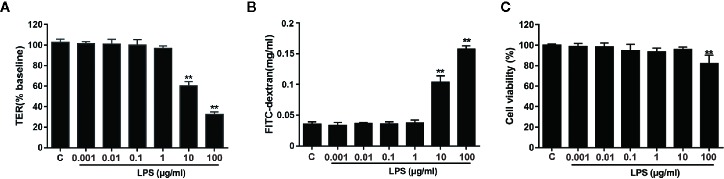
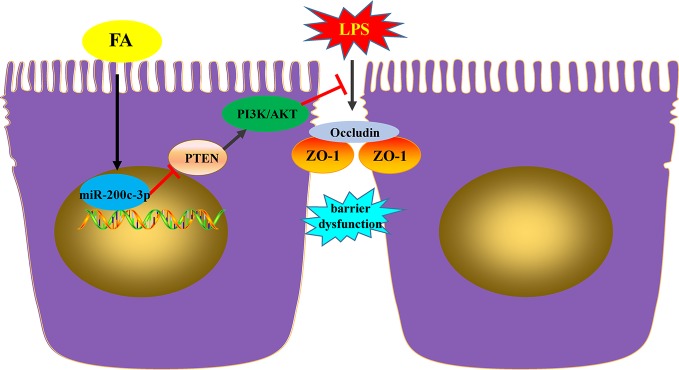
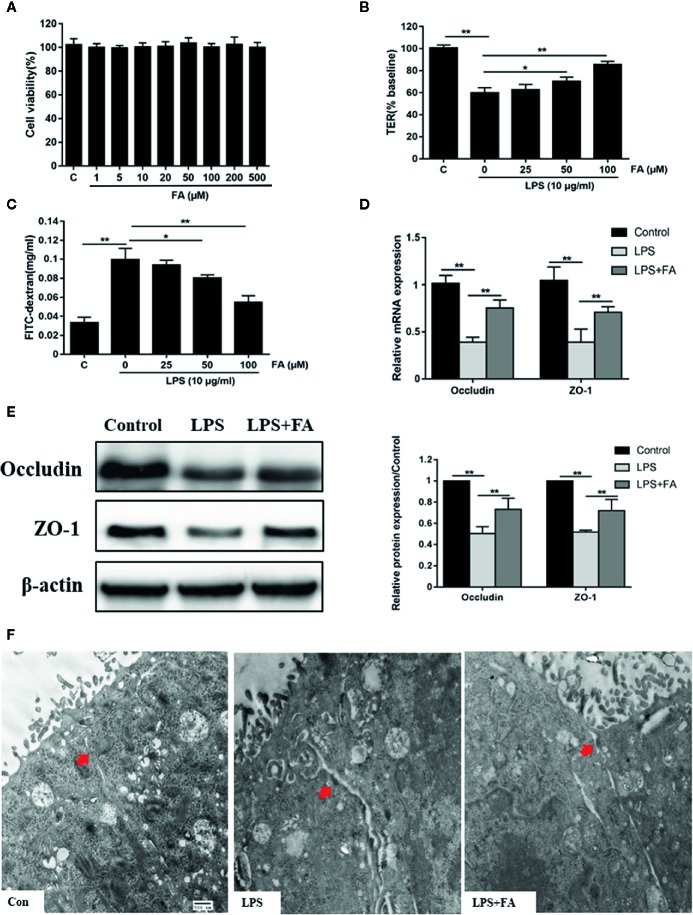
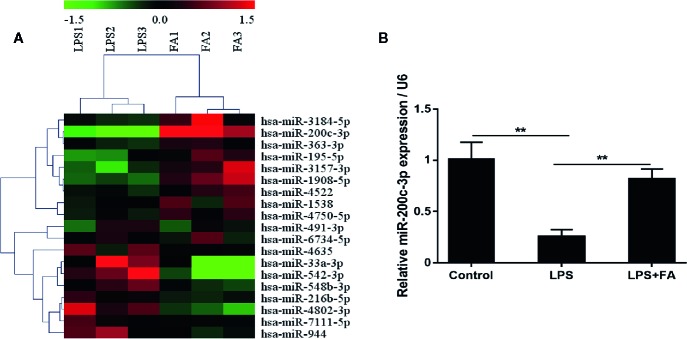
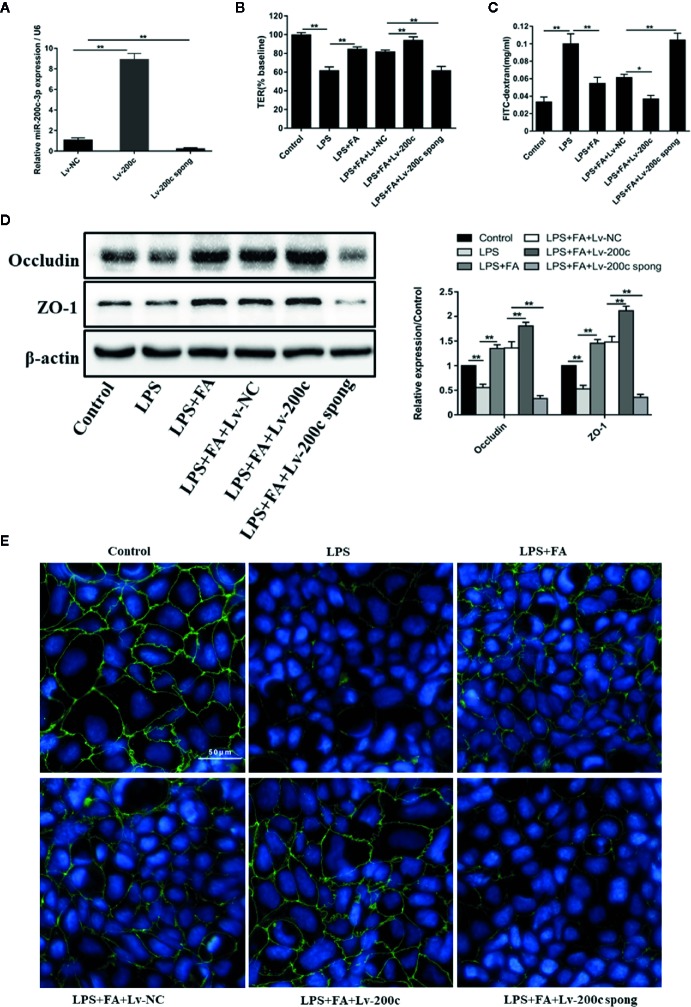
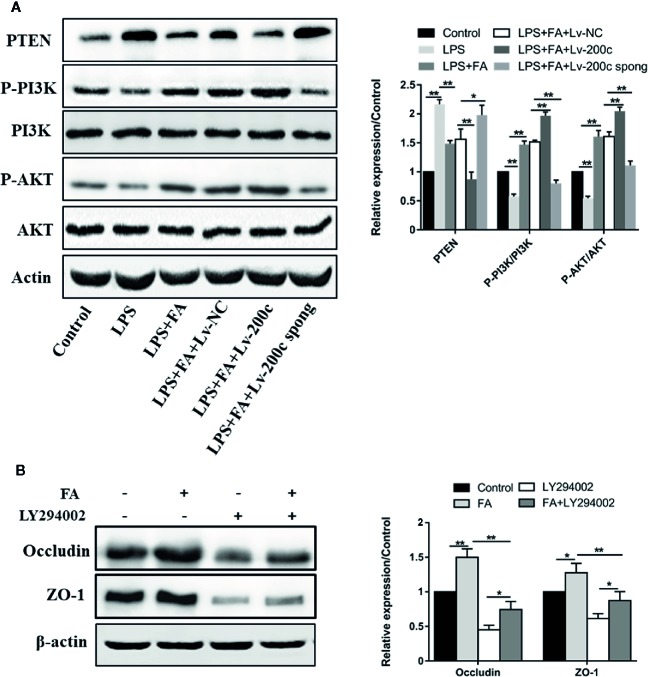
Intestinal barrier dysfunction is an important clinical problem in various acute and chronic pathological conditions. Ferulic acid (FA) can attenuate the intestinal epithelial barrier dysfunction, however, the underlying mechanism remains unclear. The present study aimed to uncover the protective effect of FA on intestinal epithelial barrier dysfunction in a Caco-2 cell model of lipopolysaccharide (LPS) stimulation and the underlying mechanism. Caco-2 cells were pretreated with FA and then exposed to LPS stimulation. The barrier function of Caco-2 cells was evaluated by measuring trans-epithelial resistance (TER) and 4-kDa fluorescein isothiocyanate (FITC)-dextran (FD4) flux, and analyzing the tight junction protein expression and structure. The results showed that decreased TER and increased FITC-FD4 flux were observed in Caco-2 cells stimulated with LPS, but these effects were attenuated by FA pretreatment. FA pretreatment inhibited LPS-induced decrease in occludin and ZO-1 mRNA and protein expression. LPS stimulation decreased miR-200c-3p expression, whereas this decrease was inhibited by FA pretreatment. Furthermore, overexpression of miR-200c-3p strengthened the protective effects of FA on LPS-induced Caco-2 cell barrier dysfunction by decreasing epithelial permeability, increasing occludin and ZO-1 protein expression, and maintaining of ZO-1 protein distribution, while suppression of miR-200c-3p reversed the protective effects of FA. LPS treatment increased the expression of PTEN protein and decreased expression of phosphorylated PI3K and AKT proteins. However, pretreatment of FA inhibited expression of PTEN protein and promoted activation of PI3K/AKT signaling pathway in the LPS-treated Caco-2 cells, and this regulatory effect of FA on the PTEN/PI3K/AKT signaling pathway was strengthened or weakened by miR-200c-3p overexpression or suppression, respectively. Our findings suggested that in Caco-2 cells, FA promotes activation of PI3K/AKT pathway by miR-200c-3p-mediated suppression of the negative mediator PTEN, which, in turn, maintains TJ function and thus ameliorates LPS-induced intestinal epithelial barrier dysfunction.
肠屏障功能障碍是各种急慢性病理状态下的一个重要临床问题。阿魏酸(FA)可减轻肠上皮屏障功能障碍,但其潜在机制尚不清楚。本研究旨在揭示FA对脂多糖(LPS)刺激的Caco-2细胞模型中肠上皮屏障功能障碍的保护作用及其潜在机制。将Caco-2细胞用FA预处理,然后暴露于LPS刺激。通过测量跨上皮电阻(TER)和4 kDa异硫氰酸荧光素(FITC)-葡聚糖(FD4)通量,并分析紧密连接蛋白的表达和结构,评估Caco-2细胞的屏障功能。结果显示,在用LPS刺激的Caco-2细胞中观察到TER降低和FITC-FD4通量增加,但FA预处理减弱了这些效应。FA预处理抑制了LPS诱导的闭合蛋白和ZO-1 mRNA及蛋白表达的降低。LPS刺激降低了miR-200c-3p的表达,而FA预处理抑制了这种降低。此外,miR-200c-3p的过表达通过降低上皮通透性、增加闭合蛋白和ZO-1蛋白表达以及维持ZO-1蛋白分布,增强了FA对LPS诱导的Caco-2细胞屏障功能障碍的保护作用,而抑制miR-200c-3p则逆转了FA的保护作用。LPS处理增加了PTEN蛋白的表达,降低了磷酸化PI3K和AKT蛋白的表达。然而,FA预处理抑制了LPS处理的Caco-2细胞中PTEN蛋白的表达,并促进了PI3K/AKT信号通路的激活,FA对PTEN/PI3K/AKT信号通路的这种调节作用分别通过miR-200c-3p的过表达或抑制而增强或减弱。我们的研究结果表明,在Caco-2细胞中,FA通过miR-200c-3p介导抑制负性介质PTEN来促进PI3K/AKT通路的激活,进而维持紧密连接功能,从而改善LPS诱导的肠上皮屏障功能障碍。