Martin-Ordas Gema
Department of Psychology, University of Stirling, Stirling, United Kingdom.
Front Psychol. 2020 Apr 3;11:635. doi: 10.3389/fpsyg.2020.00635. eCollection 2020.
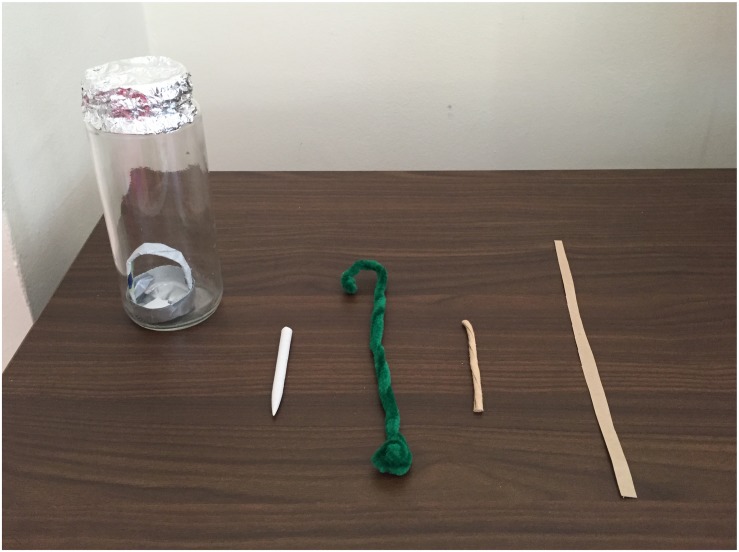
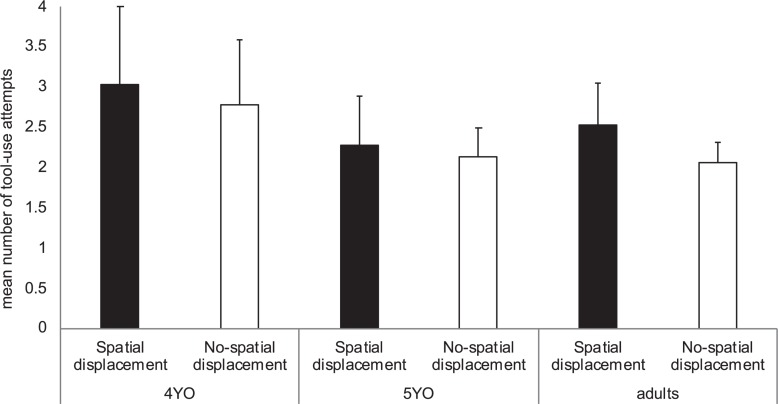
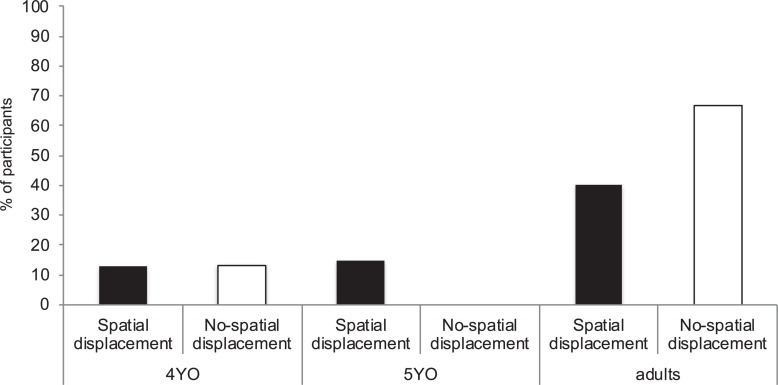
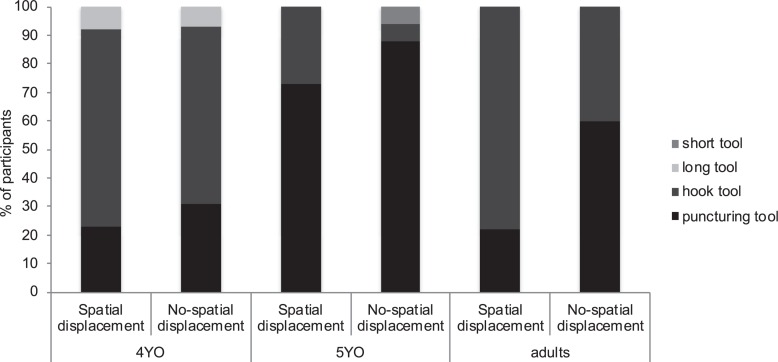
The ability to think about and plan for the future is a critical cognitive skill for our daily life. There is ongoing debate about whether other animals possess future thinking. Part of the difficulty in resolving this debate is that there is not a definite methodology that allow us to conclude that animals (and human children) are truly thinking about a future event. Research with humans-both children and adults- will benefit the field of comparative psychology by providing information about the range of humans' responses when they are faced with problems similar to those presented to other animals. Inspired by a problem that chimpanzees experienced in the wild, children of 4 and 5 years of age and young adults were presented with a situation in which they were expected to select two tools in order to obtain a reward. More older children than 4 years old successfully obtained the reward. Adults also succeeded at solving the problem. However, both children and adults struggled to select the two correct tools any tool-use action was executed. While children's performance is discussed in the context of temporal components required to envisage future events, adults' performance is interpreted in the context of cognitive effort. These findings link developmental and adult cognition with comparative psychology.
思考未来并为未来做规划的能力是我们日常生活中一项至关重要的认知技能。关于其他动物是否具备未来思维,目前仍在争论之中。解决这一争论的部分困难在于,没有一种明确的方法能让我们断定动物(以及人类儿童)真的在思考未来事件。对人类(包括儿童和成年人)的研究,通过提供有关人类在面对与其他动物所面临问题相似的情况时的反应范围的信息,将有助于比较心理学领域。受黑猩猩在野外遇到的一个问题启发,4岁和5岁的儿童以及年轻人被置于一种情境中,要求他们选择两种工具以获得奖励。4岁以上的大龄儿童比4岁儿童更成功地获得了奖励。成年人也成功解决了这个问题。然而,在执行任何工具使用行动之前,儿童和成年人都难以选择正确的两种工具。虽然儿童的表现是在设想未来事件所需的时间成分的背景下进行讨论的,但成年人的表现是在认知努力的背景下进行解释的。这些发现将发展认知和成人认知与比较心理学联系起来。