Lin Wanzun, Xu Yanyan, Chen Xiaochuan, Liu Jun, Weng Youliang, Zhuang Qingyang, Lin Feifei, Huang Zongwei, Wu Shihong, Ding Jianming, Chen Long, Qiu Xianxin, Zhang Lurong, Wu Junxin, Lin Duo, Qiu Sufang
Department of Radiation Oncology, Fujian Cancer Hospital & Fujian Medical University Cancer Hospital, Fuzhou, China.
Department of Obstetrics and Gynecology, Shanghai General Hospital, Shanghai Jiao Tong University School of Medicine, Shanghai, China.
Theranostics. 2020 Mar 26;10(11):4871-4884. doi: 10.7150/thno.43539. eCollection 2020.
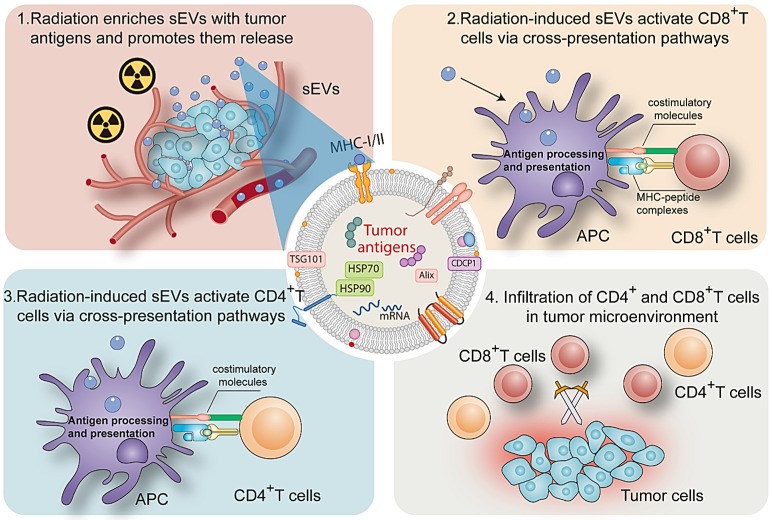
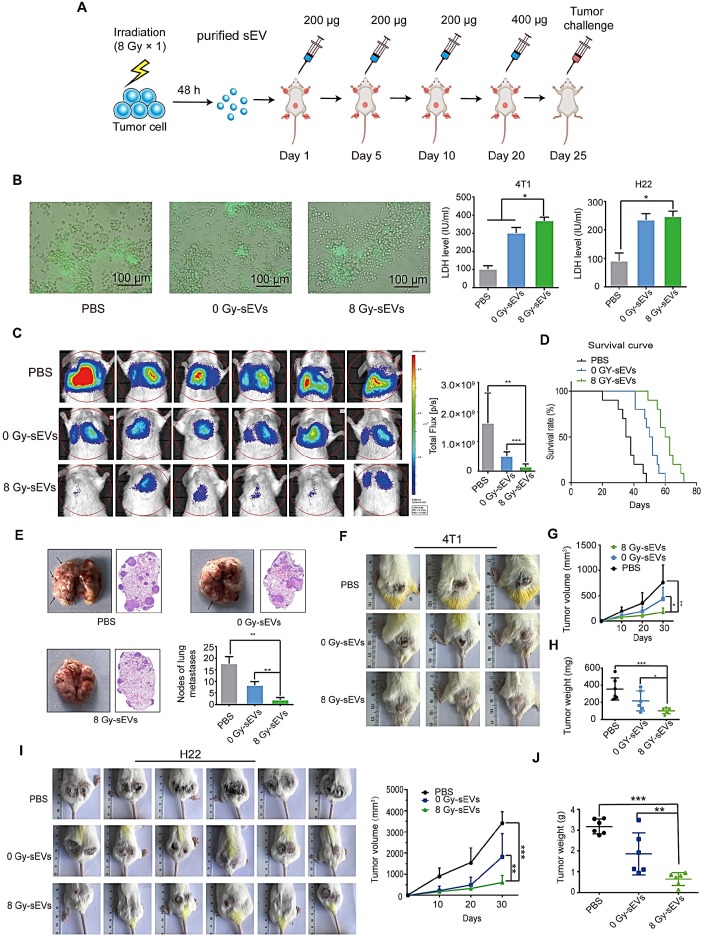
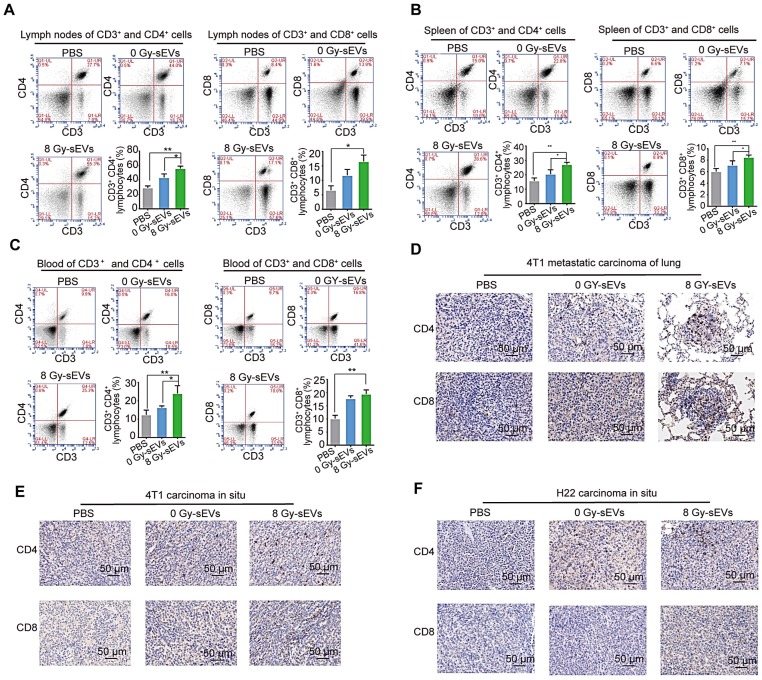
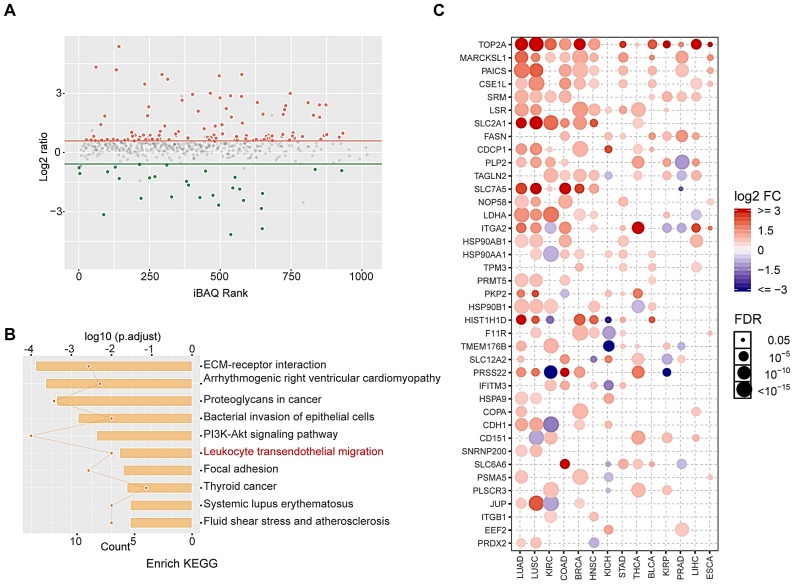
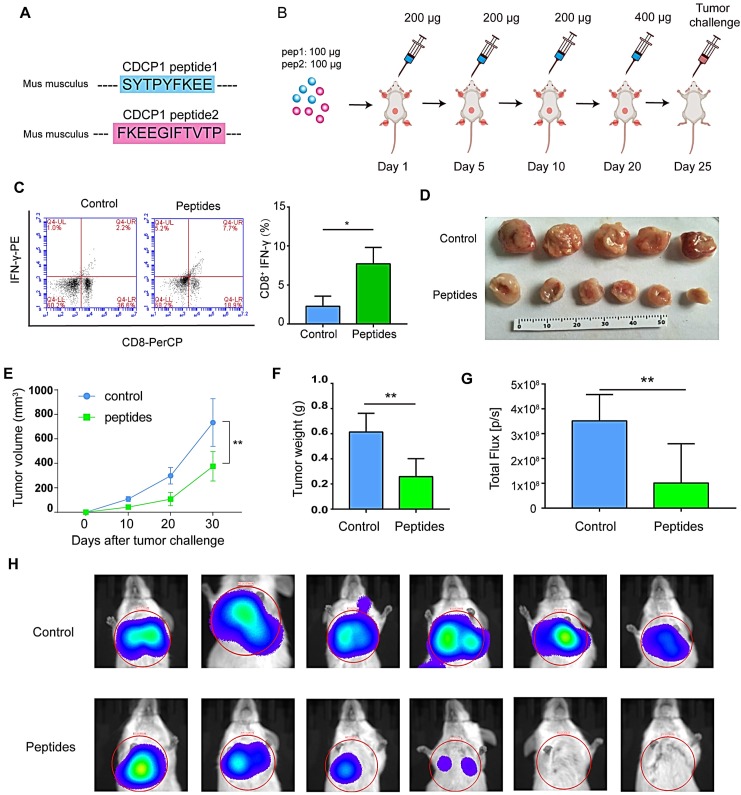
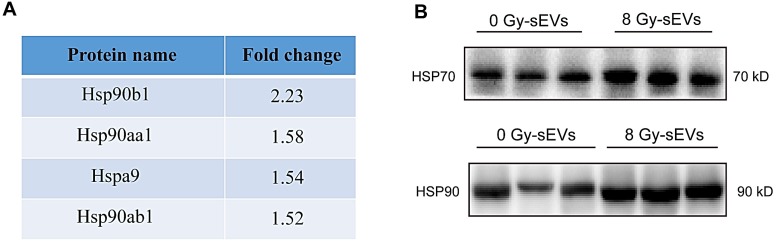
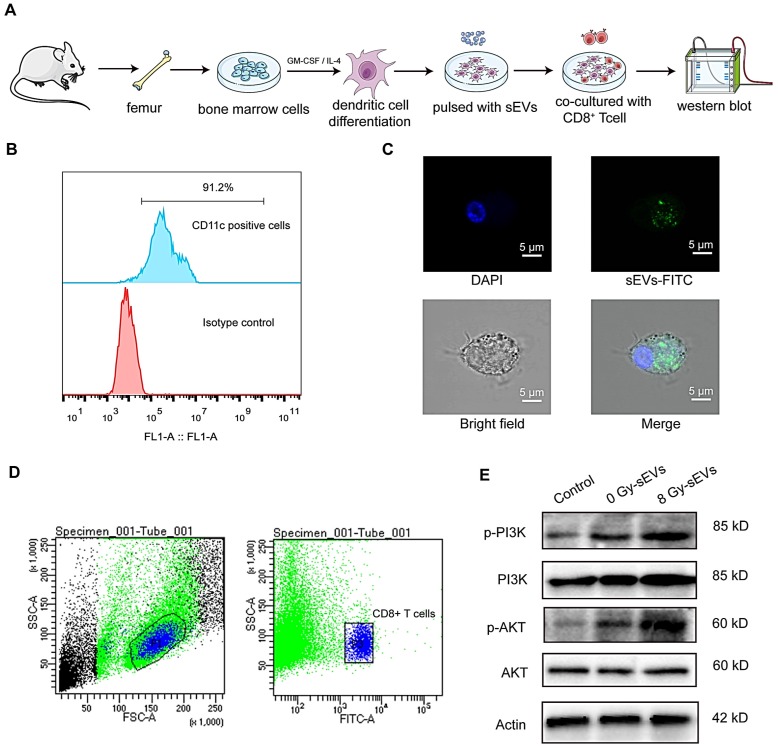
: Accumulating evidence supports the importance of radiation therapy in the induction of antitumor immunity. Small extracellular vesicles (sEVs) play essential roles in tumor antigen loading and delivery. However, the role of sEVs in radiation-induced antitumor immunity remains unclear. It is therefore important to determine the role and regulatory mechanisms of sEVs in radiation-induced immunity. : Tumor cells were irradiated (8 Gy), and sEVs were purified via ultracentrifugation. Primary tumor and experimental lung metastasis models were established in mice to evaluate antitumor immunity triggered by immunization with sEVs. Proteomic and bioinformatic analyses were performed to identify altered cargos in sEVs induced by radiation. Peptides derived from up-regulated proteins in sEVs were designed and synthesized as vaccines according to major histocompatibility complex (MHC) I binding and immunogenicity. : Here, we demonstrated that sEVs derived from irradiated tumor cells could trigger antitumor immunity against primary tumor and experimental lung metastasis by enhancing CD8 and CD4 T cell infiltration. Radiation may also enrich sEVs with tumor antigens and heat-shock proteins. Furthermore, CUB domain-containing protein 1 (CDCP1) derived from radiation-induced sEVs was identified as a novel tumor-associated antigen and developed as a peptide vaccine that may generate antitumor immune responses. : Our results demonstrate that the use of sEVs secreted by irradiated tumor cells constitutes an efficient approach for tumor antigen delivery and presentation and highlight the role of sEVs in radiation-triggered antitumor immunity.
越来越多的证据支持放射治疗在诱导抗肿瘤免疫中的重要性。小细胞外囊泡(sEVs)在肿瘤抗原的装载和传递中发挥着重要作用。然而,sEVs在辐射诱导的抗肿瘤免疫中的作用仍不清楚。因此,确定sEVs在辐射诱导免疫中的作用和调控机制很重要。
肿瘤细胞接受8 Gy照射,通过超速离心纯化sEVs。在小鼠中建立原发性肿瘤和实验性肺转移模型,以评估用sEVs免疫引发的抗肿瘤免疫。进行蛋白质组学和生物信息学分析,以鉴定辐射诱导的sEVs中改变的货物。根据主要组织相容性复合体(MHC)I结合和免疫原性,设计并合成源自sEVs中上调蛋白的肽作为疫苗。
在这里,我们证明源自照射肿瘤细胞的sEVs可以通过增强CD8和CD4 T细胞浸润来触发针对原发性肿瘤和实验性肺转移的抗肿瘤免疫。辐射还可能使sEVs富含肿瘤抗原和热休克蛋白。此外,源自辐射诱导的sEVs的含CUB结构域蛋白1(CDCP1)被鉴定为一种新型肿瘤相关抗原,并开发为一种可能产生抗肿瘤免疫反应的肽疫苗。
我们的结果表明,使用照射肿瘤细胞分泌的sEVs构成了一种有效的肿瘤抗原递送和呈递方法,并突出了sEVs在辐射触发的抗肿瘤免疫中的作用。