Al-Kathiri Lutfi, Al-Najjar Tasneem, Al-Asmaili Abla
Dermatology Unit,Sultan Qaboos Hospital, Salalah, Oman.
Dermtology Department, Al Nahdha Hospital, Muscat, Oman.
Oman Med J. 2020 Apr 14;35(2):e111. doi: 10.5001/omj.2020.29. eCollection 2020 Mar.
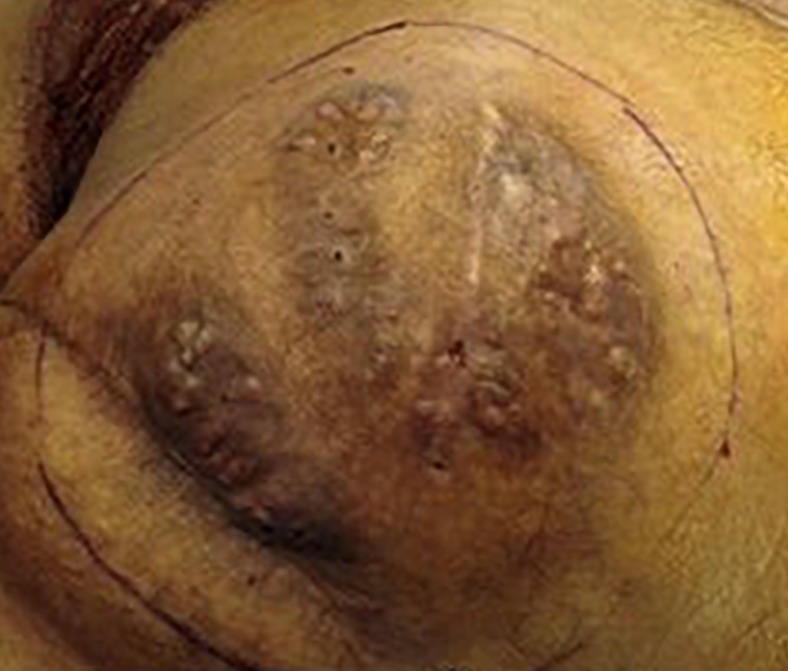
Mycetoma, formerly known as Madura foot, is a chronic, localized, gradually increasing in size, granulomatous exogenous infection of the skin and subcutaneous tissue with risks of bone and visceral involvement. It is unevenly found worldwide but it is endemic in tropical and subtropical countries. Two groups of mycetoma exist with similar clinical presentation; eumycetoma due to true fungi, and actinomycetoma due to aerobic bacteria from actinomycomycetes species. Mycetoma is difficult to treat and can lead to serious sequelae including disability, deformity and even death, so early diagnosis and treatment can elicit good results. The diagnosis is made based on a clinical picture of a triad of painless tumefaction, draining sinuses and granules of the causative micro-organism along with direct microscopic examination and histological study. It is very important to distinguish between actinomycetoma and eumycetoma for selecting the therapy. Actinomycetomas generally respond well to antimicrobials compared with eumycetomas, which respond poorly and need a combination of medical and surgical therapy. Bone involvement makes treatment more difficult, keeping surgical amputation as the only choice of treatment. Despite the possibility of a cure with medical treatment alone, treatment failure may occur even with long-term therapy, which necessitates adding surgical intervention to achieve cure. We report a case of gluteal actinomycetoma in an Omani man, treated successfully by combined medical treatment and surgical excision with graft reconstruction after failure of different regimens of antimicrobials.
足菌肿,以前称为马杜拉足,是一种慢性、局限性、大小逐渐增加的皮肤和皮下组织肉芽肿性外源性感染,有累及骨骼和内脏的风险。它在全球分布不均,但在热带和亚热带国家呈地方性流行。存在两组临床表现相似的足菌肿;由真正真菌引起的真菌性足菌肿,以及由放线菌属需氧菌引起的放线菌性足菌肿。足菌肿难以治疗,可导致严重后遗症,包括残疾、畸形甚至死亡,因此早期诊断和治疗可取得良好效果。诊断基于无痛性肿块、引流窦道和致病微生物颗粒三联征的临床表现,以及直接显微镜检查和组织学研究。区分放线菌性足菌肿和真菌性足菌肿对于选择治疗方法非常重要。与真菌性足菌肿相比,放线菌性足菌肿通常对抗菌药物反应良好,真菌性足菌肿反应较差,需要药物和手术联合治疗。骨骼受累使治疗更加困难,手术截肢成为唯一的治疗选择。尽管单独药物治疗有可能治愈,但即使长期治疗也可能出现治疗失败,这就需要增加手术干预以实现治愈。我们报告一例阿曼男性臀肌放线菌性足菌肿病例,在不同抗菌方案治疗失败后,通过药物治疗和手术切除联合植皮重建成功治愈。