Fu Xiaorui, Duanmu Jinzhong, Li Taiyuan, Jiang Qunguang
Queen Mary School of Medical Department, Nanchang University, Nanchang, Jiangxi, China.
Department of Gastrointestinal Surgery, The First Affiliated Hospital of Nanchang University, Nanchang, Jiangxi, China.
PeerJ. 2020 Apr 10;8:e8877. doi: 10.7717/peerj.8877. eCollection 2020.
Colon adenocarcinoma (COAD) is the most common colon cancer exhibiting high mortality. Due to their association with cancer progression, long noncoding RNAs (lncRNAs) are now being used as prognostic biomarkers. In the present study, we used relevant clinical information and expression profiles of lncRNAs originating from The Cancer Genome Atlas database, aiming to construct a prognostic lncRNA signature to estimate the prognosis of patients.
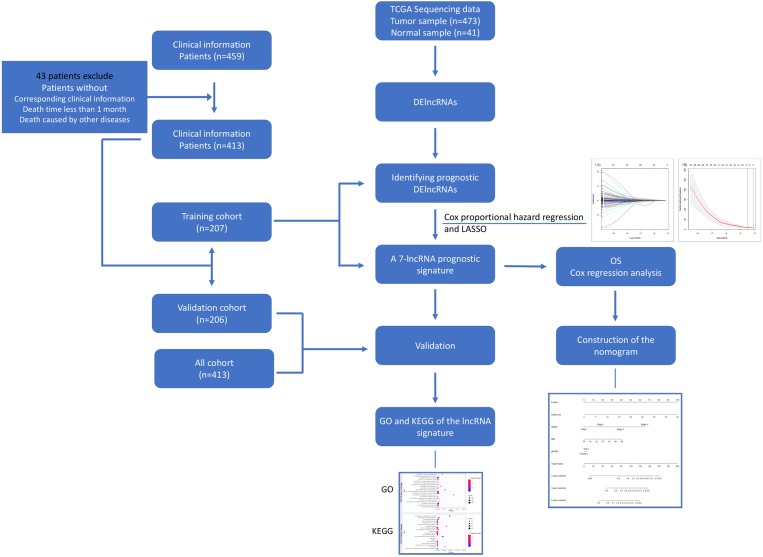
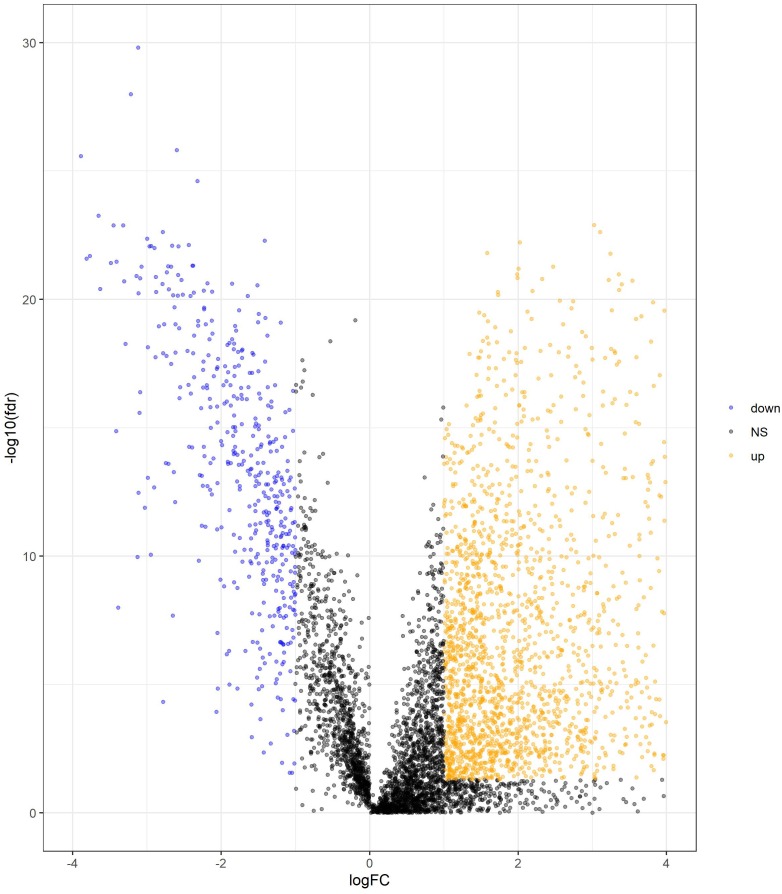
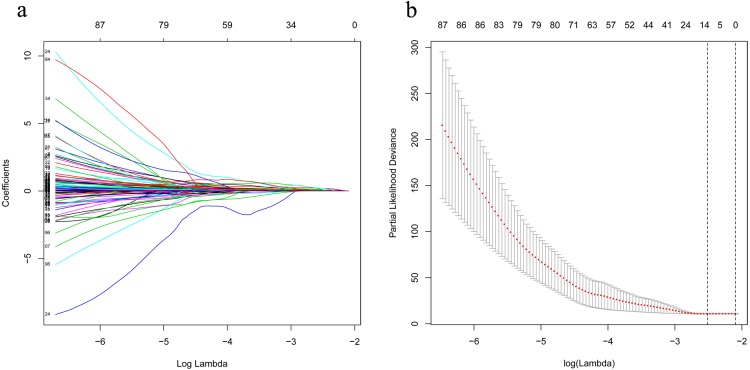
The samples were randomly spilt into training and validation cohorts. In the training cohort, prognosis-related lncRNAs were selected from differentially expressed lncRNAs using the univariate Cox analysis. Furthermore, the least absolute shrinkage and selection operator (LASSO) regression and multivariate Cox analysis were employed for identifying prognostic lncRNAs. The prognostic signature was constructed by these lncRNAs.
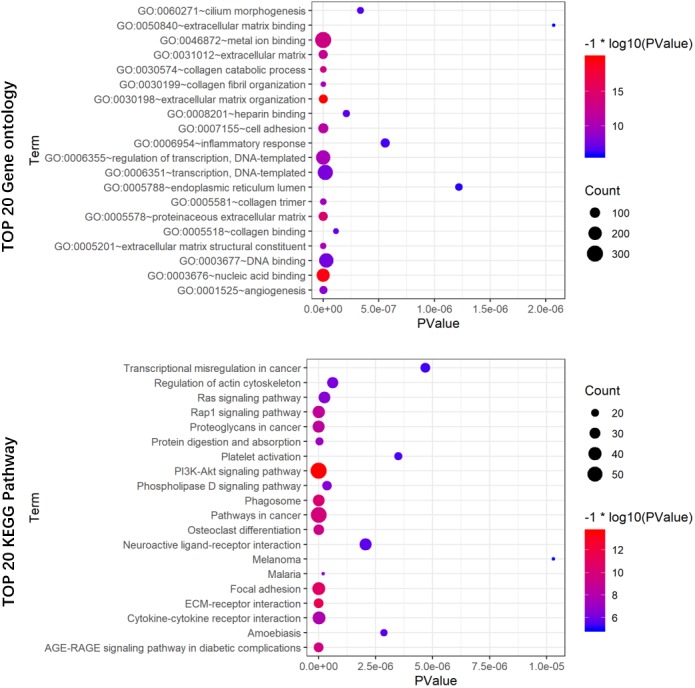
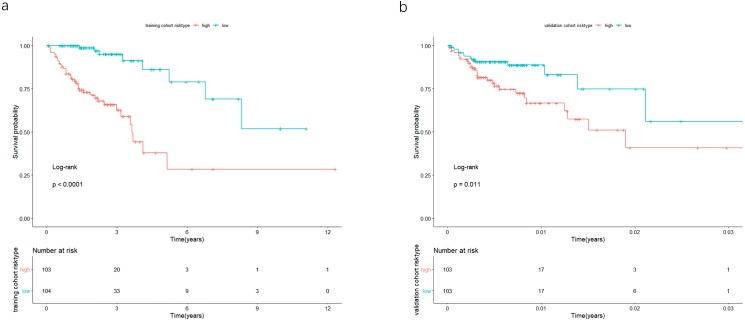
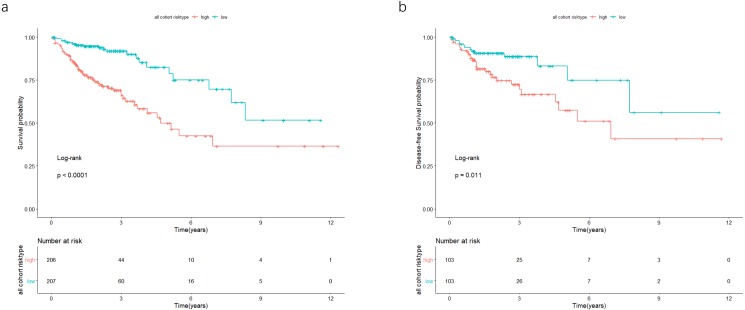
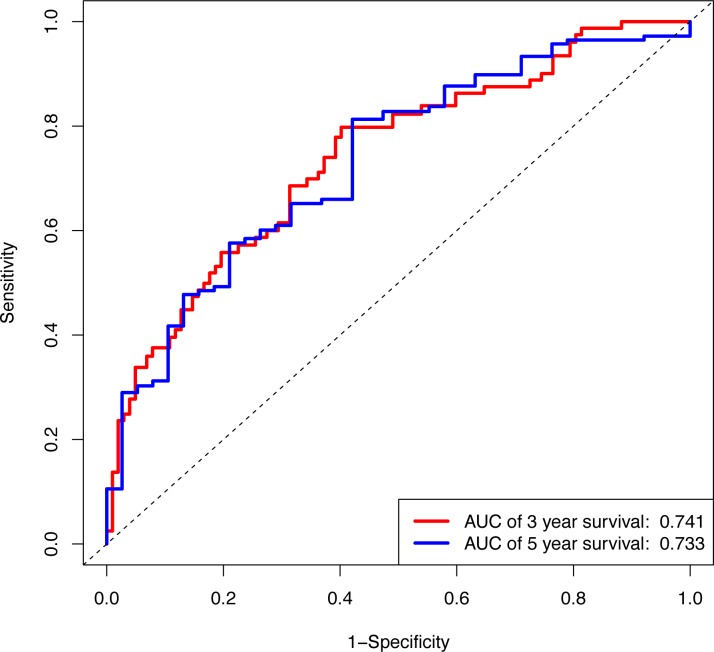
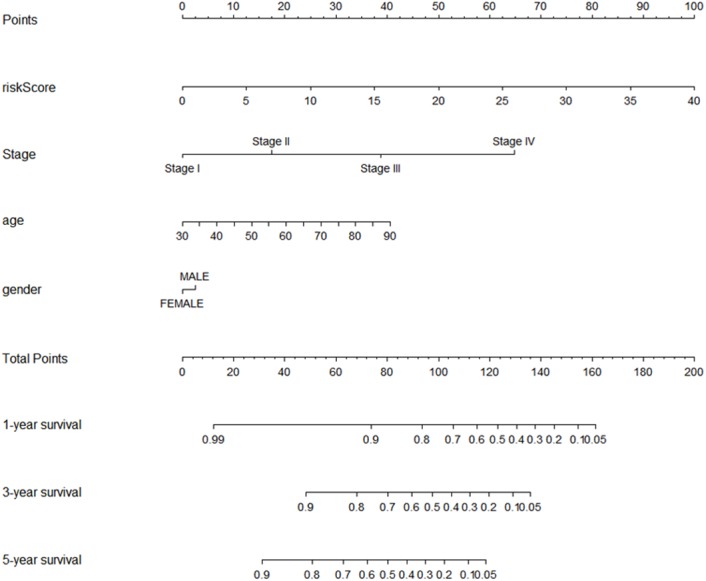
The prognostic model was able to calculate each COAD patient's risk score and split the patients into groups of low and high risks. Compared to the low-risk group, the high-risk group had significant poor prognosis. Next, the prognostic signature was validated in the validation, as well as all cohorts. The receiver operating characteristic (ROC) curve and c-index were determined in all cohorts. Moreover, these prognostic lncRNA signatures were combined with clinicopathological risk factors to construct a nomogram for predicting the prognosis of COAD in the clinic. Finally, seven lncRNAs (CTC-273B12.10, AC009404.2, AC073283.7, RP11-167H9.4, AC007879.7, RP4-816N1.7, and RP11-400N13.2) were identified and validated by different cohorts. The Kyoto Encyclopedia of Genes and Genomes analysis of the mRNAs co-expressed with the seven prognostic lncRNAs suggested four significantly upregulated pathways, which were AGE-RAGE, focal adhesion, ECM-receptor interaction, and PI3K/Akt signaling pathways.
Thus, our study verified that the seven lncRNAs mentioned can be used as biomarkers to predict the prognosis of COAD patients and design personalized treatments.
结肠腺癌(COAD)是最常见的结肠癌,死亡率很高。由于长链非编码RNA(lncRNAs)与癌症进展相关,目前正被用作预后生物标志物。在本研究中,我们使用来自癌症基因组图谱数据库的相关临床信息和lncRNAs表达谱,旨在构建一个预后lncRNA特征来评估患者的预后。
将样本随机分为训练组和验证组。在训练组中,使用单变量Cox分析从差异表达的lncRNAs中筛选出与预后相关的lncRNAs。此外,采用最小绝对收缩和选择算子(LASSO)回归和多变量Cox分析来识别预后lncRNAs。由这些lncRNAs构建预后特征。
该预后模型能够计算每个COAD患者的风险评分,并将患者分为低风险组和高风险组。与低风险组相比,高风险组的预后明显较差。接下来,在验证组以及所有队列中对预后特征进行了验证。在所有队列中确定了受试者工作特征(ROC)曲线和c指数。此外,将这些预后lncRNA特征与临床病理风险因素相结合,构建了一个用于临床预测COAD预后的列线图。最后,七个lncRNAs(CTC-273B12.10、AC009404.2、AC073283.7、RP11-167H9.4、AC007879.7、RP4-816N1.7和RP11-400N13.2)被不同队列鉴定并验证。对与这七个预后lncRNAs共表达的mRNA进行京都基因与基因组百科全书分析,发现四个显著上调的通路,即AGE-RAGE、粘着斑、ECM-受体相互作用和PI3K/Akt信号通路。
因此,我们的研究证实,上述七个lncRNAs可作为生物标志物来预测COAD患者的预后并设计个性化治疗方案。