Tu Ethan, Pearlmutter Paul, Tiangco Michelle, Derose Gia, Begdache Lina, Koh Ahyeon
Department of Biomedical Engineering, Binghamton University-State University of New York, Binghamton, New York 13902, United States.
Department of Biomedical Engineering, Michigan State University, East Lansing, Michigan 48824, United States.
ACS Omega. 2020 Mar 31;5(14):8211-8218. doi: 10.1021/acsomega.0c00498. eCollection 2020 Apr 14.
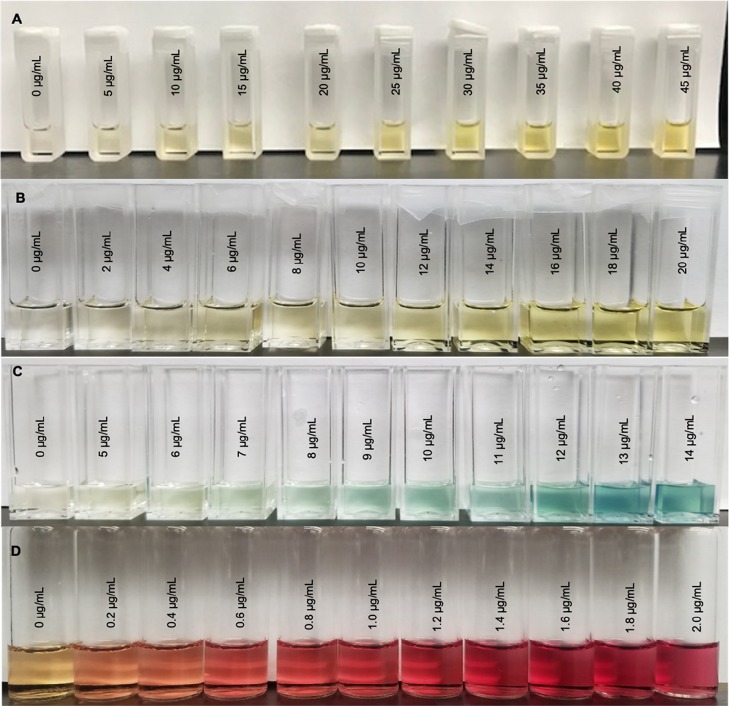
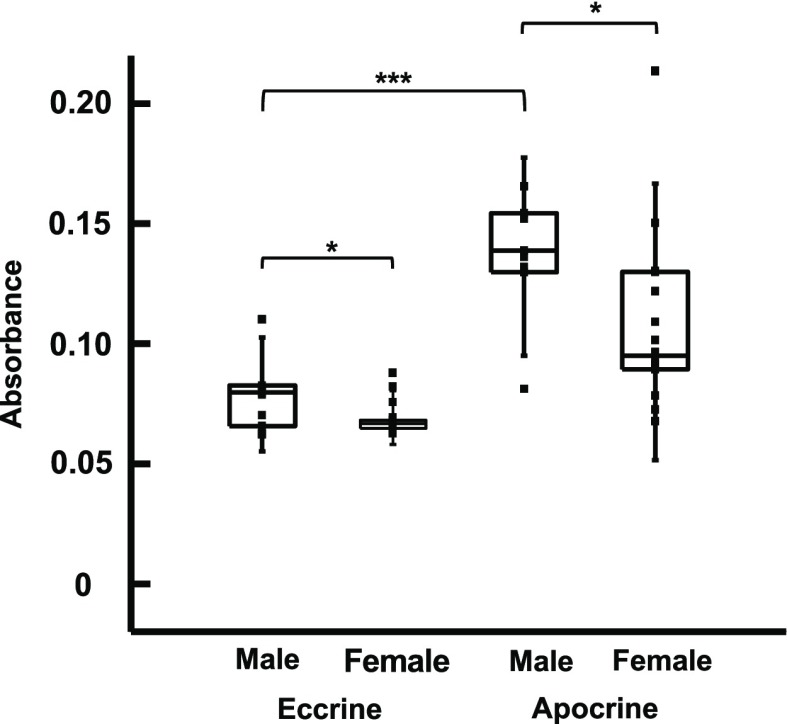
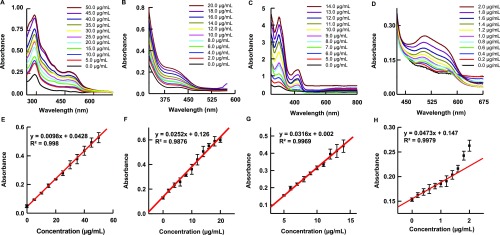
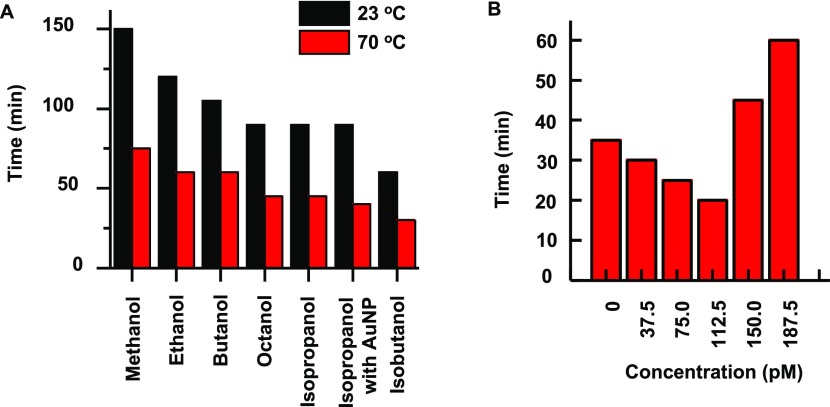
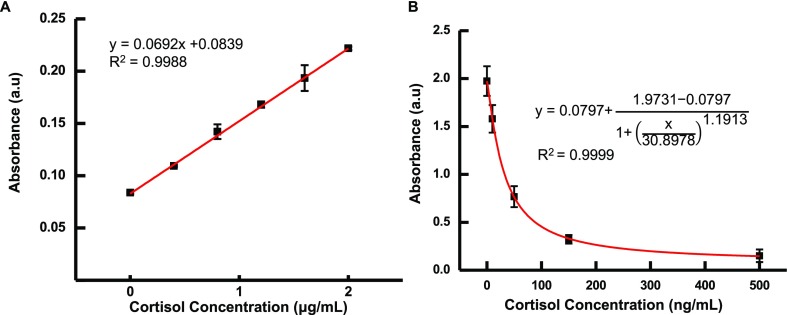
Colorimetric analysis, which relies on a chemical reaction to facilitate a change in visible color, is a great strategy for detecting cortisol, which is necessary to diagnose and manage the wide variety of diseases related to the hormone, because it is simple in design, inexpensive, and reliable as a standard cortisol analysis technique. In this study, four different colorimetric cortisol analyses that use various chromogens, which include sulfuric acid, Porter-Silber reagent, Prussian blue, and blue tetrazolium, are studied. Modifications to the classic Porter-Silber method are made by increasing the carbon content of the alcohol and adding gold nanoparticles, which result in a twofold increase in reaction rate and a slight decrease in the limit of detection (LoD). After a comparison of the reaction rate, LoD, dynamic range, characteristic peaks, and color stability of all methods, blue tetrazolium demonstrates a low LoD (97 ng/mL), broad dynamic range (0.05-2 μg/mL), and quick reaction rate (color development as fast as 10 min), which are well within the requirements for human biofluids. Cortisol in artificial saliva and sweat and in human sweat was determined while confirming that no excipients or other biomarkers interfered with the reactions. Twenty-one human sweat samples were tested using blue tetrazolium and revealed a significant difference between male and female apocrine cortisol concentrations and showed a highly significant difference between apocrine and eccrine cortisol concentrations. Colorimetric methods of cortisol can compete with existing electrochemical sensors because of their similar accuracy and detection range in certain wearable biosensor applications. The simplicity of colorimetric methods advances potential applications in skin-interfaced bio-electronics and point-of-care devices.
比色分析依靠化学反应促使可见颜色发生变化,是检测皮质醇的一种很好的策略。皮质醇对于诊断和管理与该激素相关的多种疾病至关重要,因为其设计简单、成本低廉,并且作为一种标准的皮质醇分析技术很可靠。在本研究中,对四种不同的比色皮质醇分析方法进行了研究,这些方法使用了各种显色剂,包括硫酸、波特 - 西尔伯试剂、普鲁士蓝和蓝四氮唑。对经典的波特 - 西尔伯方法进行了改进,增加了醇的碳含量并添加了金纳米颗粒,这使得反应速率提高了两倍,检测限(LoD)略有降低。在比较了所有方法的反应速率、LoD、动态范围、特征峰和颜色稳定性之后,蓝四氮唑显示出低LoD(97 ng/mL)、宽动态范围(0.05 - 2 μg/mL)和快速反应速率(显色快至10分钟),这些都完全符合人体生物流体的要求。在确认没有赋形剂或其他生物标志物干扰反应的情况下,测定了人工唾液和汗液以及人体汗液中的皮质醇。使用蓝四氮唑对21份人体汗液样本进行了测试,结果显示男性和女性顶泌汗腺皮质醇浓度之间存在显著差异,并且顶泌汗腺和小汗腺皮质醇浓度之间存在高度显著差异。皮质醇的比色方法在某些可穿戴生物传感器应用中因其与现有电化学传感器相似的准确性和检测范围而能够与之竞争。比色方法的简单性推动了其在皮肤界面生物电子学和即时检测设备中的潜在应用。