China Military Institute of Chinese Materia, The Fifth Medical Centre, Chinese PLA General Hospital, Beijing, 100039, China.
School of Pharmacy, Jiangxi University of Traditional Chinese Medicine, Nanchang, 330004, China.
Cell Death Dis. 2020 Apr 20;11(4):252. doi: 10.1038/s41419-020-2460-x.
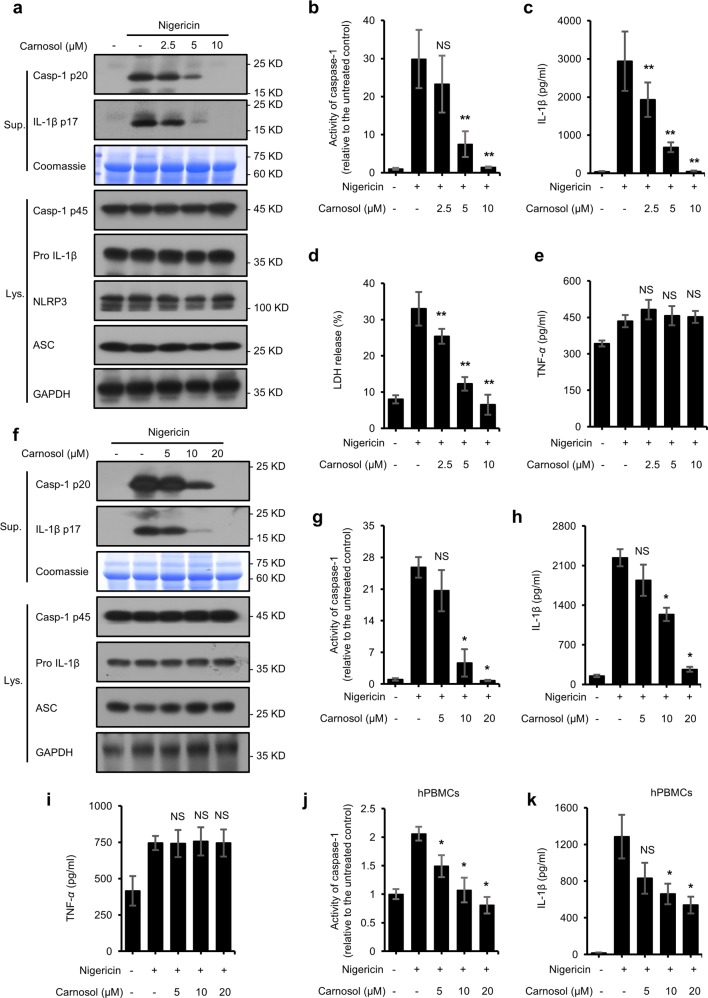
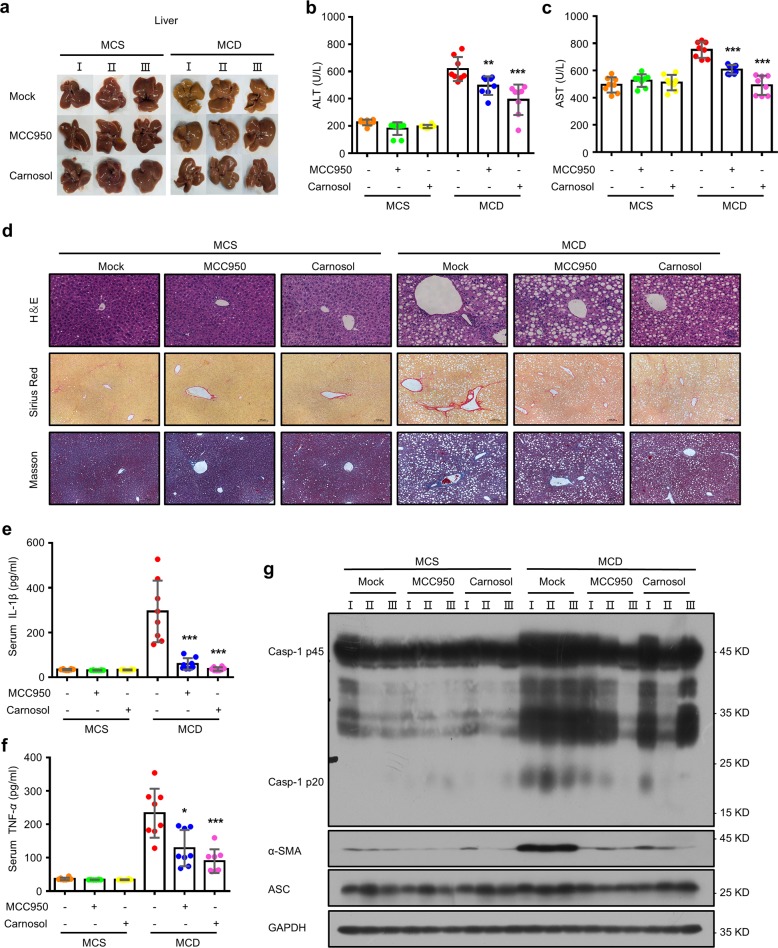
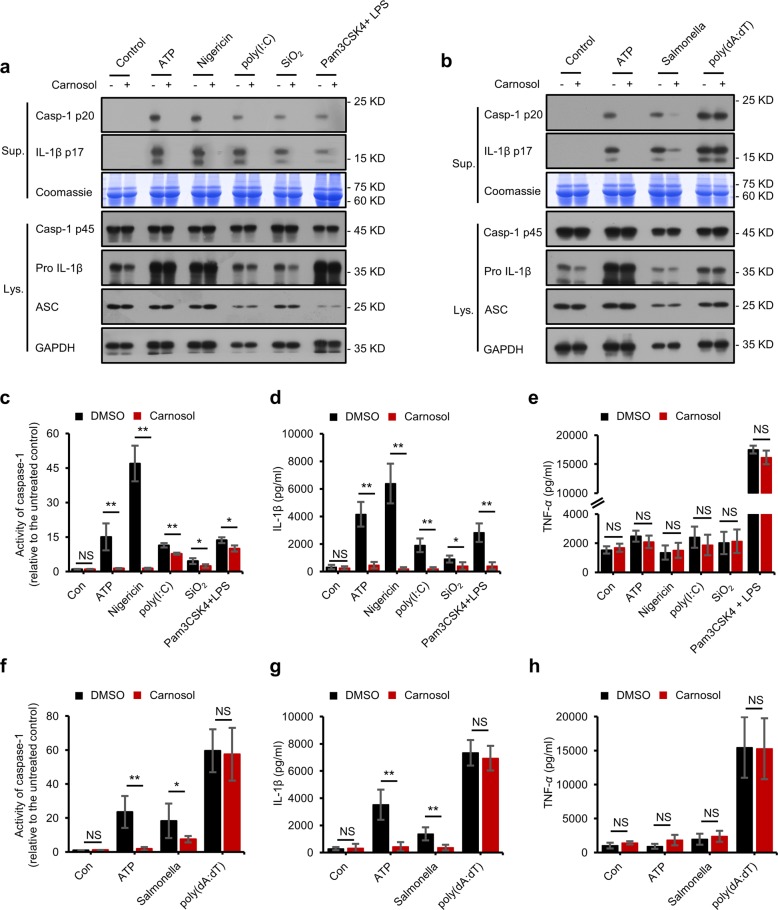
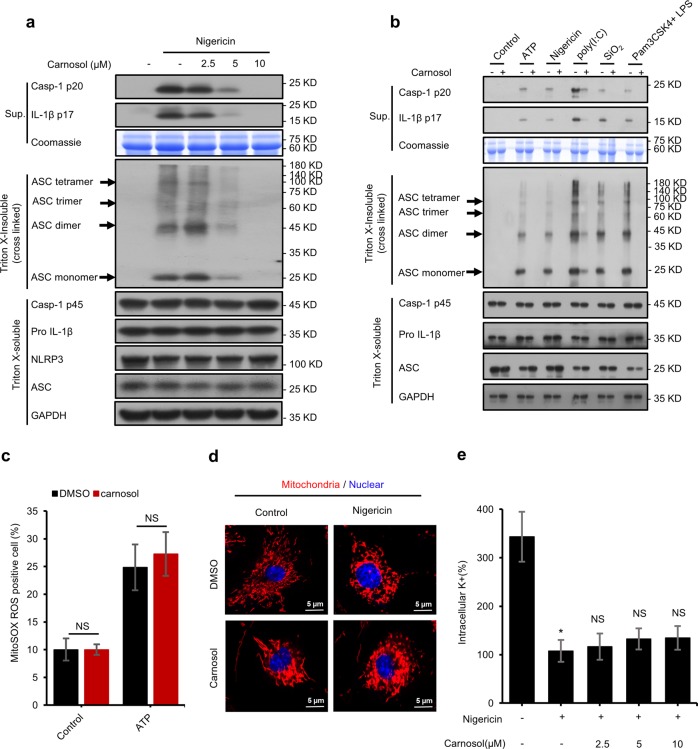
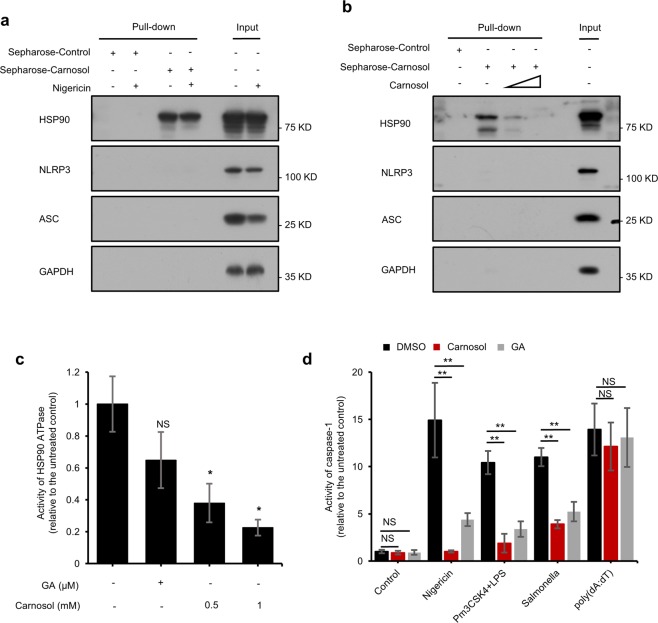
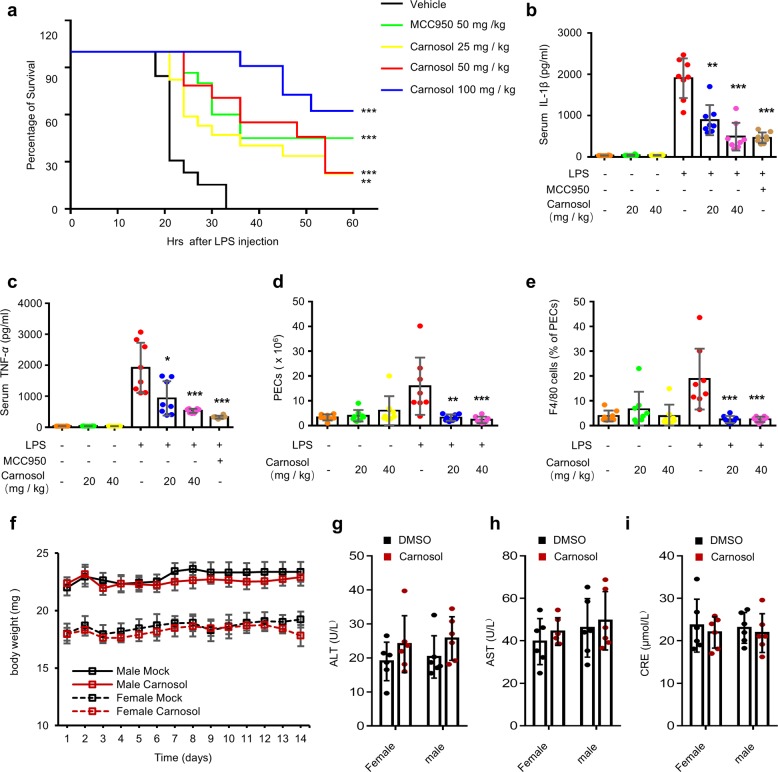
Aberrant activation of inflammasomes, a group of protein complexes, is pathogenic in a variety of metabolic and inflammation-related diseases. Here, we report that carnosol inhibits NLRP3 inflammasome activation by directly targeting heat-shock protein 90 (HSP90), which is essential for NLRP3 inflammasome activity, thereby treating inflammasome-mediated diseases. Our data demonstrate that carnosol inhibits NLRP3 inflammasome activation in primary mouse bone marrow-derived macrophages (BMDMs), THP-1 cells and human peripheral blood mononuclear cells (hPBMCs). Mechanistically, carnosol inhibits inflammasome activation by binding to HSP90 and then inhibiting its ATPase activity. In vivo, our results show that carnosol has remarkable therapeutic effects in mouse models of NLRP3 inflammasome-mediated diseases, including endotoxemia and nonalcoholic steatohepatitis (NASH). Our data also suggest that intraperitoneal administration of carnosol (120 mg/kg) once daily for two weeks is well tolerated in mice. Thus, our study reveals the inhibitory effect of carnosol on inflammasome activation and demonstrates that carnosol is a safe and effective candidate for the treatment of inflammasome-mediated diseases.
炎性小体是一组蛋白复合物,其异常激活与多种代谢和炎症相关疾病的发病机制有关。在这里,我们报告了迷迭香酚通过直接靶向热休克蛋白 90(HSP90)抑制 NLRP3 炎性小体的激活,HSP90 对于 NLRP3 炎性小体的活性是必不可少的,从而治疗炎性小体介导的疾病。我们的数据表明,迷迭香酚可抑制原代小鼠骨髓来源的巨噬细胞(BMDMs)、THP-1 细胞和人外周血单核细胞(hPBMCs)中的 NLRP3 炎性小体激活。在机制上,迷迭香酚通过与 HSP90 结合并抑制其 ATP 酶活性来抑制炎性小体的激活。在体内,我们的结果表明,迷迭香酚在 NLRP3 炎性小体介导的疾病(包括内毒素血症和非酒精性脂肪性肝炎[NASH])的小鼠模型中具有显著的治疗作用。我们的数据还表明,腹腔内给予迷迭香酚(120mg/kg),每天一次,连续两周,在小鼠中耐受性良好。因此,我们的研究揭示了迷迭香酚对炎性小体激活的抑制作用,并表明迷迭香酚是治疗炎性小体介导的疾病的一种安全有效的候选药物。