Military Institute of Chinese Materia, the Fifth Medical Centre, General Hospital of PLA, Beijing, China.
Integrative Medical Centre, the Fifth Medical Centre, General Hospital of PLA, Beijing, China.
JCI Insight. 2021 Jan 25;6(2):134601. doi: 10.1172/jci.insight.134601.
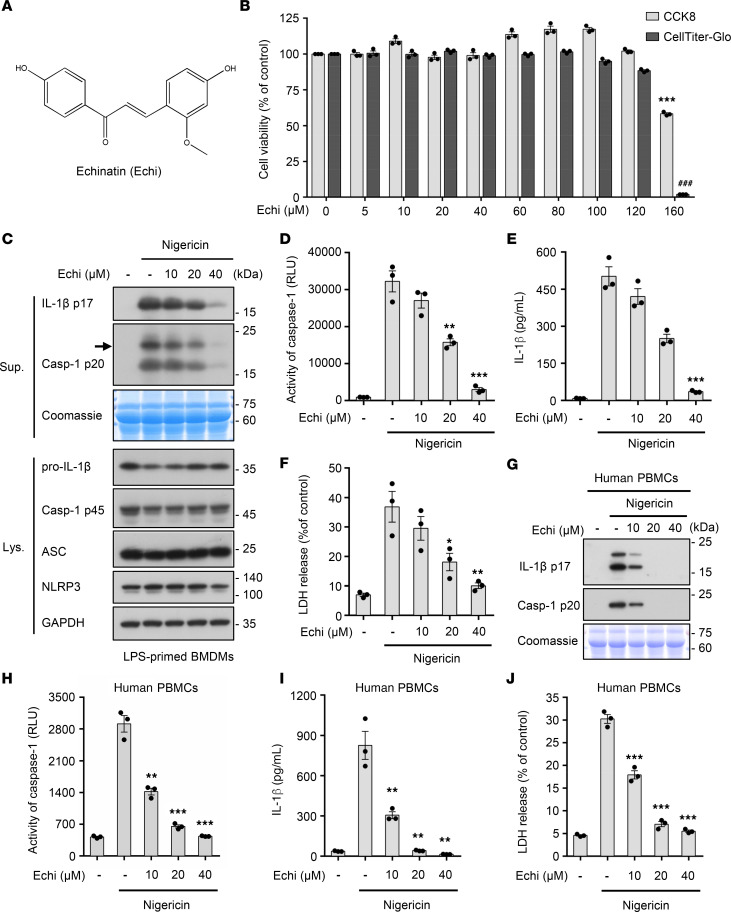
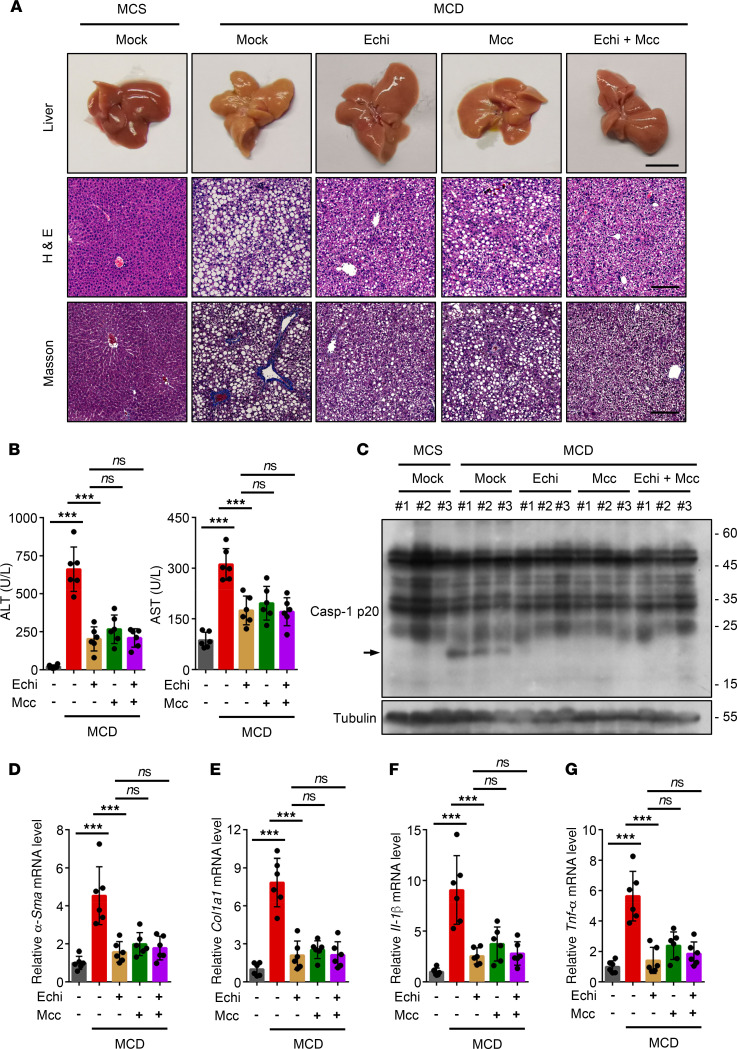
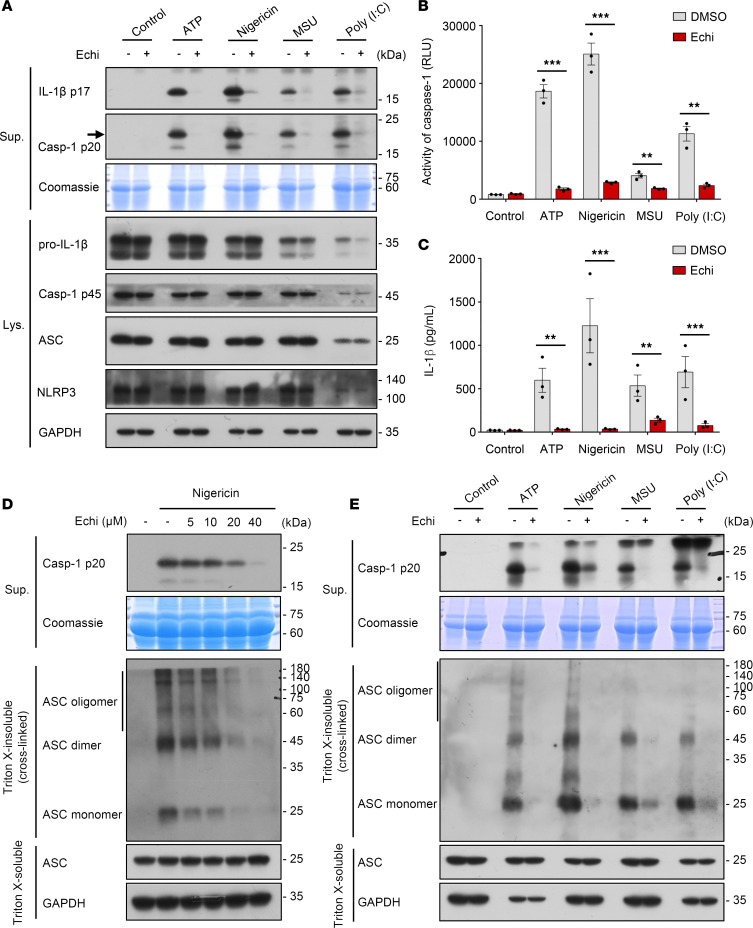
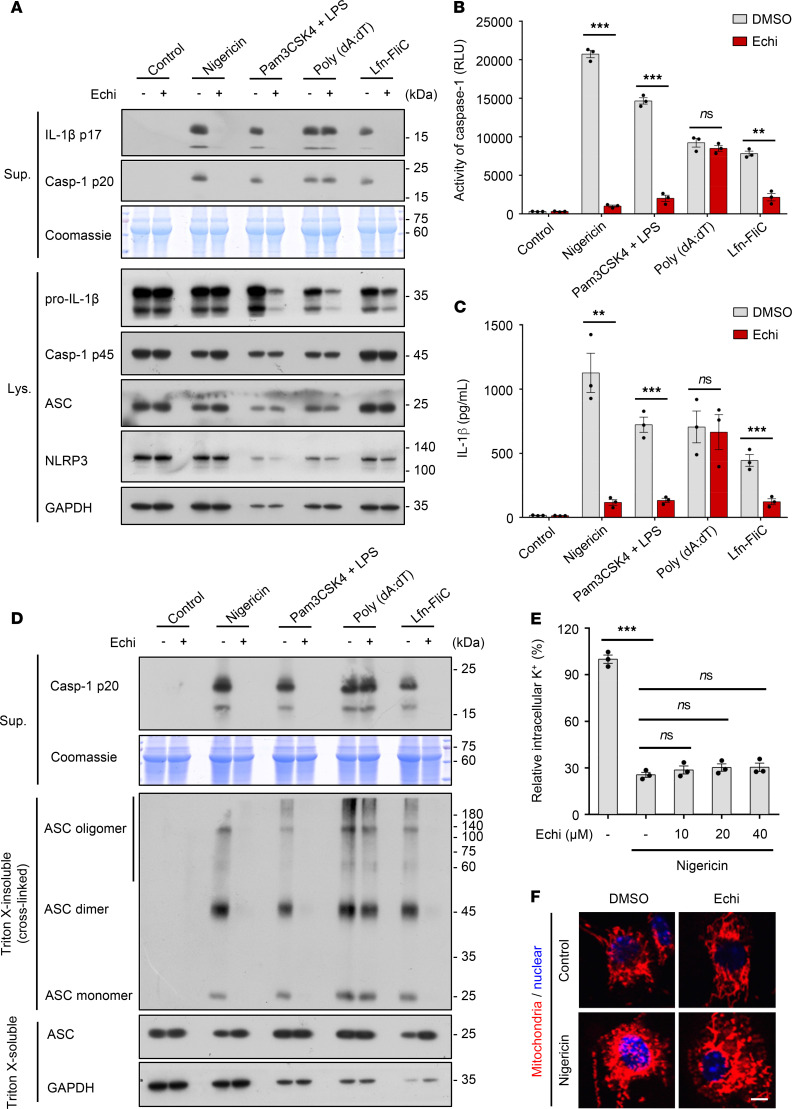
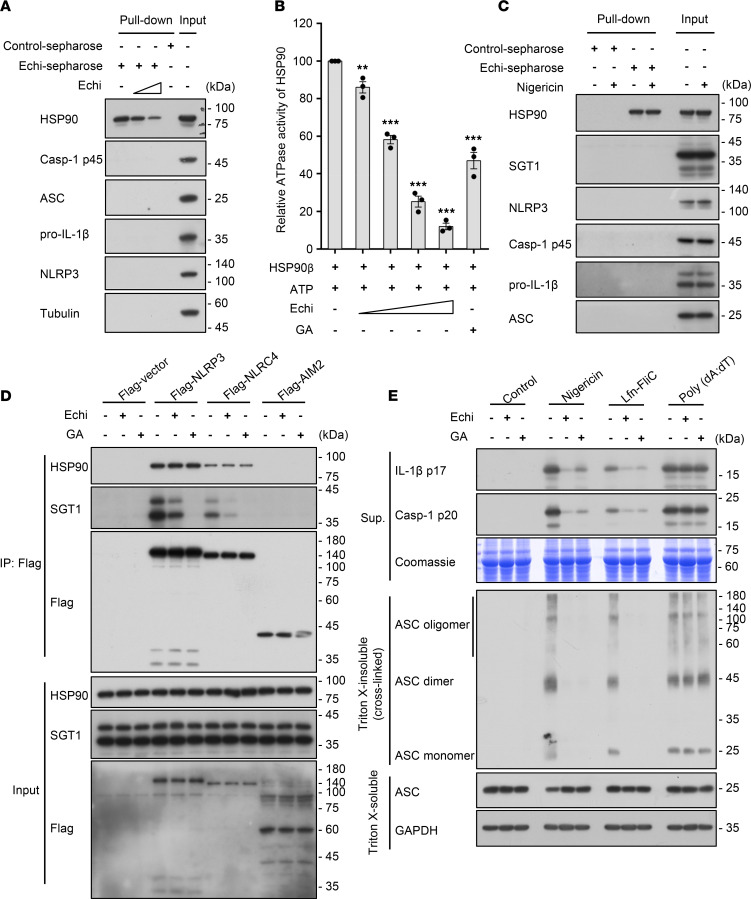
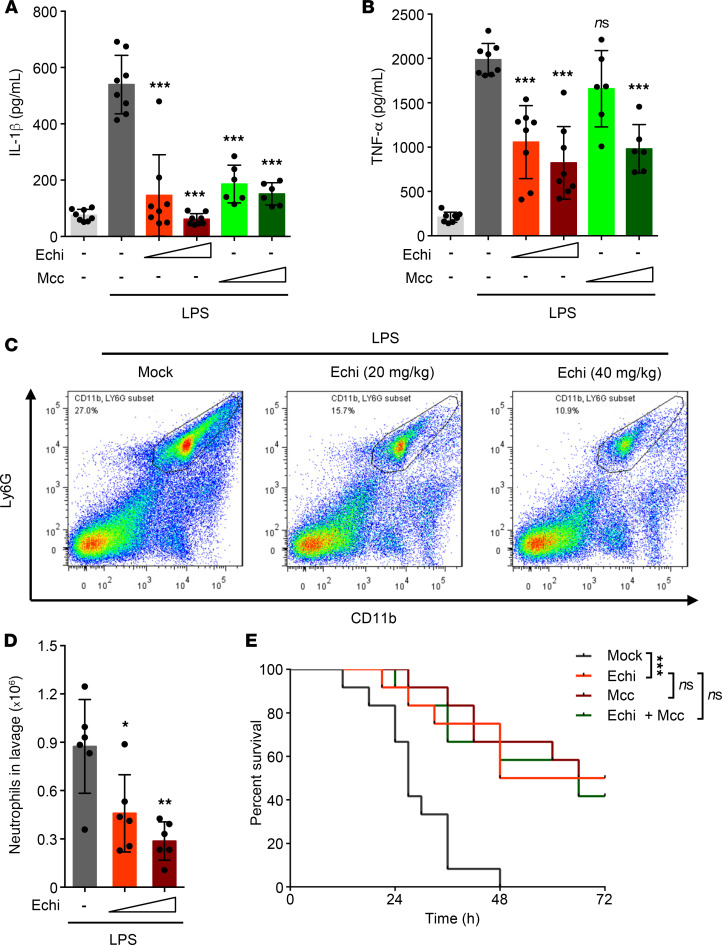
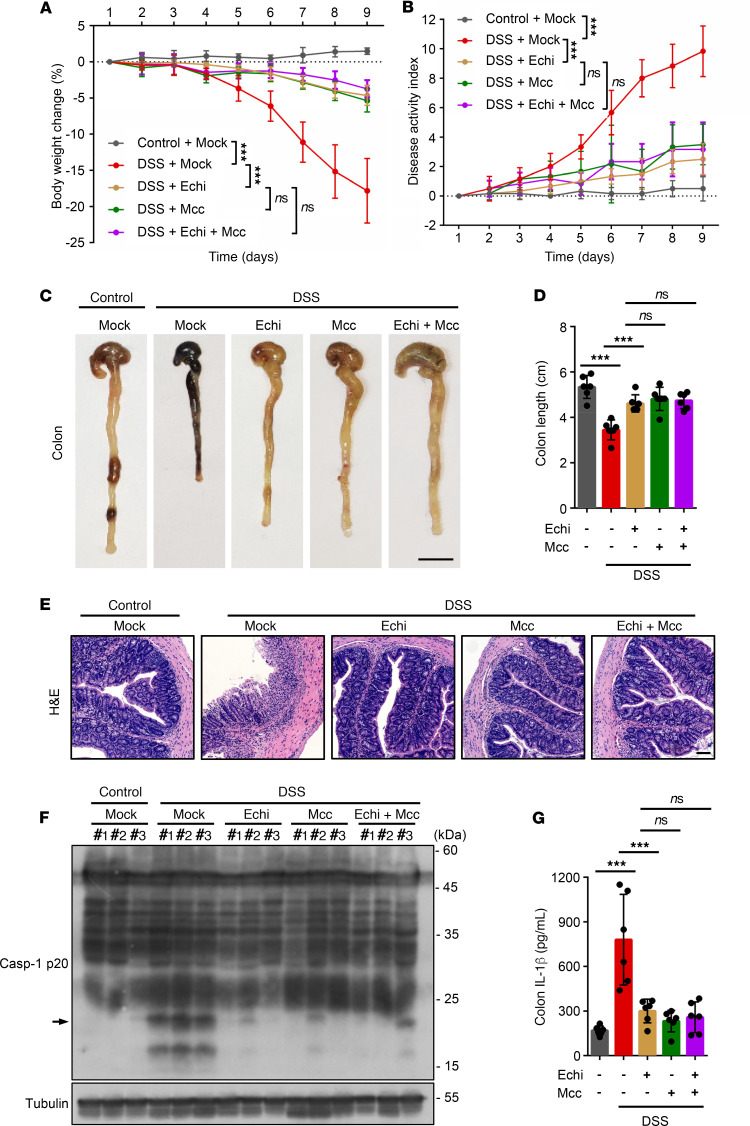
Aberrant activation of NLRP3 inflammasome has been implicated in a variety of human inflammatory diseases, but currently, no pharmacological NLRP3 inhibitor has been approved. In this study, we showed that echinatin, the ingredient of the traditional herbal medicine licorice, effectively suppresses the activation of NLRP3 inflammasome in vitro and in vivo. Further investigation revealed that echinatin exerts its inhibitory effect on NLRP3 inflammasome by binding to heat-shock protein 90 (HSP90), inhibiting its ATPase activity and disrupting the association between the cochaperone SGT1 and HSP90-NLRP3. Importantly, in vivo experiments demonstrated that administration of echinatin obviously inhibits NLRP3 inflammasome activation and ameliorates LPS-induced septic shock and dextran sodium sulfate-induced (DSS-induced) colitis in mice. Moreover, echinatin exerted favorable pharmacological effects on liver inflammation and fibrosis in a mouse model of nonalcoholic steatohepatitis (NASH). Collectively, our study identifies echinatin as a potentially novel inhibitor of NLRP3 inflammasome, and its use may be developed as a therapeutic approach for the treatment of NLRP3-driven diseases.
NLRP3 炎性小体的异常激活与多种人类炎症性疾病有关,但目前尚无批准的药理学 NLRP3 抑制剂。在这项研究中,我们表明,甘草的传统草药成分獐牙菜苦苷在体外和体内有效抑制 NLRP3 炎性小体的激活。进一步的研究表明,獐牙菜苦苷通过与热休克蛋白 90(HSP90)结合,抑制其 ATP 酶活性并破坏共伴侣 SGT1 和 HSP90-NLRP3 之间的关联,从而发挥其对 NLRP3 炎性小体的抑制作用。重要的是,体内实验表明,獐牙菜苦苷给药明显抑制 NLRP3 炎性小体的激活,并改善 LPS 诱导的脓毒症休克和葡聚糖硫酸钠诱导(DSS 诱导)的结肠炎小鼠。此外,獐牙菜苦苷在非酒精性脂肪性肝炎(NASH)小鼠模型中对肝脏炎症和纤维化表现出良好的药理作用。总之,我们的研究将獐牙菜苦苷确定为 NLRP3 炎性小体的一种潜在新型抑制剂,其用途可能被开发为治疗 NLRP3 驱动疾病的治疗方法。