Discovery Biology, Incyte Research Institute, Wilmington, Delaware, United States of America.
Discovery Chemistry, Incyte Research Institute, Wilmington, Delaware, United States of America.
PLoS One. 2020 Apr 21;15(4):e0231877. doi: 10.1371/journal.pone.0231877. eCollection 2020.
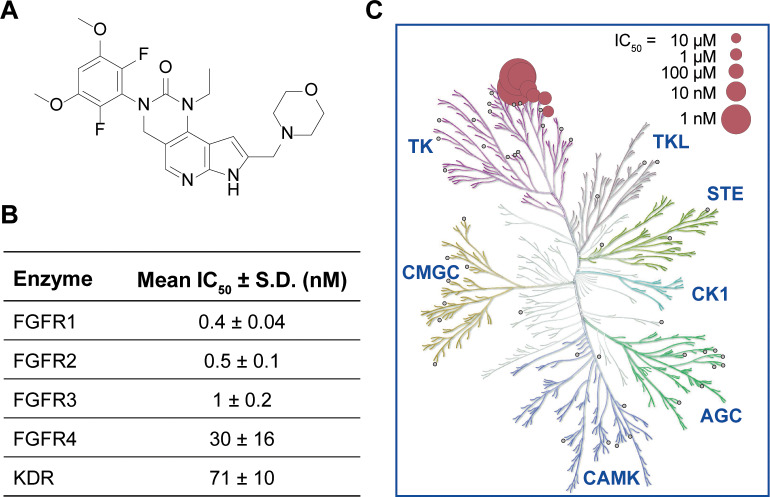
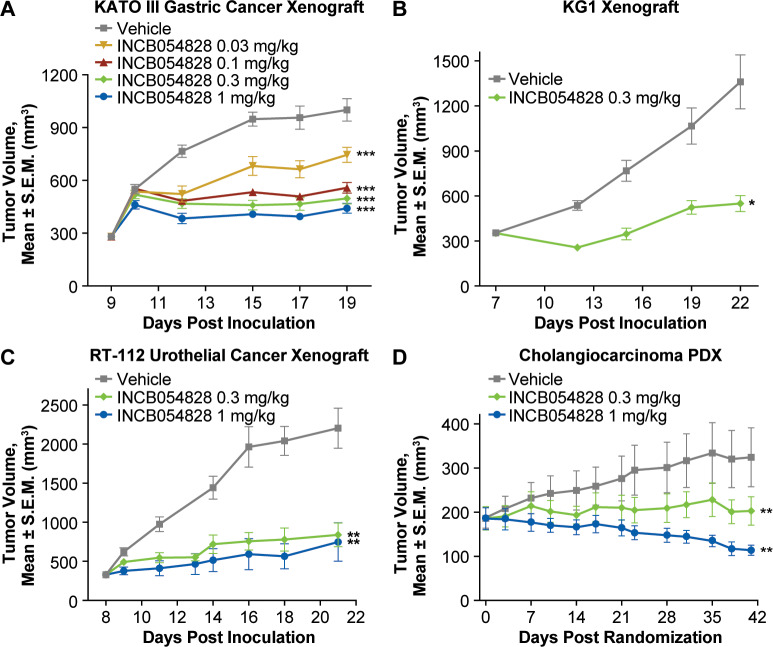
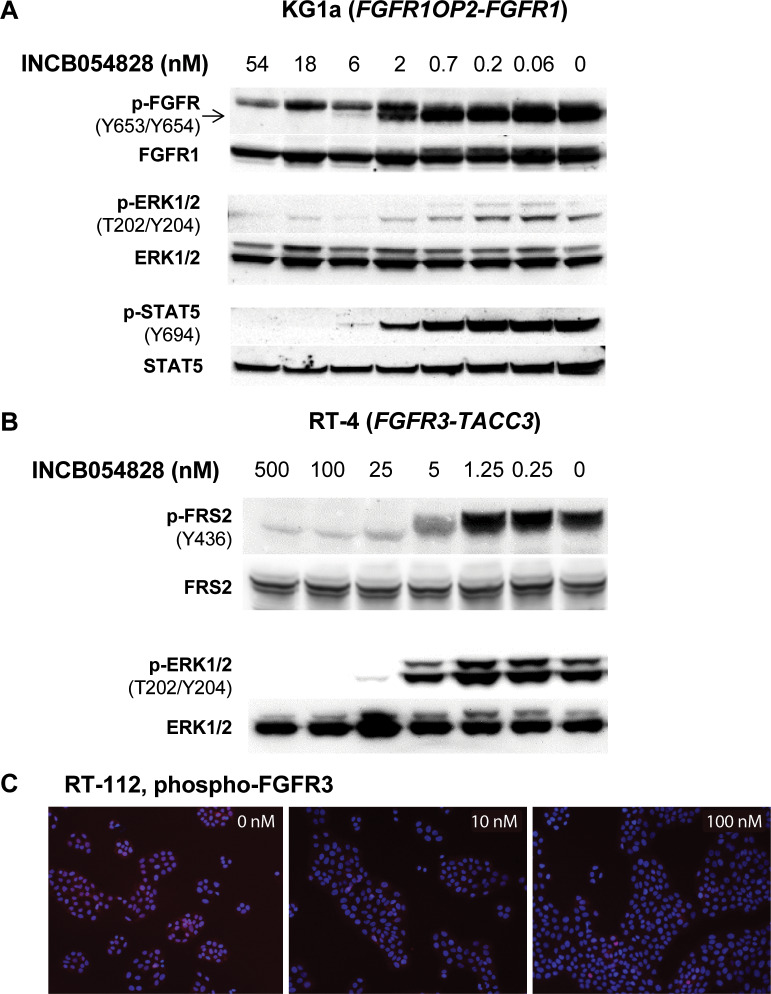
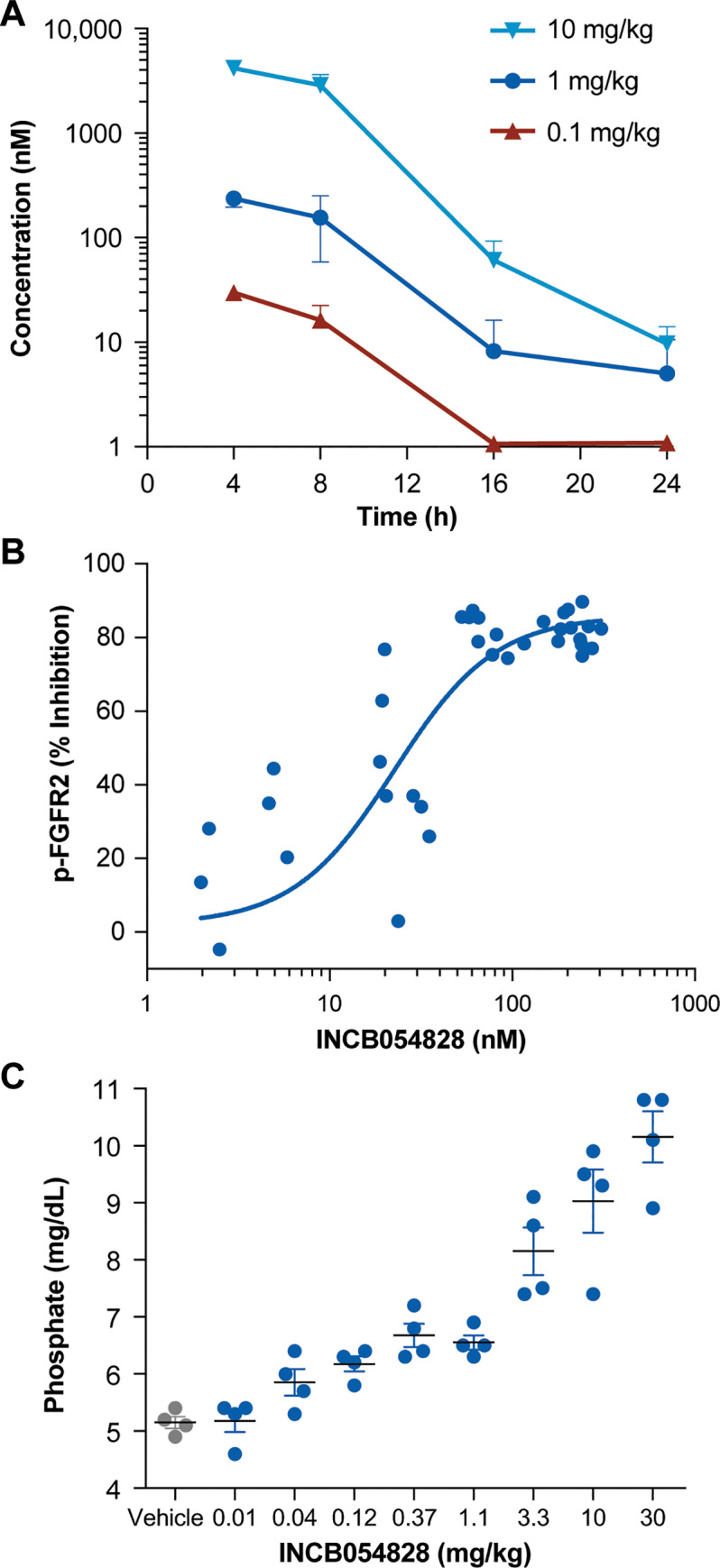
Alterations in fibroblast growth factor receptor (FGFR) genes have been identified as potential driver oncogenes. Pharmacological targeting of FGFRs may therefore provide therapeutic benefit to selected cancer patients, and proof-of-concept has been established in early clinical trials of FGFR inhibitors. Here, we present the molecular structure and preclinical characterization of INCB054828 (pemigatinib), a novel, selective inhibitor of FGFR 1, 2, and 3, currently in phase 2 clinical trials. INCB054828 pharmacokinetics and pharmacodynamics were investigated using cell lines and tumor models, and the antitumor effect of oral INCB054828 was investigated using xenograft tumor models with genetic alterations in FGFR1, 2, or 3. Enzymatic assays with recombinant human FGFR kinases showed potent inhibition of FGFR1, 2, and 3 by INCB054828 (half maximal inhibitory concentration [IC50] 0.4, 0.5, and 1.0 nM, respectively) with weaker activity against FGFR4 (IC50 30 nM). INCB054828 selectively inhibited growth of tumor cell lines with activation of FGFR signaling compared with cell lines lacking FGFR aberrations. The preclinical pharmacokinetic profile suggests target inhibition is achievable by INCB054828 in vivo with low oral doses. INCB054828 suppressed the growth of xenografted tumor models with FGFR1, 2, or 3 alterations as monotherapy, and the combination of INCB054828 with cisplatin provided significant benefit over either single agent, with an acceptable tolerability. The preclinical data presented for INCB054828, together with preliminary clinical observations, support continued investigation in patients with FGFR alterations, such as fusions and activating mutations.
成纤维细胞生长因子受体 (FGFR) 基因的改变已被确定为潜在的驱动致癌基因。因此,针对 FGFR 的药物治疗可能会为选定的癌症患者带来治疗益处,并且在 FGFR 抑制剂的早期临床试验中已经证实了这一概念。在这里,我们介绍了 INCB054828(培米替尼)的分子结构和临床前特征,这是一种新型、选择性 FGFR1、2 和 3 抑制剂,目前正在进行 2 期临床试验。使用细胞系和肿瘤模型研究了 INCB054828 的药代动力学和药效学,并用 FGFR1、2 或 3 基因改变的异种移植肿瘤模型研究了口服 INCB054828 的抗肿瘤作用。用重组人 FGFR 激酶进行的酶分析显示,INCB054828 对 FGFR1、2 和 3 具有很强的抑制作用(半最大抑制浓度 [IC50] 分别为 0.4、0.5 和 1.0 nM),对 FGFR4 的活性较弱(IC50 为 30 nM)。与缺乏 FGFR 异常的细胞系相比,INCB054828 选择性地抑制 FGFR 信号激活的肿瘤细胞系的生长。临床前药代动力学特征表明,INCB054828 可以通过低口服剂量在体内实现靶抑制。INCB054828 作为单药抑制 FGFR1、2 或 3 改变的异种移植肿瘤模型的生长,INCB054828 与顺铂联合治疗比单独使用任何一种药物都有显著的益处,且具有可接受的耐受性。INCB054828 的临床前数据与初步临床观察结果一起,支持在 FGFR 改变(如融合和激活突变)的患者中继续进行研究。