Faculty of Medicine, Institute of Neurophysiology, University of Cologne, Robert-Koch-Str. 39, 50931 Cologne, Germany.
Center for Molecular Medicine Cologne (CMMC), University of Cologne, Robert-Koch-Str. 21, 50931 Cologne, Germany.
Cells. 2020 Apr 17;9(4):1001. doi: 10.3390/cells9041001.
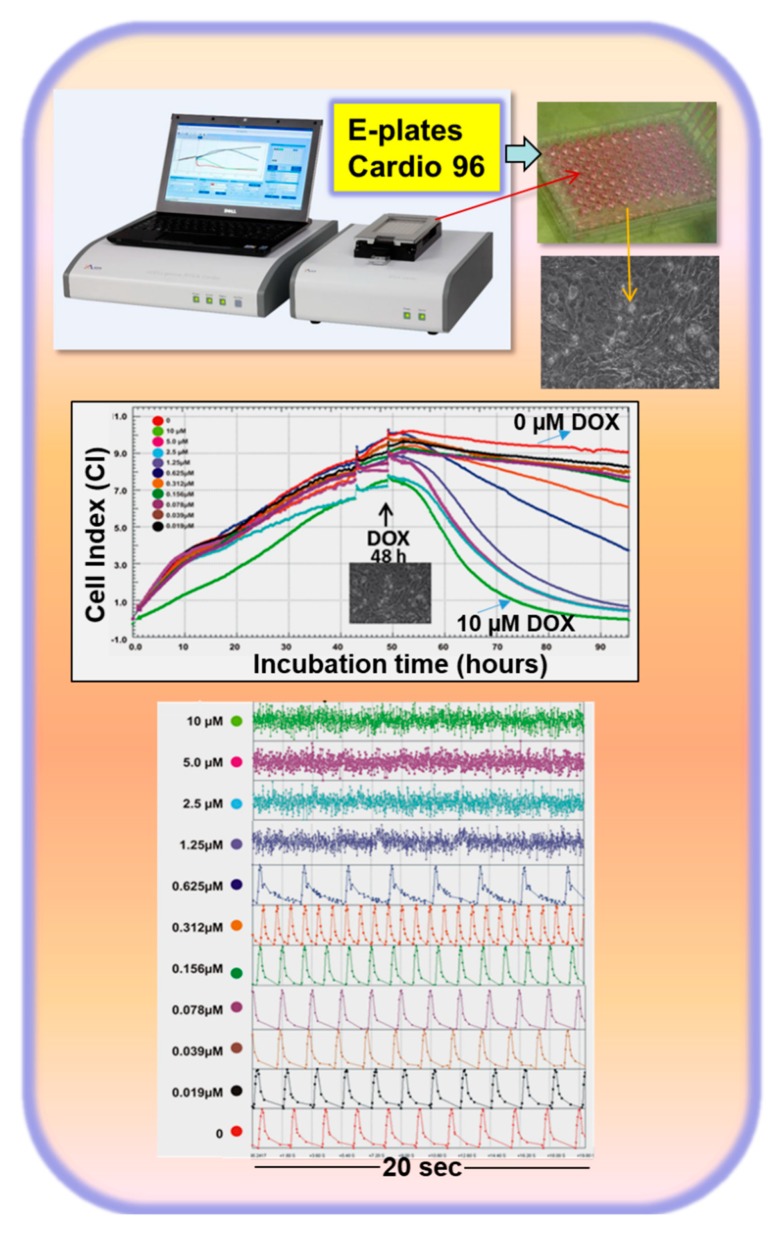
Human-induced pluripotent stem cells (hiPSCs) are discussed as disease modeling for optimization and adaptation of therapy to each individual. However, the fundamental question is still under debate whether stem-cell-based disease modeling and drug discovery are applicable for recapitulating pathological processes under in vivo conditions. Drug treatment and exposure to different chemicals and environmental factors can initiate diseases due to toxicity effects in humans. It is well documented that drug-induced cardiotoxicity accelerates the development of heart failure (HF). Until now, investigations on the understanding of mechanisms involved in HF by anticancer drugs are hindered by limitations of the available cellular models which are relevant for human physiology and by the fact that the clinical manifestation of HF often occurs several years after its initiation. Recently, we identified similar genomic biomarkers as observed by HF after short treatment of hiPSCs-derived cardiomyocytes (hiPSC-CMs) with different antitumor drugs such as anthracyclines and etoposide (ETP). Moreover, we identified common cardiotoxic biological processes and signal transduction pathways which are discussed as being crucial for the survival and function of cardiomyocytes and, therefore, for the development of HF. In the present review, I discuss the applicability of the in vitro cardiotoxicity test systems as modeling for discovering preventive mechanisms/targets against cardiotoxicity and, therefore, for novel HF therapeutic concepts.
人诱导多能干细胞(hiPSCs)被讨论为疾病建模,以优化和适应每个个体的治疗方法。然而,干细胞为基础的疾病建模和药物发现是否适用于在体内条件下重现病理过程,这个基本问题仍在争论之中。药物治疗和接触不同的化学物质和环境因素会因毒性作用而导致人类疾病。有充分的文献记载表明,药物引起的心脏毒性会加速心力衰竭(HF)的发展。到目前为止,由于可用的细胞模型与人类生理学相关的局限性,以及 HF 的临床表现通常在其发病后数年才出现,因此,对抗癌药物引起的 HF 相关机制的研究受到了阻碍。最近,我们在接受不同抗肿瘤药物(如蒽环类药物和依托泊苷(ETP))短时间处理的 hiPSCs 衍生的心肌细胞(hiPSC-CMs)中观察到与 HF 相似的基因组生物标志物,从而确定了相似的基因组生物标志物。此外,我们还确定了常见的心脏毒性生物过程和信号转导途径,这些过程和途径被认为对心肌细胞的存活和功能至关重要,因此对 HF 的发展也至关重要。在本综述中,我讨论了体外心脏毒性测试系统作为发现预防心脏毒性的机制/靶点的适用性,从而为新型 HF 治疗概念提供了依据。