Yasim-Anuar Tengku Arisyah Tengku, Ariffin Hidayah, Norrrahim Mohd Nor Faiz, Hassan Mohd Ali, Andou Yoshito, Tsukegi Takayuki, Nishida Haruo
Faculty of Biotechnology and Biomolecular Sciences, Universiti Putra Malaysia, UPM Serdang 43400, Selangor, Malaysia.
Laboratory of Biopolymer and Derivatives, Institute of Tropical Forestry and Forest Products, Universiti Putra Malaysia, UPM Serdang 43400, Selangor, Malaysia.
Polymers (Basel). 2020 Apr 17;12(4):927. doi: 10.3390/polym12040927.
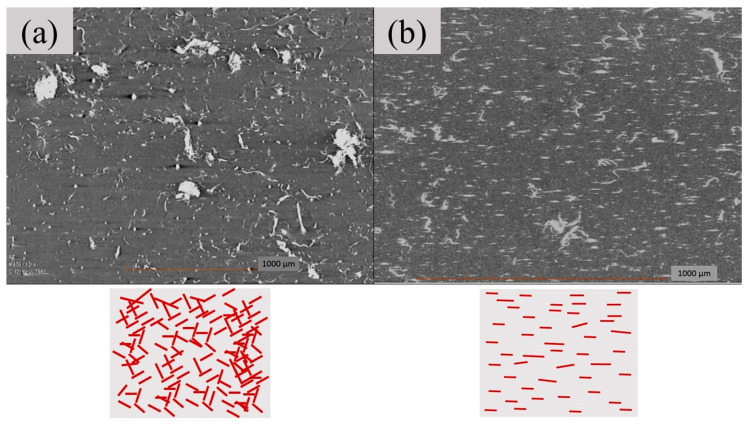
Two different liquid assisted processing methods: internal melt-blending (IMB) and twin-screw extrusion (TWS) were performed to fabricate polyethylene (PE)/cellulose nanofiber (CNF) nanocomposites. The nanocomposites consisted maleic anhydride-grafted PE (PEMA) as a compatibilizer, with PE/PEMA/CNF ratio of 97/3/0.5-5 (wt./wt./wt.), respectively. Morphological analysis exhibited that CNF was well-dispersed in nanocomposites prepared by liquid-assisted TWS. Meanwhile, a randomly oriented and agglomerated CNF was observed in the nanocomposites prepared by liquid-assisted IMB. The nanocomposites obtained from liquid-assisted TWS exhibited the best mechanical properties at 3 wt.% CNF addition with an increment in flexural strength by almost 139%, higher than that of liquid-assisted IMB. Results from this study indicated that liquid feeding of CNF assisted the homogenous dispersion of CNF in PE matrix, and the mechanical properties of the nanocomposites were affected by compounding method due to the CNF dispersion and alignment.
内部熔融共混(IMB)和双螺杆挤出(TWS)来制备聚乙烯(PE)/纤维素纳米纤维(CNF)纳米复合材料。这些纳米复合材料以马来酸酐接枝聚乙烯(PEMA)作为增容剂,PE/PEMA/CNF的比例分别为97/3/0.5 - 5(重量/重量/重量)。形态分析表明,在通过液体辅助TWS制备的纳米复合材料中,CNF分散良好。同时,在通过液体辅助IMB制备的纳米复合材料中观察到CNF随机取向且团聚。在添加3 wt.% CNF时,通过液体辅助TWS获得的纳米复合材料表现出最佳的机械性能,弯曲强度提高了近139%,高于液体辅助IMB制备的纳米复合材料。本研究结果表明,CNF的液体进料有助于CNF在PE基体中的均匀分散,并且由于CNF的分散和排列,纳米复合材料的机械性能受到复合方法的影响。