Institute of Information and Communication Technologies, Electronics and Applied Mathematics (ICTEAM), University of Louvain, Louvain-la-Neuve, 1348, Belgium
Institute of Neuroscience (IoNS), University of Louvain, Brussels, 1200, Belgium.
eNeuro. 2020 Apr 29;7(2). doi: 10.1523/ENEURO.0400-19.2020. Print 2020 Mar/Apr.
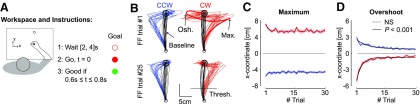
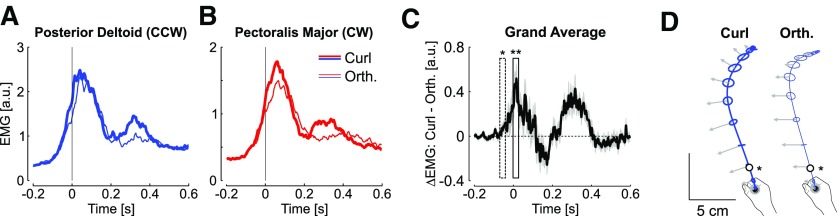
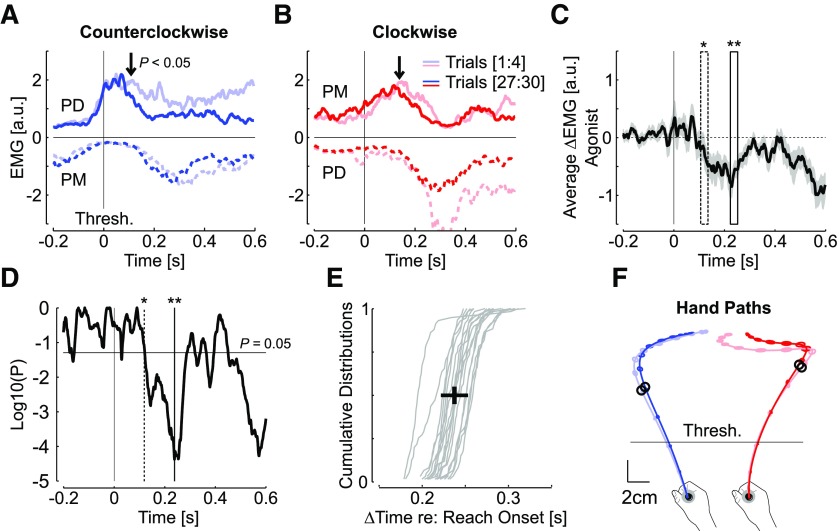
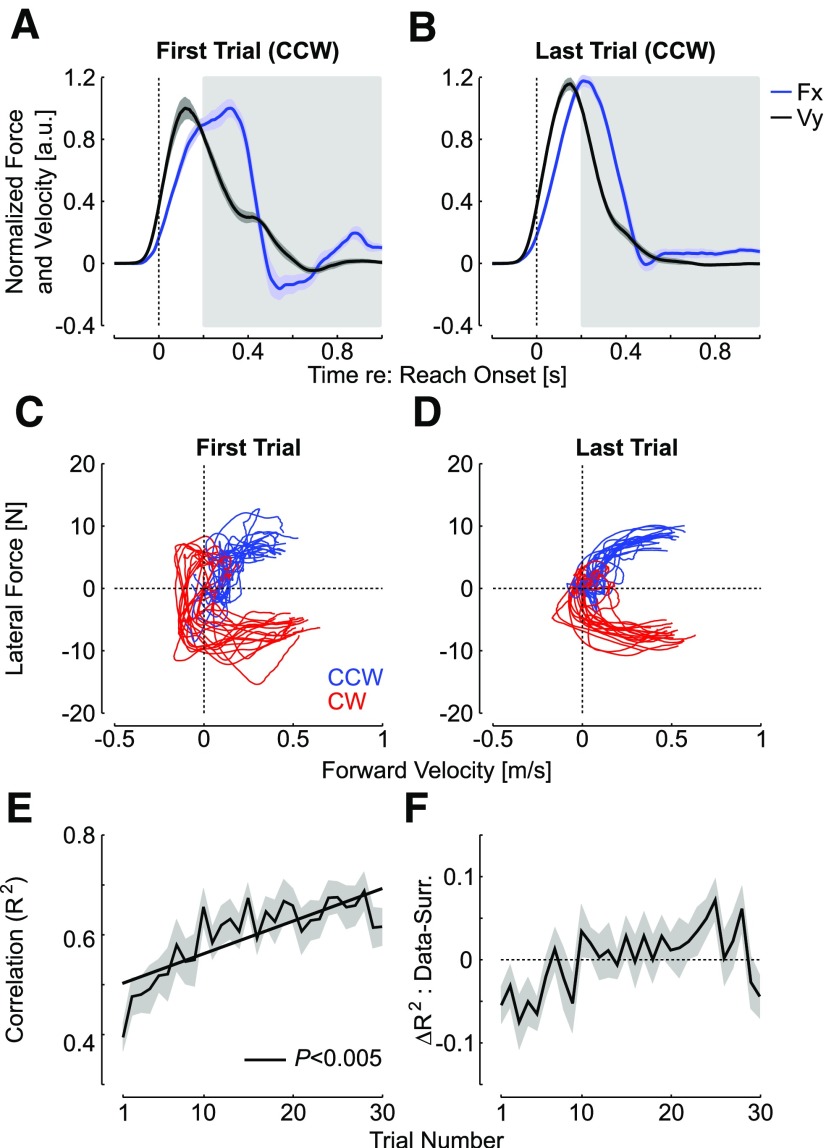
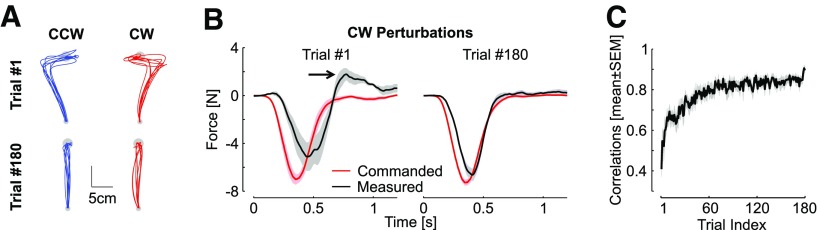
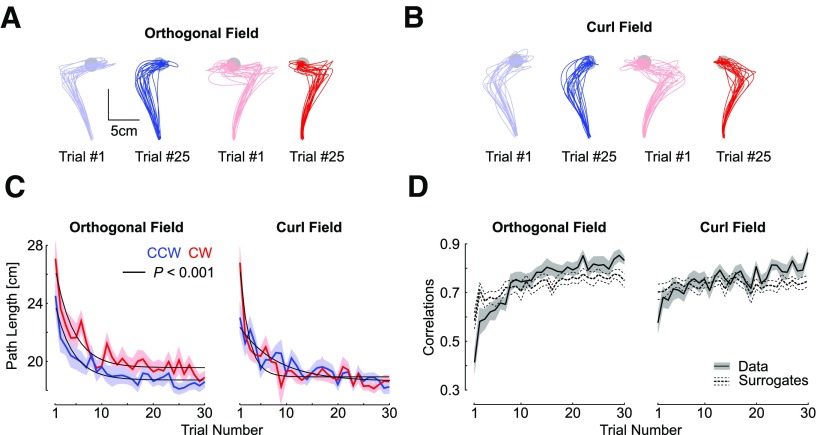
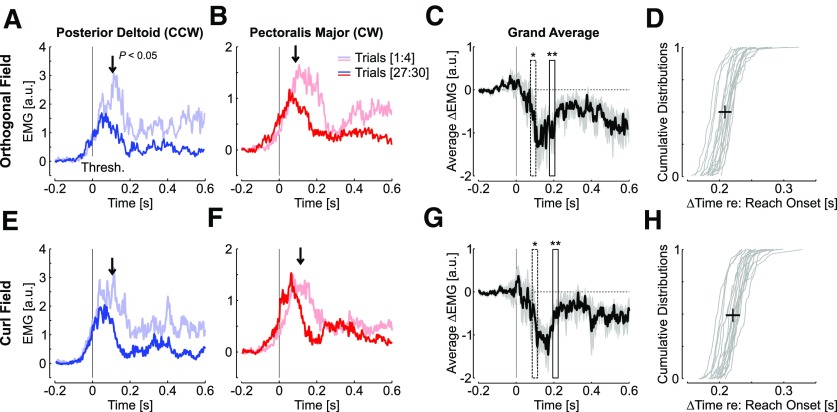
Motor learning and adaptation are important functions of the nervous system. Classical studies have characterized how humans adapt to changes in the environment during tasks such as reaching, and have documented improvements in behavior across movements. However, little is known about how quickly the nervous system adapts to such disturbances. In particular, recent work has suggested that adaptation could be sufficiently fast to alter the control strategies of an ongoing movement. To further address the possibility that learning occurred within a single movement, we designed a series of human reaching experiments to extract from muscles recordings the latency of feedback adaptation. Our results confirmed that participants adapted their feedback responses to unanticipated force fields applied randomly. In addition, our analyses revealed that the feedback response was specifically and finely tuned to the ongoing perturbation not only across trials with the same force field, but also across different kinds of force fields. Finally, changes in muscle activity consistent with feedback adaptation occurred in ∼250 ms following reach onset. The adaptation that we observed across trials presented in a random context was similar to the one observed when the force fields could be anticipated, suggesting that these two adaptive processes may be closely linked to each other. In such case, our measurement of 250 ms may correspond to the latency of motor adaptation in the nervous system.
运动学习和适应是神经系统的重要功能。经典研究已经描述了人类在诸如伸手等任务中如何适应环境变化,并记录了整个运动过程中的行为改善。然而,对于神经系统对这种干扰的适应速度知之甚少。特别是,最近的研究表明,适应过程可能足够快,可以改变正在进行的运动的控制策略。为了进一步探讨学习是否发生在单个运动过程中,我们设计了一系列人类伸手实验,以从肌肉记录中提取反馈适应的潜伏期。我们的结果证实,参与者确实会根据随机施加的意外力场来调整其反馈响应。此外,我们的分析表明,反馈响应不仅在具有相同力场的试验之间,而且在不同类型的力场之间,都可以专门且精细地针对正在进行的扰动进行调整。最后,与反馈适应一致的肌肉活动变化发生在伸手开始后的约 250 毫秒内。我们在随机环境中观察到的跨试验适应与可以预测力场时观察到的适应相似,这表明这两个适应过程可能密切相关。在这种情况下,我们测量的 250 毫秒可能对应于神经系统中运动适应的潜伏期。