Praveen Valiyaparambil Pavithran, Ladjouze Asmahane, Sauter Kay-Sara, Pulickal Annie, Katharopoulos Efstathios, Trippel Mafalda, Perren Aurel, Pandey Amit V, Flück Christa E
Department of Endocrinology, Amrita Institute of Medical Sciences, Kochi, Kerala, India.
Department of Pediatrics, CHU Bab El Oued, Algiers, Algeria.
J Endocr Soc. 2020 Mar 10;4(4):bvaa030. doi: 10.1210/jendso/bvaa030. eCollection 2020 Apr 1.
The steroidogenic enzyme aromatase (CYP19A1) is required for estrogen biosynthesis from androgen precursors in the ovary and extragonadal tissues. The role of aromatase, and thus estrogens, is best illustrated by genetic variations of the gene leading to aromatase deficiency or excess.
The objective of this work is to characterize novel variants.
Variants causing aromatase deficiency were suspected in four 46,XX children of African and Indian origin by careful clinical phenotyping. Sequencing of the gene identified novel variants. Minigene experiments, aromatase activity assay, and computational, and histological analysis were used to characterize the variants.
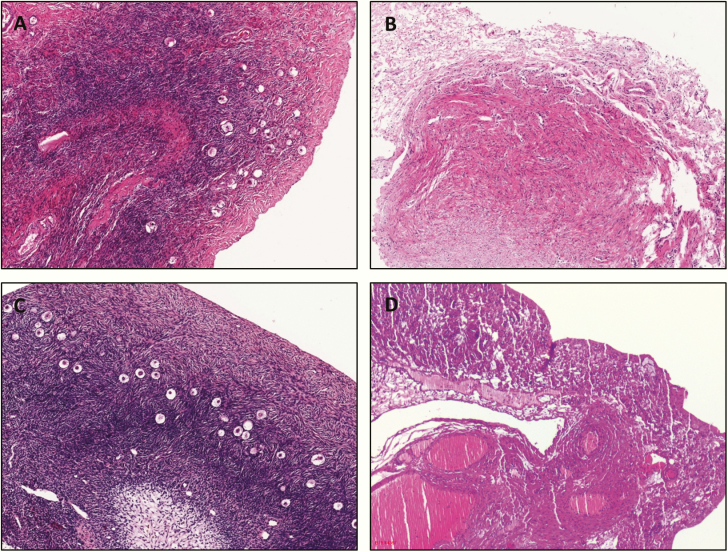
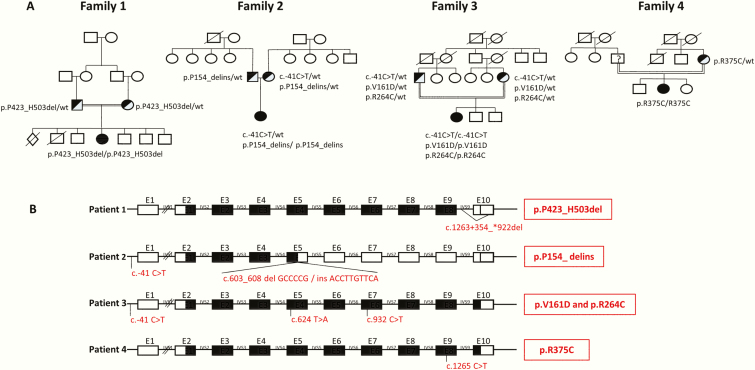
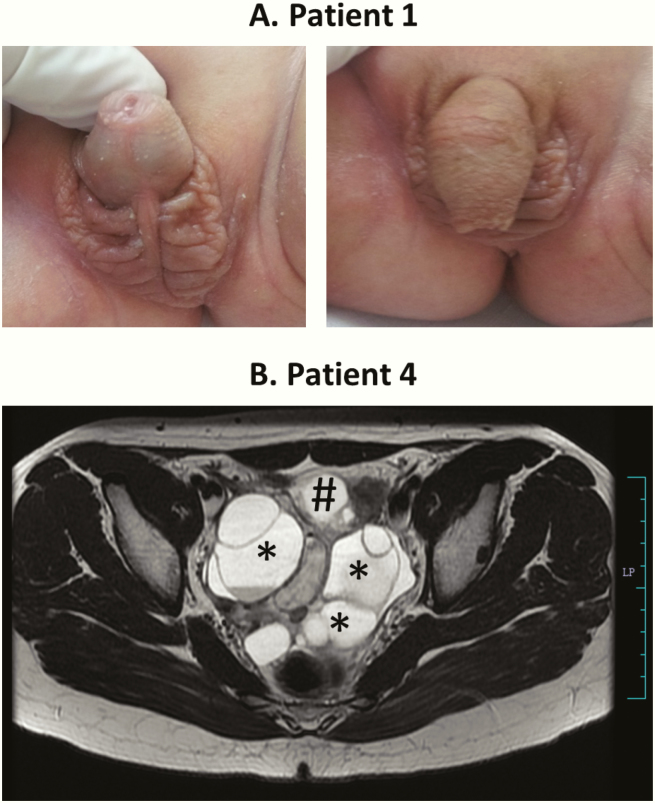
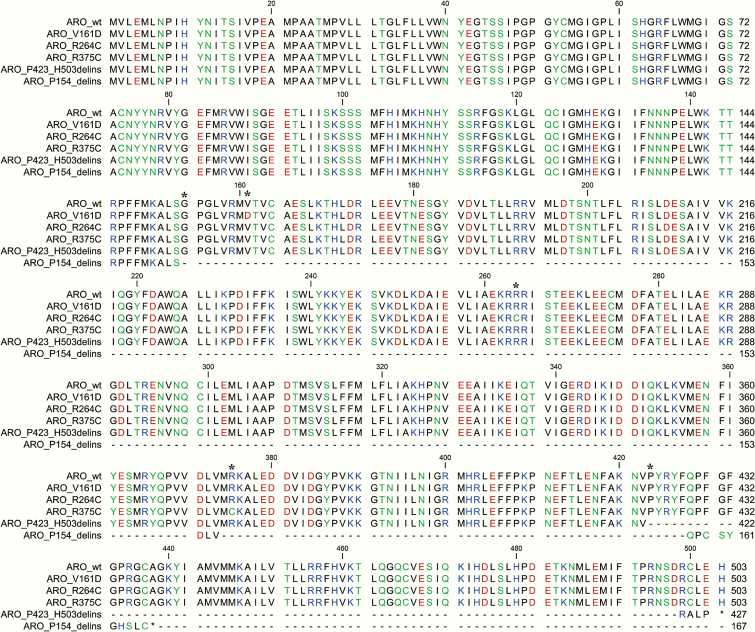
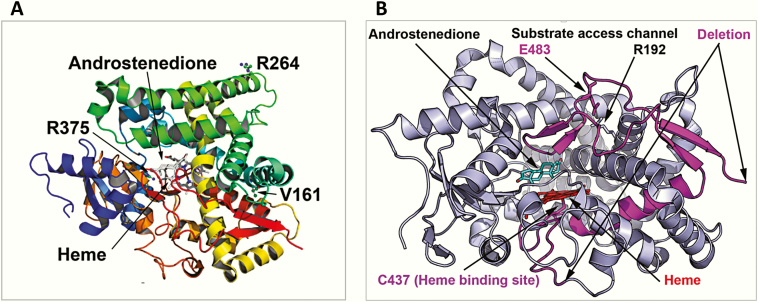
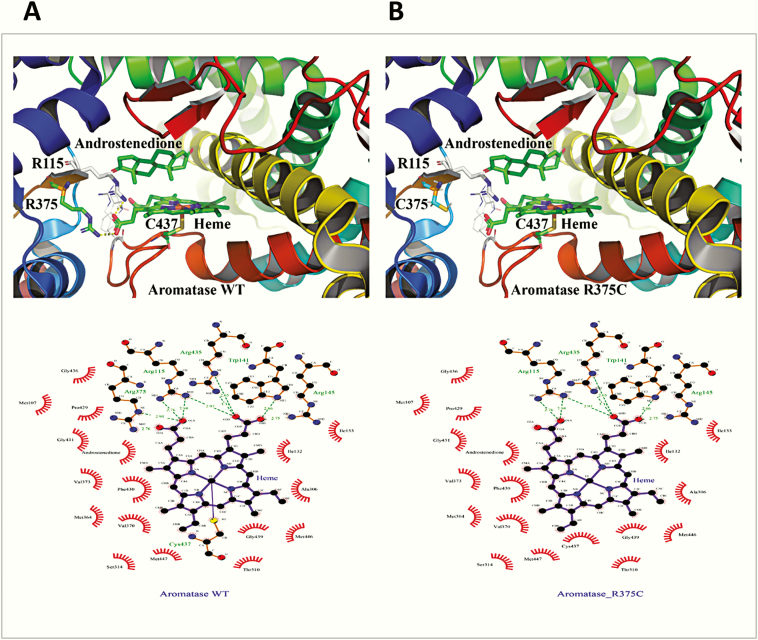
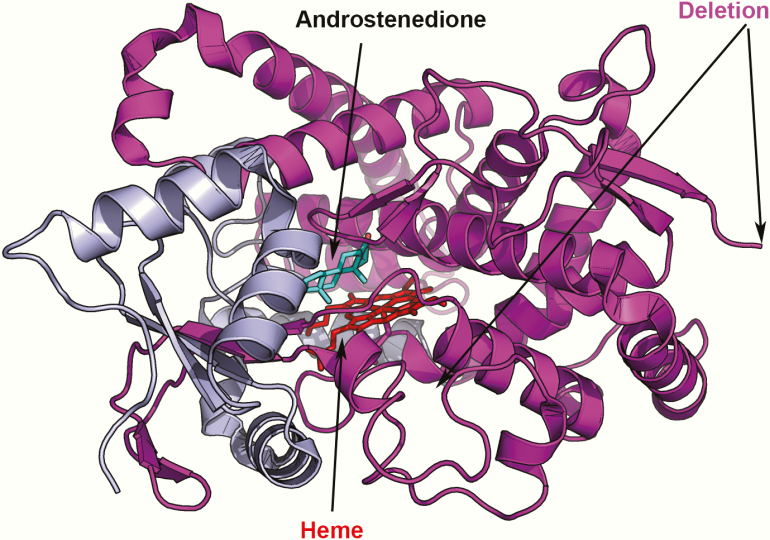
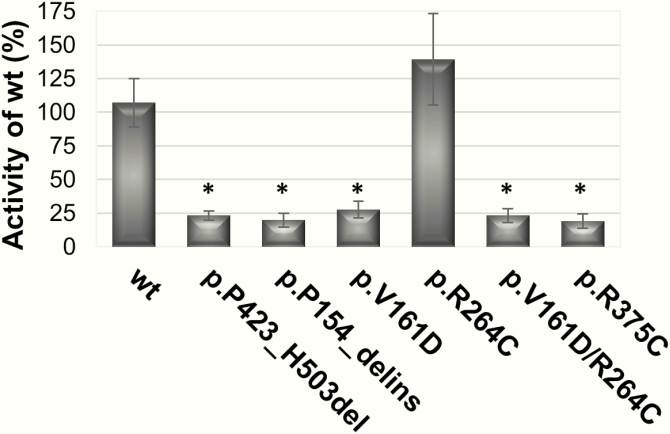
variants were found in all patients: a deletion in intron 9 leading to p.P423_H503del, a delins variant at p.P154, and point variants p.V161D, p.R264C, p.R375C. Except for R264C, all variants showed a loss of function. Protein structure and dynamics studies were in line with functional assays. The 2 female patients with delins variants manifested with ambiguous genitalia at birth. Histologic investigation revealed normal ovarian tissue on one side and a streak gonad on the other. Two female patients presented with abnormal pubertal development and polycystic ovaries.
In girls, aromatase deficiency usually manifests at birth, but diagnosis may also be made because of abnormal pubertal development or ovarian torsion due to (poly)cystic ovaries. The ovary harboring variants may present as streak gonad or appears normal at birth, but is then at very high risk to produce cysts with aging and is therefore prone to ovarian torsion.
甾体生成酶芳香化酶(CYP19A1)是卵巢和性腺外组织中雄激素前体合成雌激素所必需的。芳香化酶以及雌激素的作用,通过导致芳香化酶缺乏或过量的基因变异得到了最好的体现。
这项研究的目的是鉴定新的变异体。
设计、地点和患者:通过仔细的临床表型分析,怀疑4名非洲和印度裔46,XX儿童存在导致芳香化酶缺乏的变异体。对该基因进行测序,鉴定出了新的变异体。采用小基因实验、芳香化酶活性测定、计算分析和组织学分析对变异体进行特征描述。
在所有患者中均发现了变异体:9号内含子缺失导致p.P423_H503del,p.P154处的缺失插入变异体,以及点变异体p.V161D、p.R264C、p.R375C。除R264C外,所有变异体均表现出功能丧失。蛋白质结构和动力学研究与功能测定结果一致。两名携带缺失插入变异体的女性患者出生时表现为生殖器模糊。组织学检查显示一侧卵巢组织正常,另一侧为条索状性腺。两名女性患者出现青春期发育异常和多囊卵巢。
在女孩中,芳香化酶缺乏通常在出生时就有表现,但也可能因青春期发育异常或(多囊)卵巢导致的卵巢扭转而被诊断出来。携带变异体的卵巢在出生时可能表现为条索状性腺或外观正常,但随着年龄增长产生囊肿的风险非常高,因此容易发生卵巢扭转。