Li Li, Ran Jianghua, Li Lan, Chen Gang, Zhang Shengning, Wang Yingjia
Department of Hepatobiliary Surgery, First People's Hospital of Kunming City, Kunming, Yunnan 650034, P.R. China.
Mol Med Rep. 2020 Apr;21(4):1861-1871. doi: 10.3892/mmr.2020.10997. Epub 2020 Feb 21.
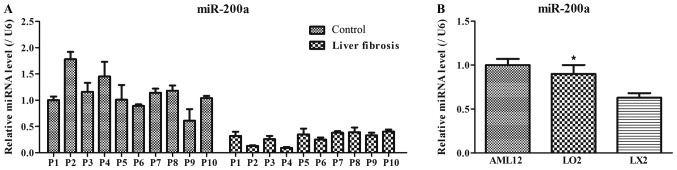
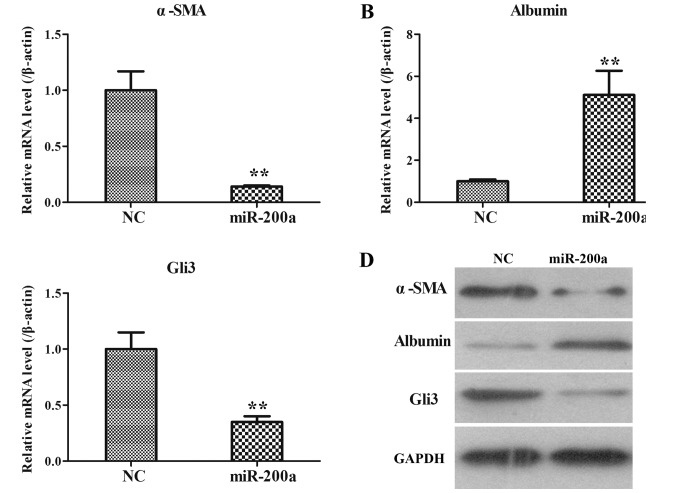
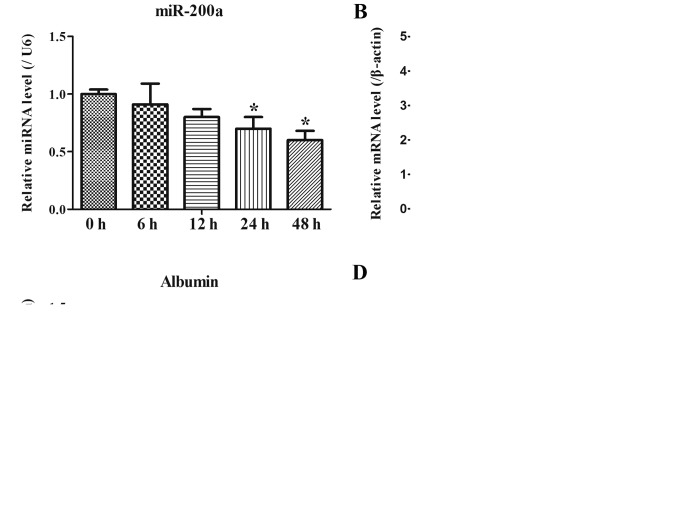
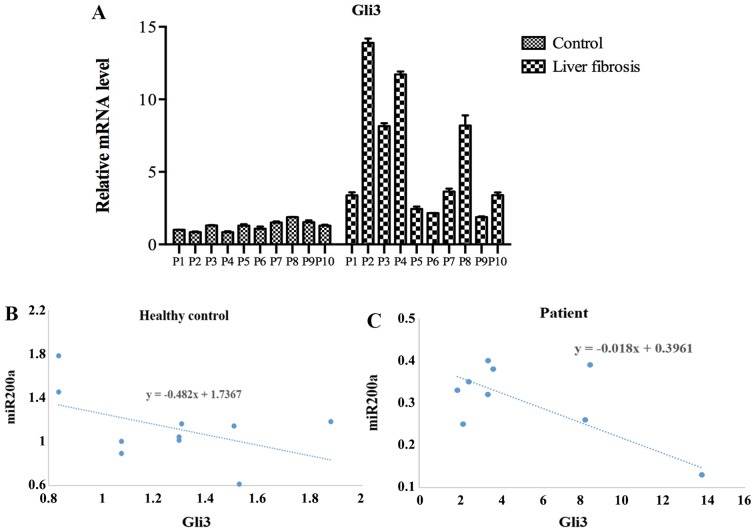
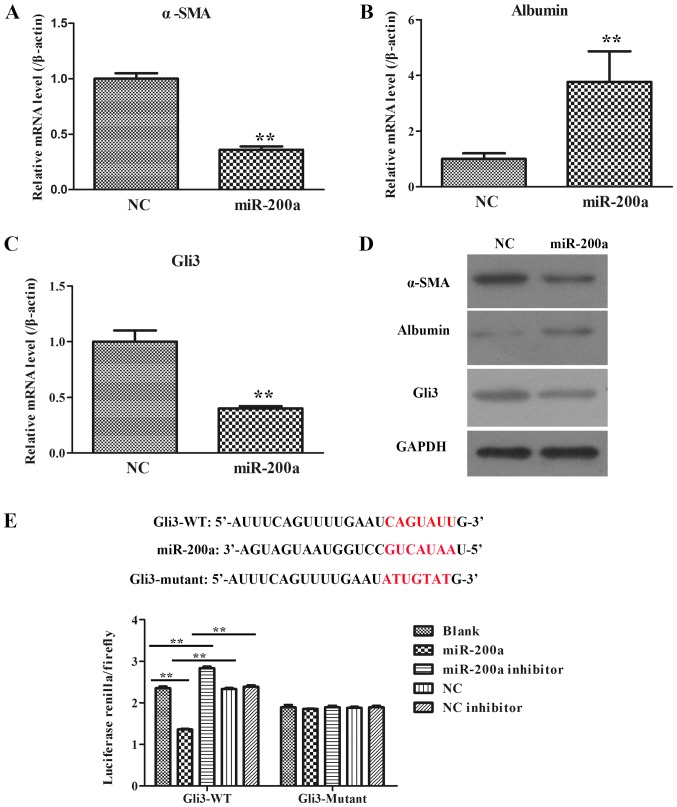
GLI family zinc finger 3 (Gli3), as the upstream transcriptional activator of hedgehog signaling, has previously been demonstrated to participate in the process of liver fibrosis. The present study aimed to investigate the potential functions of microRNA (miR)‑200a and Gli3 in the progression of liver fibrosis. The expression levels of miR‑200a and Gli3 in cells and tissues were determined by PCR and western blotting; the interaction of Gli3 and miR‑200a was evaluated by bioinformatics analysis and dual‑luciferase reporter assay. miR‑200a was significantly reduced in serum samples from clinical patients, liver tissues of a carbon tetrachloride (CCl4)‑induced rat model and activated LX2 cells. The expression of α‑smooth muscle actin (α‑SMA) and albumin at the mRNA and protein levels was increased and decreased in LX2 cells, respectively. However, the expression levels of α‑SMA and albumin were reversed and Gli3 expression was markedly decreased in LX2 cells when transfected with miR‑200a mimics. In addition, the dual‑-luciferase reporter assay confirmed the target interaction between miR‑200a and Gli3. Finally, following the administration of miR‑200a mimics to CCl4‑induced rats, it was revealed that the alterations of α‑SMA, albumin and Gli3 presented a similar trend to that in LX2 cells with miR‑200a mimics transfection. Taken together, these results indicated that downregulation of miR‑200a might enhance the formation of liver fibrosis, probably by targeting Gli3, and elevated miR‑200a may attenuate the progression of liver fibrosis by suppressing Gli3. These findings suggested that miR‑200a may function as a novel anti‑fibrotic agent in liver fibrosis via inhibition of the expression of Gli3.
Gli家族锌指蛋白3(Gli3)作为刺猬信号通路的上游转录激活因子,先前已被证明参与肝纤维化过程。本研究旨在探讨微小RNA(miR)-200a和Gli3在肝纤维化进展中的潜在作用。通过PCR和蛋白质印迹法测定细胞和组织中miR-200a和Gli3的表达水平;通过生物信息学分析和双荧光素酶报告基因检测评估Gli3与miR-200a的相互作用。临床患者血清样本、四氯化碳(CCl4)诱导的大鼠模型肝组织和活化的LX2细胞中,miR-200a显著降低。LX2细胞中,α-平滑肌肌动蛋白(α-SMA)和白蛋白在mRNA和蛋白质水平的表达分别升高和降低。然而,用miR-200a模拟物转染LX2细胞后,α-SMA和白蛋白的表达水平发生逆转,Gli3表达明显降低。此外,双荧光素酶报告基因检测证实了miR-200a与Gli3之间的靶向相互作用。最后,对CCl4诱导的大鼠给予miR-200a模拟物后发现,α-SMA、白蛋白和Gli3的变化趋势与转染miR-200a模拟物的LX2细胞相似。综上所述,这些结果表明,miR-200a的下调可能通过靶向Gli3增强肝纤维化的形成,而miR-200a的升高可能通过抑制Gli3减轻肝纤维化的进展。这些发现提示,miR-200a可能通过抑制Gli3的表达,作为肝纤维化中的一种新型抗纤维化剂发挥作用。