Gastroenterology Department, Hunan Aerospace Hospital, Changsha, Hunan, China.
Bioengineered. 2021 Dec;12(1):4736-4746. doi: 10.1080/21655979.2021.1950441.
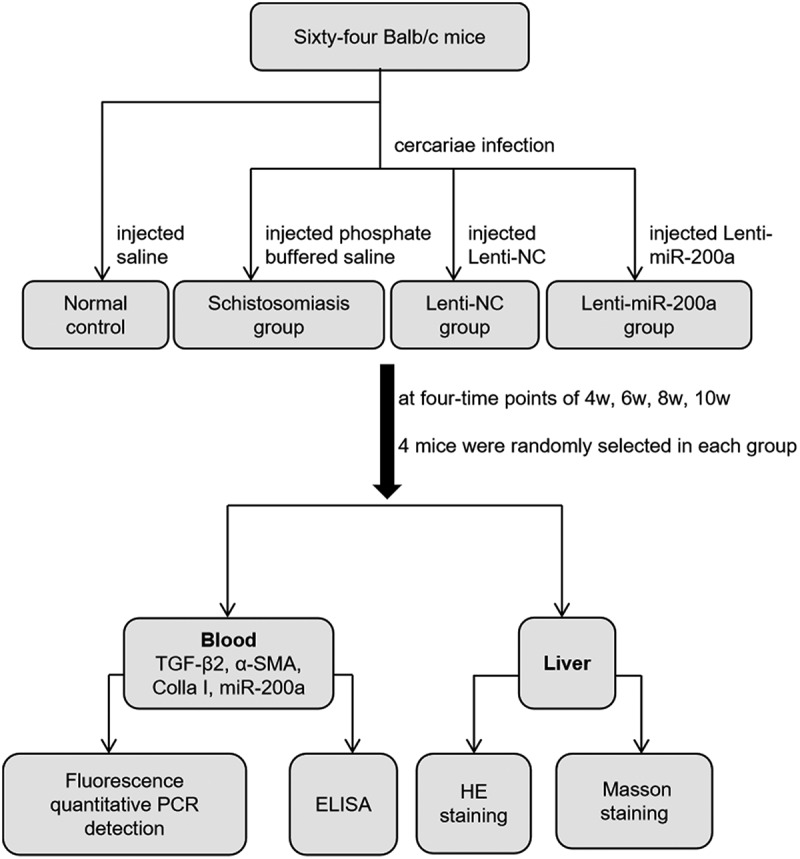
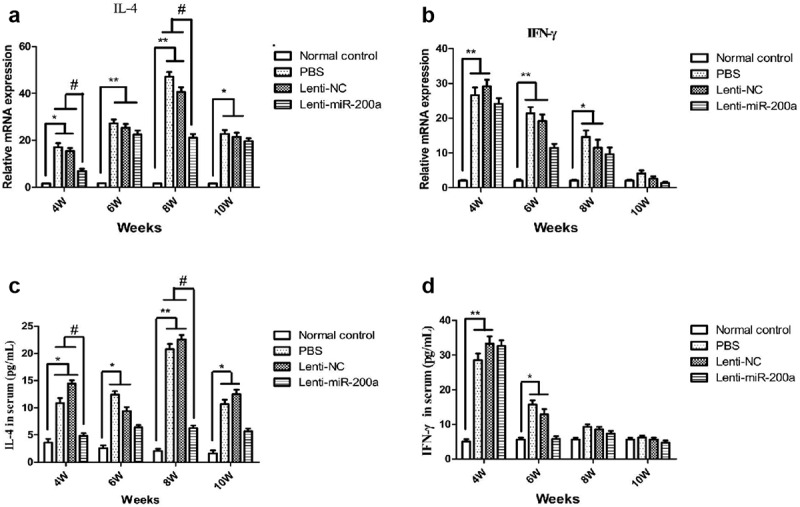
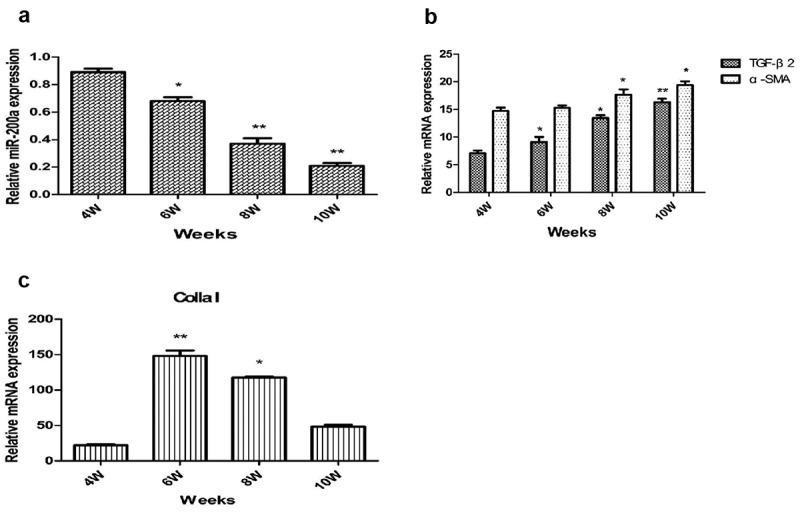
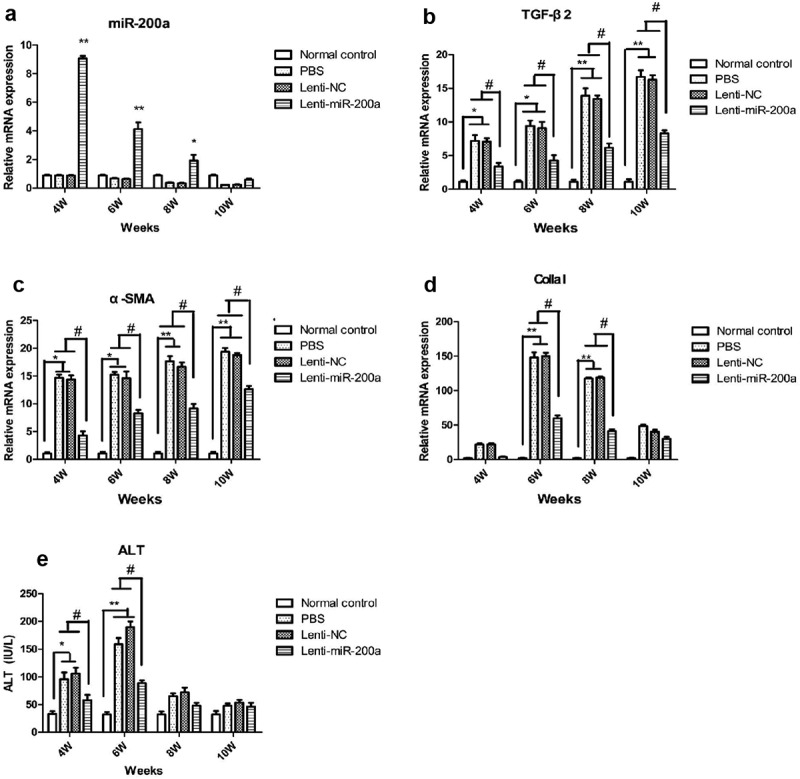
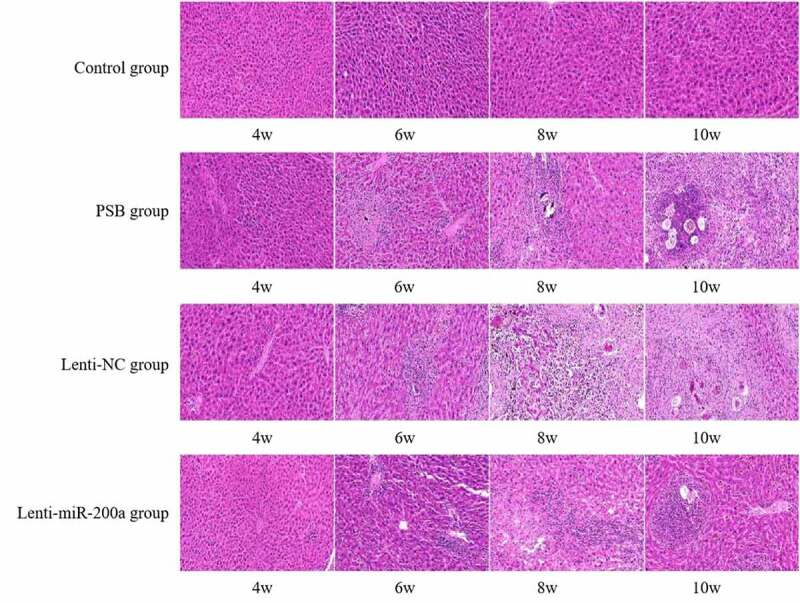
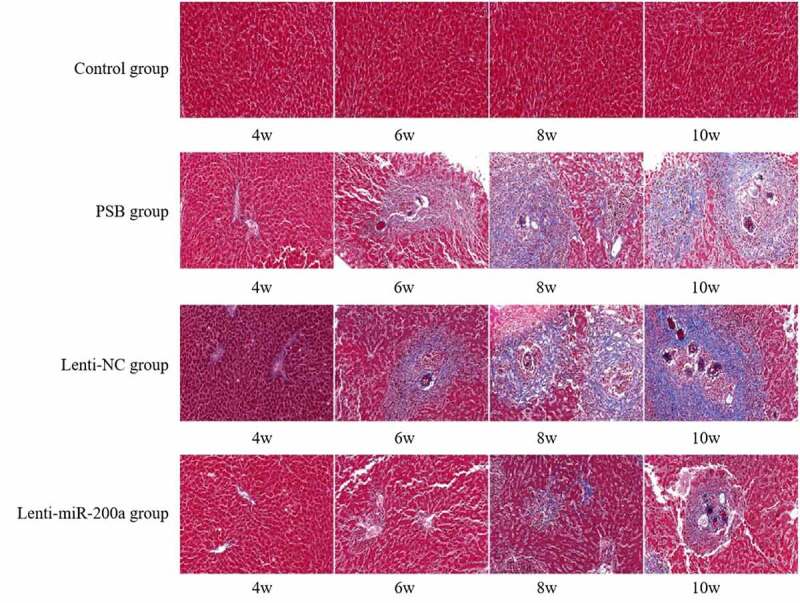
MicroRNA 200a (miR-200a) can inhibit the activation and proliferation of hepatic stellate cells (HSCs) through the transforming growth factor-β (TGF-β) signaling pathway, and improve fibrotic lesions. However, to date, there is no study exploring the role of miR-200a in schistosomiasis liver fibrosis (SLF). In this study, 64 healthy female Balb/c mice were selected and randomly divided into four groups: normal control group (non-infected schistosomiasis group), schistosomiasis model group, Lenti-NC group (lentivirus-negative control group), and Lenti-miR-200a group (lentivirus experimental group). Fluorescence quantitative PCR detection was used to measure the expression level of RNA. HE and Masson staining were used to observe the pathological changes of mouse liver tissue. Furthermore, ELISA was used to detect the serum concentrations of inflammation factors. We found that the expression level of miR-200a in liver tissues gradually decreased with the development of SLF. However, fibrosis factors (α-SMA and TGF-β2) and inflammatory cytokines (IL-4 and IFN-γ) in liver tissues and serum increased and the expression level of Colla I reached its peak in the 6th week of infection. Besides, compared with the schistosomiasis group and Lenti-NC group, the Lenti-NC group had lower levels of α-SMA, TGF-β2 and Colla I (P > 0.05). Furthermore, inflammatory cells and blue collagen fibers appeared and they increased with the development of infection in the schistosomiasis group and Lenti-NC group, but these changes reduced significantly in Lenti-miR-200a group. Our study demonstrated that upregulation of miR-200a might contribute to inhibiting schistosomiasis liver fibrosis.
微小 RNA 200a(miR-200a)可以通过转化生长因子-β(TGF-β)信号通路抑制肝星状细胞(HSCs)的激活和增殖,改善纤维化病变。然而,迄今为止,尚无研究探讨 miR-200a 在血吸虫病肝纤维化(SLF)中的作用。在这项研究中,选择了 64 只健康雌性 Balb/c 小鼠,并将其随机分为四组:正常对照组(未感染血吸虫病组)、血吸虫病模型组、Lenti-NC 组(慢病毒阴性对照组)和 Lenti-miR-200a 组(慢病毒实验组)。荧光定量 PCR 检测用于测量 RNA 的表达水平。HE 和 Masson 染色用于观察小鼠肝组织的病理变化。此外,ELISA 用于检测血清中炎症因子的浓度。我们发现 miR-200a 在肝组织中的表达水平随着 SLF 的发展逐渐降低。然而,纤维化因子(α-SMA 和 TGF-β2)和炎症细胞因子(IL-4 和 IFN-γ)在肝组织和血清中的表达水平增加,Colla I 的表达水平在感染的第 6 周达到峰值。此外,与血吸虫病组和 Lenti-NC 组相比,Lenti-NC 组的 α-SMA、TGF-β2 和 Colla I 水平较低(P>0.05)。此外,在血吸虫病组和 Lenti-NC 组中,炎症细胞和蓝色胶原纤维出现并随着感染的发展而增加,但在 Lenti-miR-200a 组中这些变化明显减少。我们的研究表明,上调 miR-200a 可能有助于抑制血吸虫病肝纤维化。