Department of Physiology, Anatomy & Genetics, University of Oxford, OX1 3PT Oxford, England.
Molecular Haematology Laboratory, Oxford University Hospitals National Health Service (NHS) Foundation Trust, John Radcliffe Hospital, OX3 9DS Oxford, England.
Proc Natl Acad Sci U S A. 2020 May 5;117(18):10067-10078. doi: 10.1073/pnas.1916641117. Epub 2020 Apr 22.
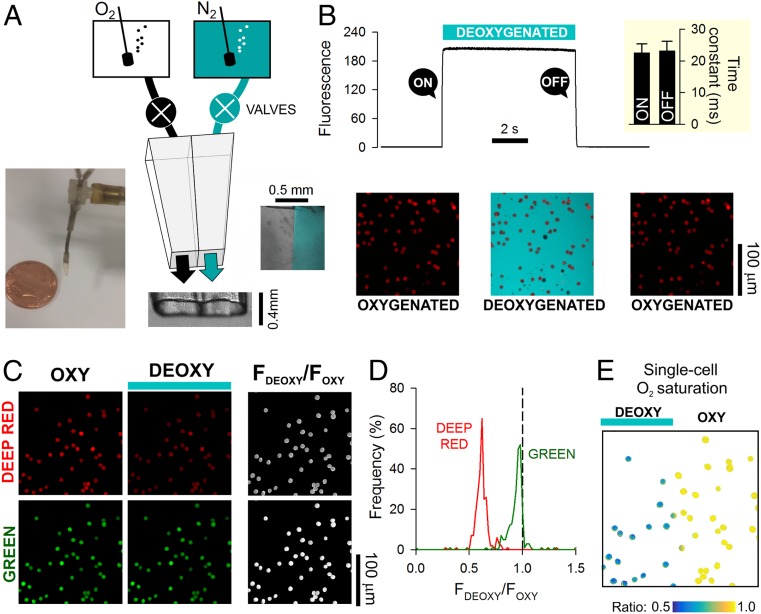
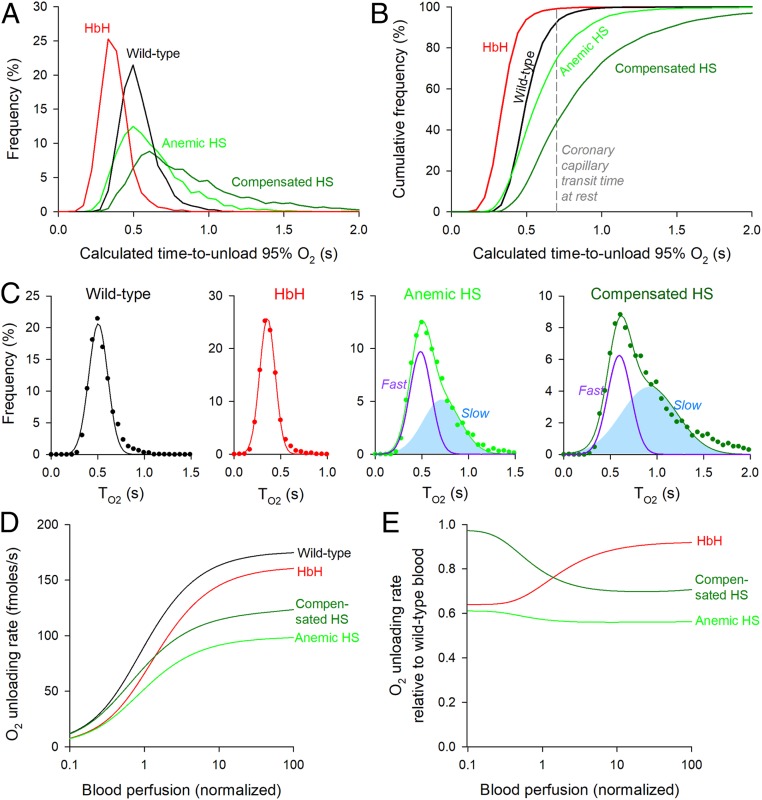
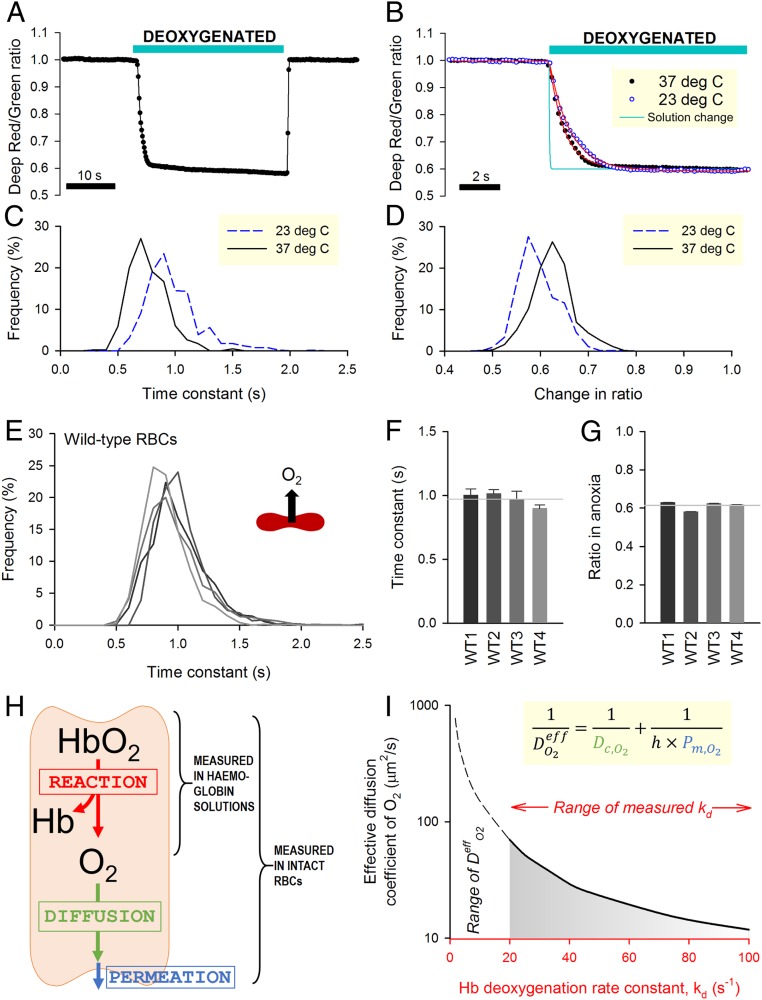
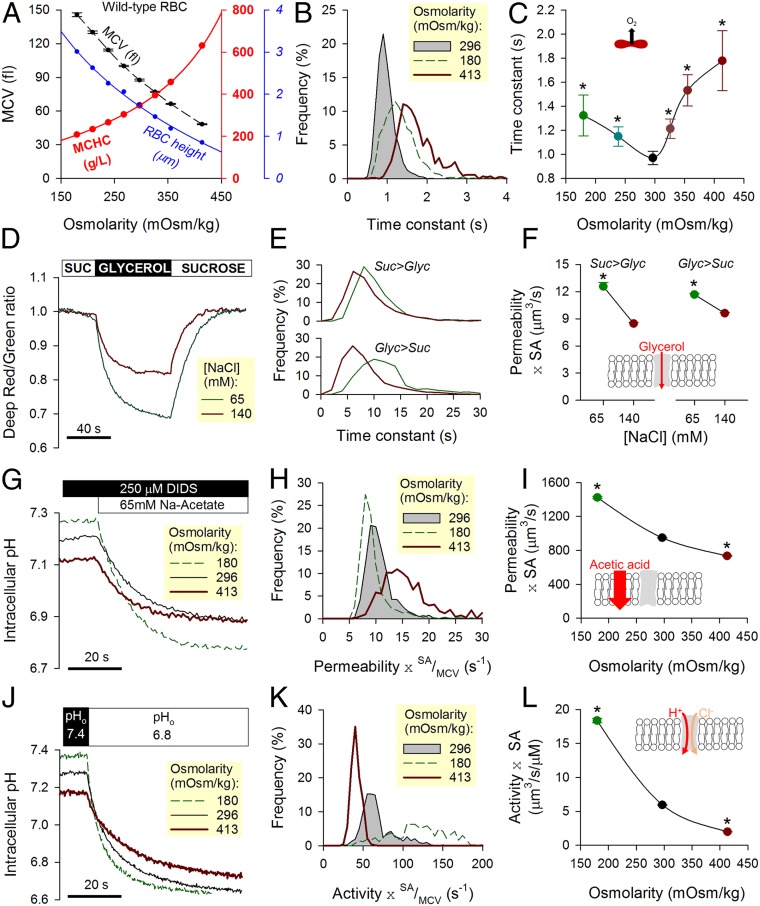
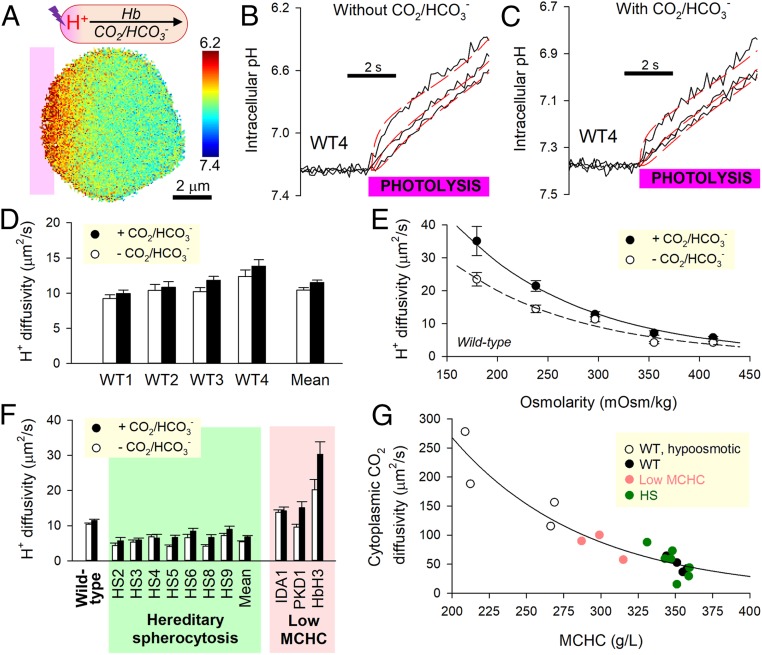
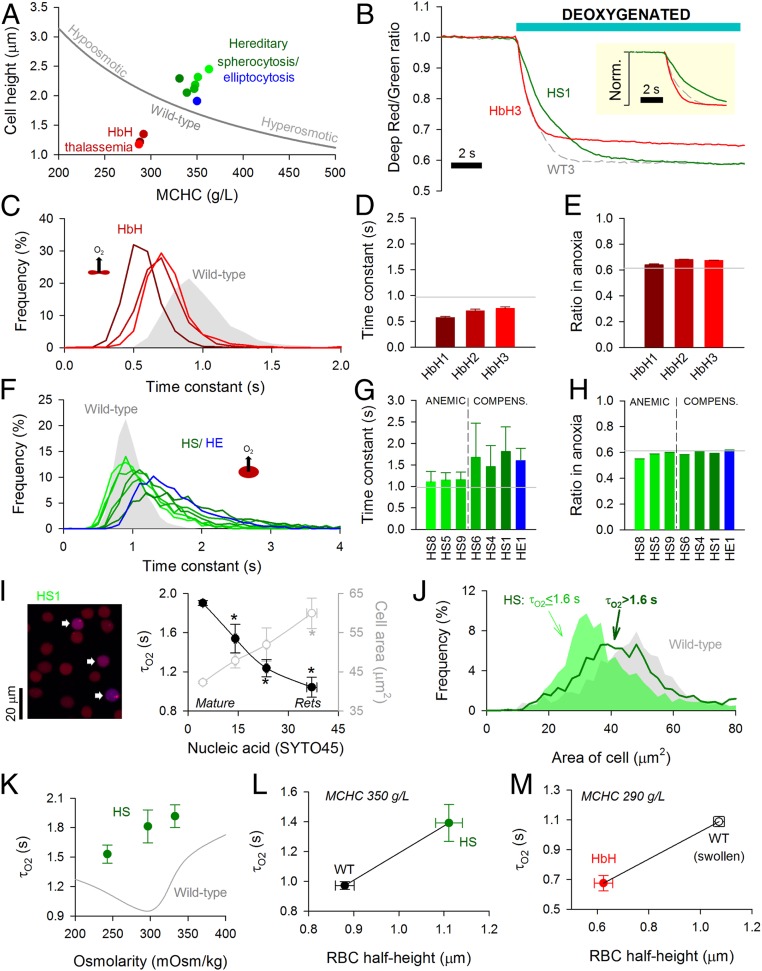
Disorders of oxygen transport are commonly attributed to inadequate carrying capacity (anemia) but may also relate to inefficient gas exchange by red blood cells (RBCs), a process that is poorly characterized yet assumed to be rapid. Without direct measurements of gas exchange at the single-cell level, the barriers to O transport and their relationship with hematological disorders remain ill defined. We developed a method to track the flow of O in individual RBCs by combining ultrarapid solution switching (to manipulate gas tension) with single-cell O saturation fluorescence microscopy. O unloading from RBCs was considerably slower than previously estimated in acellular hemoglobin solutions, indicating the presence of diffusional barriers in intact cells. Rate-limiting diffusion across cytoplasm was demonstrated by osmotically induced changes to hemoglobin concentration (i.e., diffusive tortuosity) and cell size (i.e., diffusion pathlength) and by comparing wild-type cells with hemoglobin H (HbH) thalassemia (shorter pathlength and reduced tortuosity) and hereditary spherocytosis (HS; expanded pathlength). Analysis of the distribution of O unloading rates in HS RBCs identified a subpopulation of spherocytes with greatly impaired gas exchange. Tortuosity imposed by hemoglobin was verified by demonstrating restricted diffusivity of CO, an acidic gas, from the dissipative spread of photolytically uncaged H ions across cytoplasm. Our findings indicate that cytoplasmic diffusion, determined by pathlength and tortuosity, is a major barrier to efficient gas handling by RBCs. Consequently, changes in RBC shape and hemoglobin concentration, which are common manifestations of hematological disorders, can have hitherto unrecognized and clinically significant implications on gas exchange.
氧运输紊乱通常归因于载氧能力不足(贫血),但也可能与红细胞(RBC)的低效气体交换有关,而红细胞的气体交换过程尚未得到很好的描述,被认为是快速的。在没有单细胞水平气体交换的直接测量的情况下,氧运输的障碍及其与血液学紊乱的关系仍然定义不明确。我们开发了一种方法,通过将超快速溶液切换(用于操纵气体张力)与单细胞氧饱和度荧光显微镜结合,来跟踪单个 RBC 中的 O 流动。与无细胞血红蛋白溶液中以前估计的相比,RBC 中的 O 卸载要慢得多,这表明完整细胞中存在扩散屏障。细胞质中限速扩散是通过渗透压诱导的血红蛋白浓度变化(即扩散曲折度)和细胞大小变化(即扩散路径长度)来证明的,并且通过将野生型细胞与血红蛋白 H(HbH)地中海贫血(较短的路径长度和降低的曲折度)和遗传性球形红细胞增多症(HS;扩展路径长度)进行比较来证明。对 HS RBC 中 O 卸载速率分布的分析确定了一个具有严重气体交换受损的球形红细胞亚群。通过证明酸性气体 CO 的扩散受到血红蛋白的限制,从细胞质中光解未笼合的 H 离子的耗散扩散,可以验证血红蛋白引起的曲折度。我们的研究结果表明,细胞质扩散由路径长度和曲折度决定,是 RBC 有效气体处理的主要障碍。因此,RBC 形状和血红蛋白浓度的变化,这些是血液学紊乱的常见表现,可能对气体交换具有迄今为止未被认识到的和临床上重要的影响。