School of Psychology, The University of Queensland, Brisbane, Queensland, Australia.
Center for Compassion and Altruism Research and Education, Stanford University School of Medicine, 2490 Hospital Drive, Suite 106, Stanford, California, USA.
Sci Rep. 2020 Apr 22;10(1):6789. doi: 10.1038/s41598-020-63846-3.
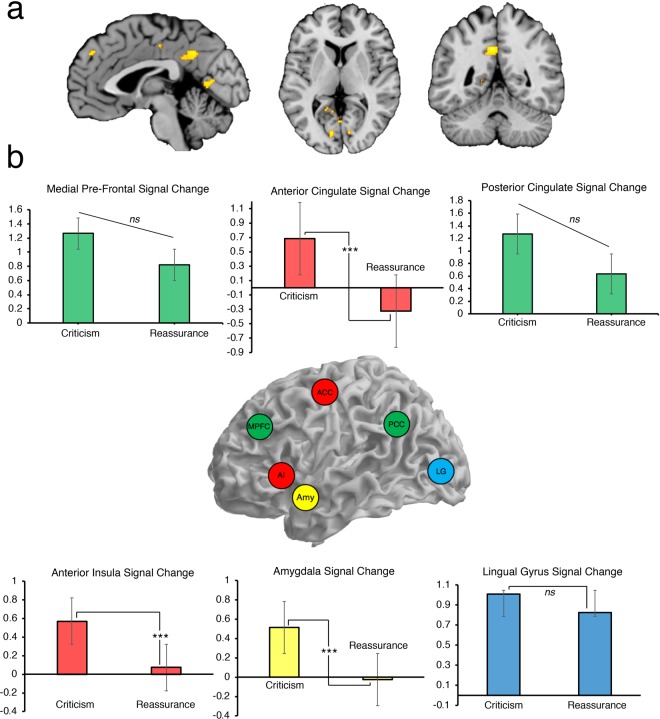
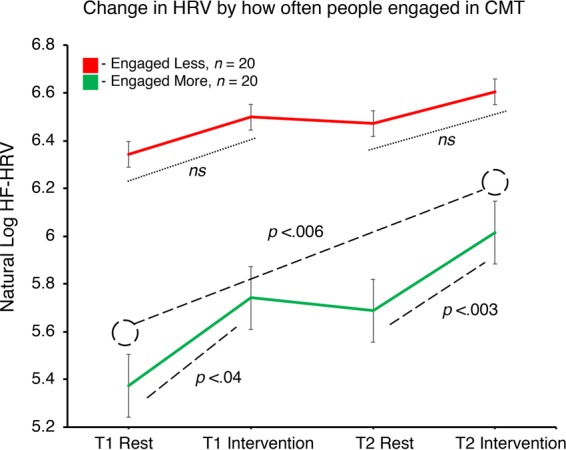
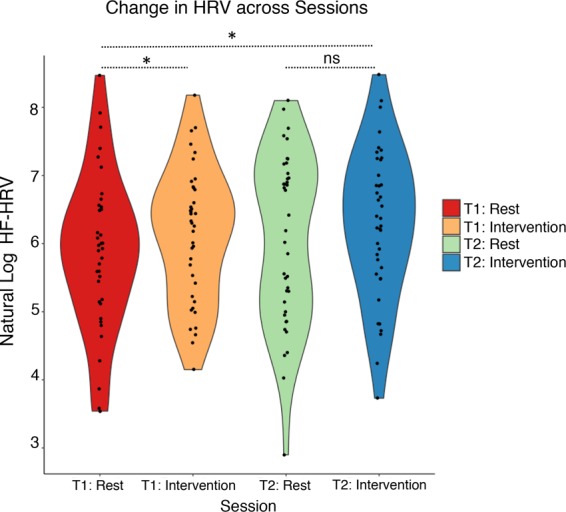
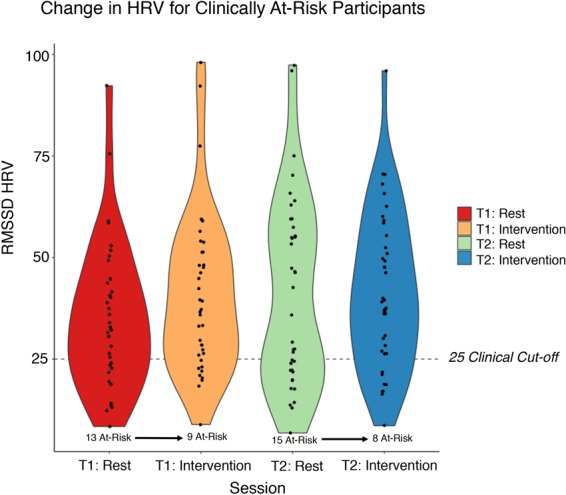
The scientific study of compassion is burgeoning, however the putative neurophysiological markers of programs which actively train distress tolerance, such as Compassionate Mind Training (CMT), are less well known. Herein we offer an integrative, multi-method approach which investigated CMT at neural, physiological, self-report, and behavioural levels. Specifically, this study first assessed participants' neural responses when confronted with disappointments (e.g., rejection, failure) using two fundamental self-regulatory styles, self-criticism and self-reassurance. Second, participant's heart-rate variability (HRV) - a marker of parasympathetic nervous system response - was assessed during compassion training, pre- and post- a two-week self-directed engagement period. We identified neural networks associated with threat are reduced when practicing compassion, and heightened when being self-critical. In addition, cultivating compassion was associated with increased parasympathetic response as measured by an increase in HRV, versus the resting-state. Critically, cultivating compassion was able to shift a subset of clinically-at risk participants to one of increased parasympathetic response. Further, those who began the trial with lower resting HRV also engaged more in the intervention, possibly as they derived more benefits, both self-report and physiologically, from engagement in compassion.
同情心的科学研究正在兴起,然而,对于积极训练耐受力的项目(如慈悲心训练)的假定神经生理学标记物,人们了解得还不够多。在此,我们提供了一种综合的、多方法的方法,从神经、生理、自我报告和行为水平上研究了慈悲心训练。具体来说,本研究首先使用两种基本的自我调节风格(自我批评和自我安慰)评估了参与者在面对失望(例如拒绝、失败)时的神经反应。其次,在为期两周的自我指导参与期之前和之后,评估了参与者的心率变异性(HRV)——副交感神经系统反应的标志。我们发现,当练习慈悲心时,与威胁相关的神经网络减少,而当自我批判时,这些神经网络增加。此外,培养慈悲心与副交感神经反应的增加有关,这可以通过 HRV 的增加来衡量,而与静息状态相比。重要的是,培养慈悲心可以使一部分处于临床风险的参与者转向增加副交感神经反应。此外,那些在试验开始时静息 HRV 较低的人也更多地参与了干预,可能是因为他们从参与慈悲心训练中获得了更多的自我报告和生理上的益处。