State Key Laboratory for Diagnosis & Treatment of Infectious Diseases, The First Affiliated Hospital, Zhejiang University School of Medicine, Zhejiang, China.
National Clinical Research Center for Infectious Diseases, The First Affiliated Hospital, Zhejiang University School of Medicine, Zhejiang, China.
Cancer Res Treat. 2020 Jul;52(3):973-986. doi: 10.4143/crt.2019.726. Epub 2020 Apr 22.
Triple-negative breast cancer (TNBC) is highly malignant and has poor prognosis and a high mortality rate. The lack of effective therapy has spurred our investigation of new targets for treating this malignant cancer. Here, we identified RON (macrophage-stimulating 1 receptor) and MET (MET proto-oncogene, receptor tyrosine kinase) as a prognostic biomarker and therapeutic targets for potential TNBC treatment.
We analyzed RON and MET expression in 187 primary TNBC clinical samples with immunohistochemistry. We validated the targeted therapeutic effects of RON and MET in TNBC using three tyrosine kinase inhibitors (TKIs): BMS-777607, INCB28060, and tivantinib. The preclinical therapeutic efficacy of the TKIs was mainly estimated using a TNBC xenograft model.
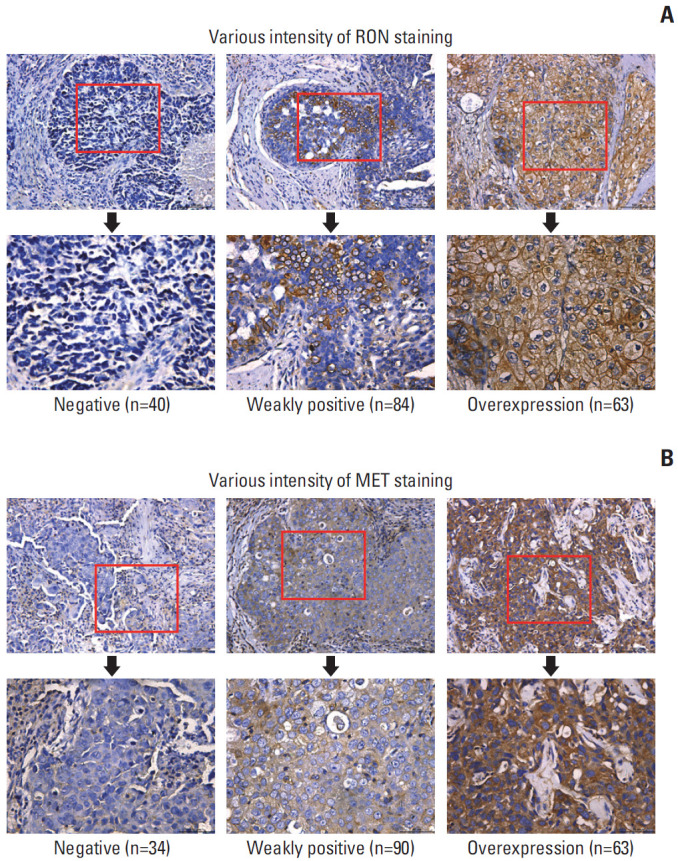
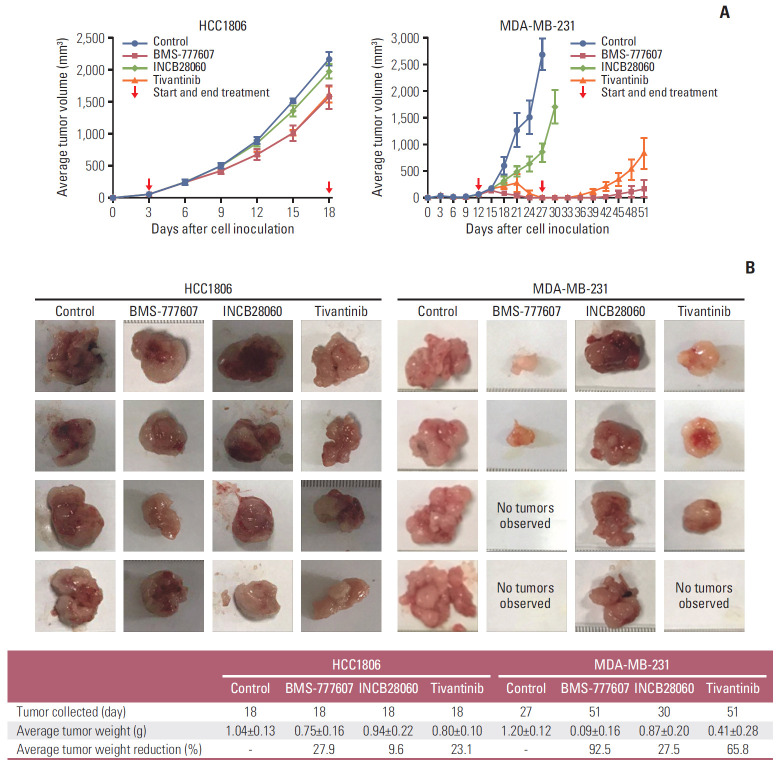
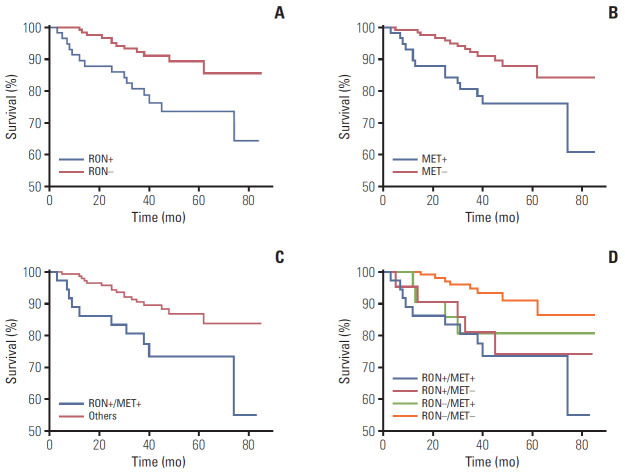
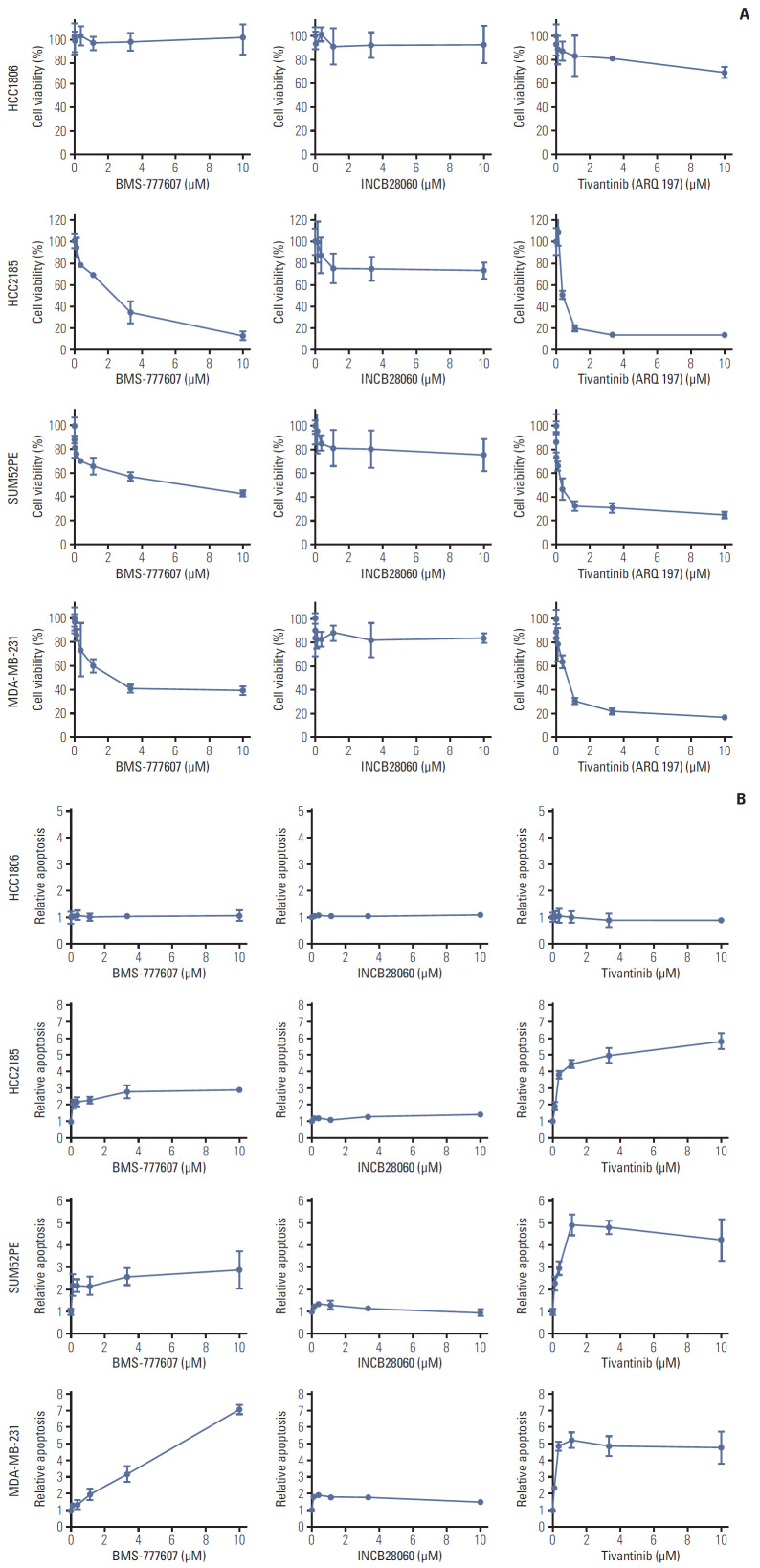
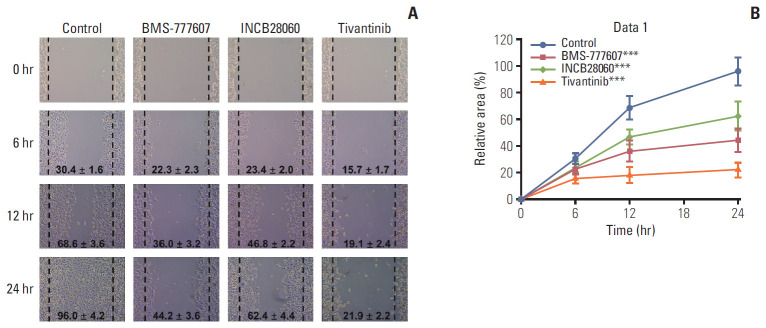
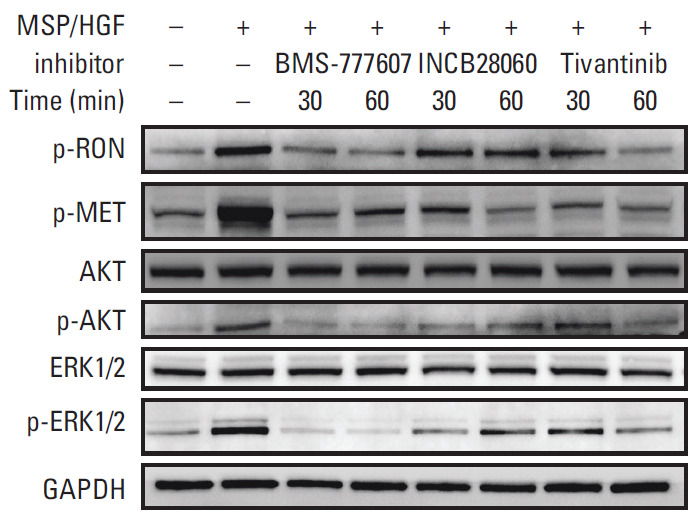
Patients with TNBC had widespread, abnormal expression of RON and MET. There was RON overexpression, MET overexpression, and RON and MET co-overexpression in 63 (33.7%), 63 (33.7%), and 43 cases (23.0%), respectively, which had poor prognosis and short survival. In vivo, the TKI targeting RON ant MET inhibited the activation of the downstream signaling molecules, inhibited TNBC cell migration and proliferation, and increased TNBC cell apoptosis; in the xenograft model, they significantly inhibited tumor growth and shrank tumor volumes. The TKI targeting RON and Met, such as BMS-777607 and tivantinib, yielded stronger anti-tumor effects than INCB28060.
RON and MET co-overexpression can be significant pathological characteristics in TNBC for poor prognosis. TKIs targeting RON and MET have stronger drug development potential for treating TNBC.
三阴性乳腺癌(TNBC)恶性程度高,预后差,死亡率高。缺乏有效的治疗方法促使我们寻找新的治疗靶点来治疗这种恶性癌症。在这里,我们确定 RON(巨噬细胞刺激 1 受体)和 MET(MET 原癌基因,受体酪氨酸激酶)作为一个预测标志物和治疗靶点,用于潜在的 TNBC 治疗。
我们使用免疫组织化学分析了 187 例原发性 TNBC 临床样本中的 RON 和 MET 表达。我们使用三种酪氨酸激酶抑制剂(TKIs):BMS-777607、INCB28060 和 tivantinib 验证了 RON 和 MET 在 TNBC 中的靶向治疗效果。TKIs 的临床前治疗效果主要通过 TNBC 异种移植模型来评估。
TNBC 患者存在广泛、异常的 RON 和 MET 表达。63 例(33.7%)患者存在 RON 过表达,63 例(33.7%)患者存在 MET 过表达,43 例(23.0%)患者存在 RON 和 MET 共过表达,这些患者的预后较差,生存时间较短。在体内,靶向 RON 和 MET 的 TKI 抑制了下游信号分子的激活,抑制了 TNBC 细胞的迁移和增殖,增加了 TNBC 细胞的凋亡;在异种移植模型中,它们显著抑制了肿瘤的生长,缩小了肿瘤体积。靶向 RON 和 Met 的 TKI,如 BMS-777607 和 tivantinib,比 INCB28060 具有更强的抗肿瘤作用。
RON 和 MET 共过表达可能是 TNBC 预后不良的显著病理特征。靶向 RON 和 MET 的 TKIs 具有更强的药物开发潜力,可用于治疗 TNBC。