Cazes Alex, Childers Betzaira G, Esparza Edgar, Lowy Andrew M
Moores Cancer Center, Department of Surgery, Division of Surgical Oncology, University of California San Diego, La Jolla, CA 92037, USA.
Cancers (Basel). 2022 Apr 18;14(8):2037. doi: 10.3390/cancers14082037.
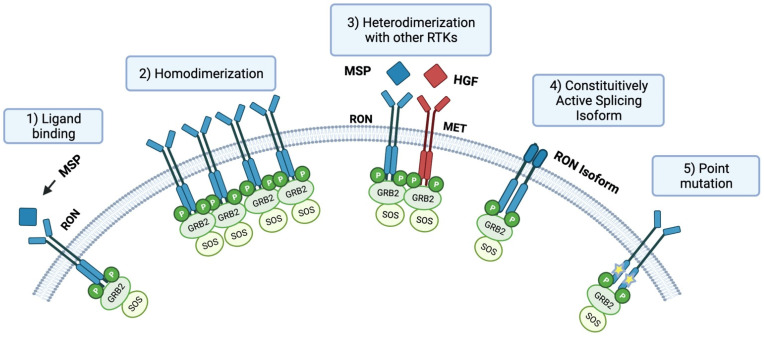
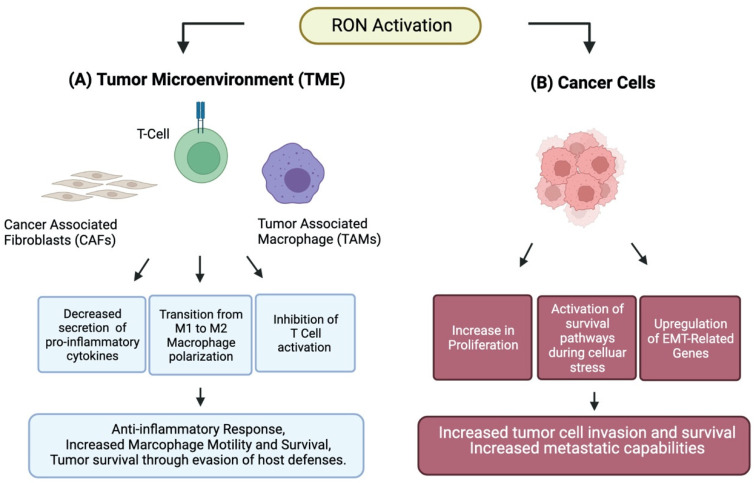
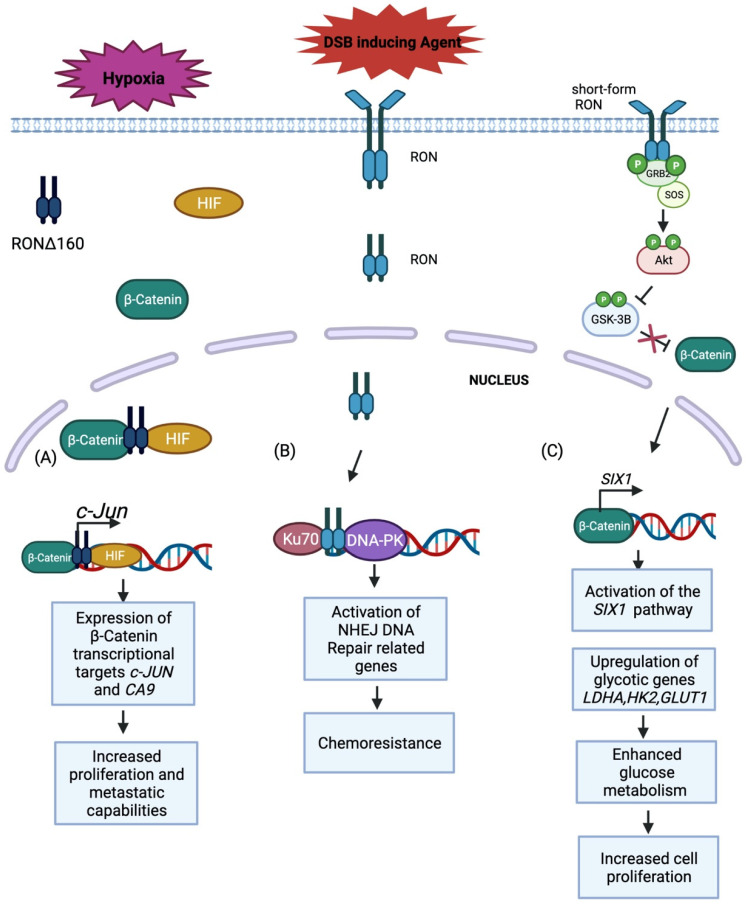
The MST1R/RON receptor tyrosine kinase is a homologue of the more well-known MET receptor. Like MET, RON orchestrates cell signaling pathways that promote oncogenesis and enable cancer cell survival; however, it has a more unique role in the regulation of inflammation. RON was originally described as a transmembrane receptor expressed on tissue resident macrophages and various epithelial cells. RON is overexpressed in a variety of cancers and its activation modifies multiple signaling pathways with resultant changes in epithelial and immune cells which together modulate oncogenic phenotypes. While several RON isoforms have been identified with differences in structure, activation, and pathway regulation, increased RON expression and/or activation is consistently associated with worse outcomes. Tyrosine kinase inhibitors targeting RON have been developed, making RON an actionable therapeutic target.
MST1R/RON受体酪氨酸激酶是更为知名的MET受体的同源物。与MET一样,RON协调促进肿瘤发生并使癌细胞存活的细胞信号通路;然而,它在炎症调节中具有更独特的作用。RON最初被描述为在组织驻留巨噬细胞和各种上皮细胞上表达的跨膜受体。RON在多种癌症中过度表达,其激活会改变多个信号通路,导致上皮细胞和免疫细胞发生变化,共同调节致癌表型。虽然已鉴定出几种在结构、激活和通路调节方面存在差异的RON异构体,但RON表达和/或激活增加始终与更差的预后相关。已开发出靶向RON的酪氨酸激酶抑制剂,使RON成为一个可操作的治疗靶点。