Li Han, Wyant Rachel, Aldrich Greg, Koppel Kadri
Center of Sensory Analysis and Consumer Behavior, Department of Food Nutrition Dietetics and Health, Kansas State University, Manhattan, KS 66506, USA.
Department of Animal Science and Industry, Kansas State University, Manhattan, KS 66506, USA.
Animals (Basel). 2020 Apr 19;10(4):710. doi: 10.3390/ani10040710.
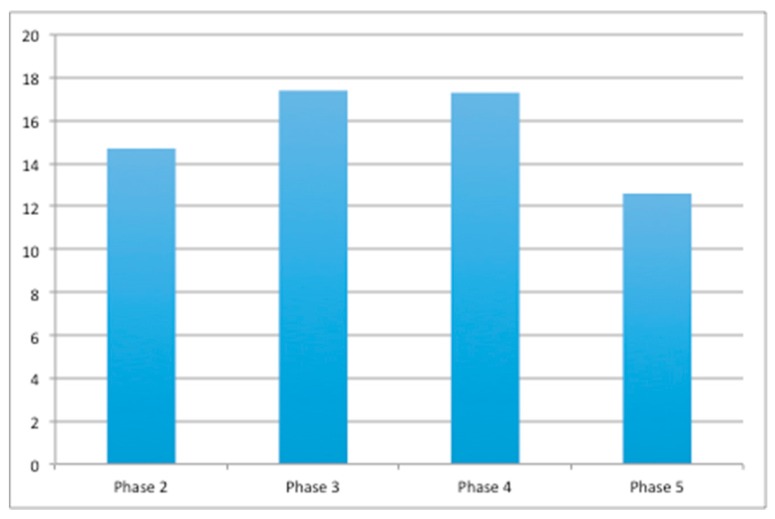
The growth of the number of pet products and the pet food industry is continuous. This is partially driven by palatability and perceptions of preference. A preference ranking procedure for dogs has been proposed in order to suggest a more efficient method to study the palatability of food products for dogs. This method was developed based on the assumption that (1) dogs would be more motivated to solve a puzzle for foods that they preferred and (2) the order in which the dogs obtained the treats from the puzzles would indicate the ranking of their preferences. This current study included a validation test that was conducted with 12 dogs to determine if the proposed method was reliable. The validation followed the same procedure as the preliminary test for most parts and dedicated a separate phase each for training, fats, proteins, starches, and complex diets. The results from phases 2 to 4 showed a similar pattern with the preliminary test: Fish oil was preferred over lard, liver over beef, and corn over chickpea. The results from phase 5 showed that the ranking of the combination of the ingredients reflected the preference of the dogs for individual ingredients. As a result, this method was concluded to be reliable.
宠物产品数量和宠物食品行业的增长持续不断。这部分是由适口性和偏好认知驱动的。为了提出一种更有效的方法来研究犬用食品的适口性,已经提出了一种针对犬的偏好排序程序。该方法是基于以下假设开发的:(1)狗会更有动力为它们喜欢的食物解决谜题;(2)狗从谜题中获得零食的顺序将表明它们的偏好排名。当前的这项研究包括一项对12只狗进行的验证测试,以确定所提出的方法是否可靠。验证在大多数部分遵循与初步测试相同的程序,并分别为训练、脂肪、蛋白质、淀粉和复合饮食设立了一个单独的阶段。第2至4阶段的结果与初步测试显示出相似的模式:鱼油比猪油更受青睐,肝脏比牛肉更受青睐,玉米比鹰嘴豆更受青睐。第5阶段的结果表明,成分组合的排名反映了狗对单个成分的偏好。因此,得出结论,该方法是可靠的。