Department of Neurology, Akershus University Hospital, Lørenskog, Norway.
Institute of Clinical Medicine, University of Oslo, Oslo, Norway.
Front Immunol. 2020 Apr 9;11:598. doi: 10.3389/fimmu.2020.00598. eCollection 2020.
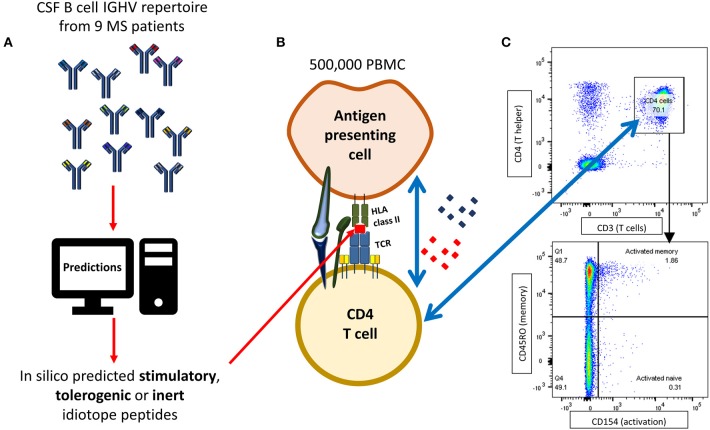
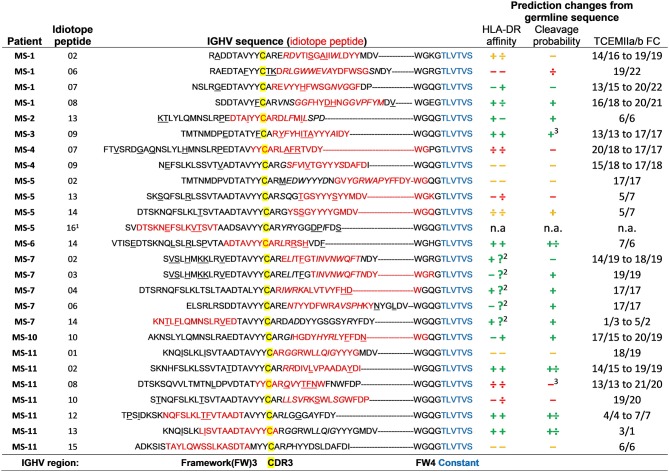
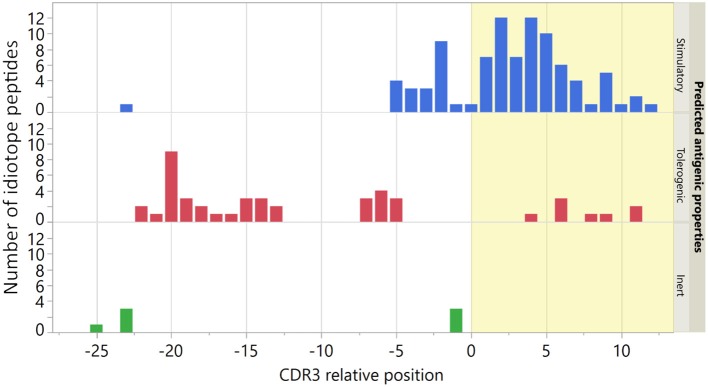
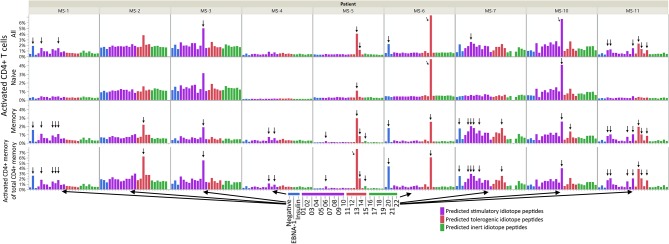
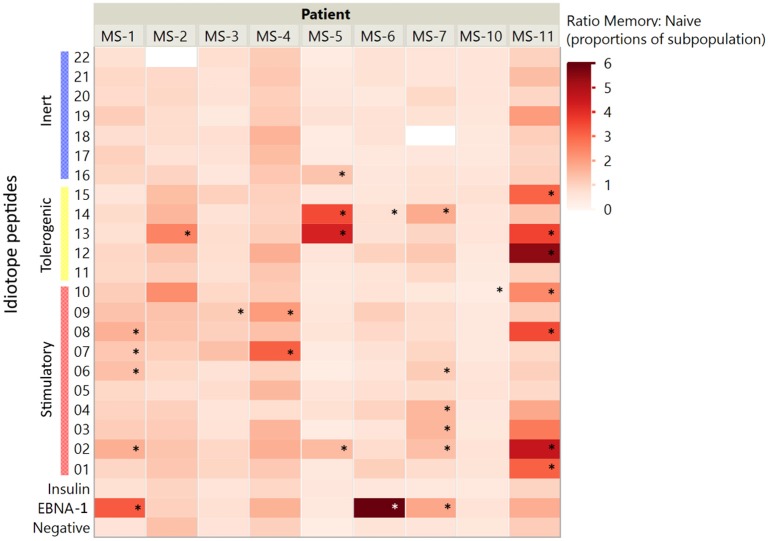
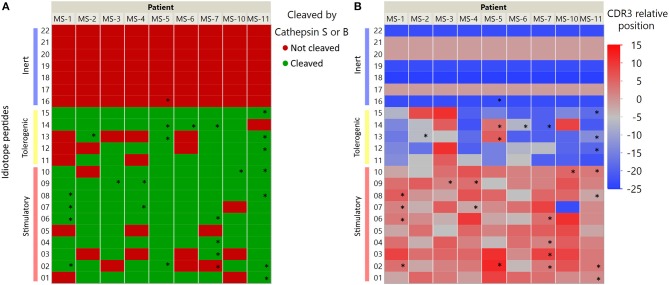
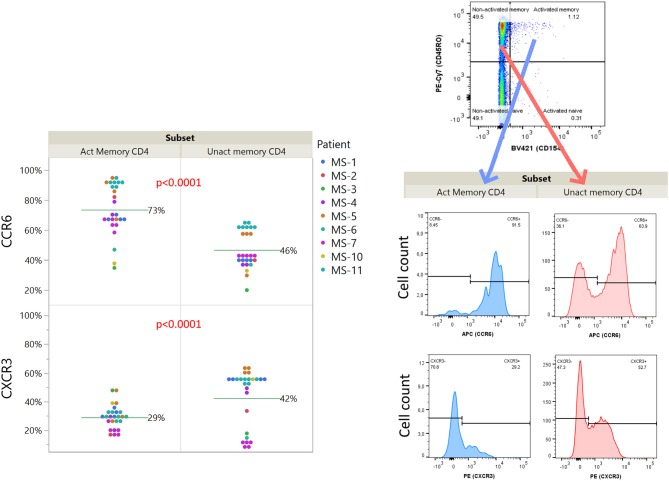
B cells are important pathogenic players in multiple sclerosis (MS), but their exact role is not known. We have previously demonstrated that B cells from cerebrospinal fluid (CSF) of MS patients can activate T cells that specifically recognize antigenic determinants (idiotopes) from their B cell receptors (BCRs). The aim of this study was to evaluate whether prediction models could identify antigenic idiotopes of immunoglobulin heavy-chain variable (IGHV) transcriptomes in MS patients. We utilized a previously assembled dataset of CSF IGHV repertoires from MS patients. To guide selection of potential antigenic idiotopes, we used predicted HLA-DR affinity, endosomal processing, as well as transcript frequency from nine MS patients. Idiotopes with predicted low affinity and low likelihood of cathepsins cleavage were inert controls. Peripheral blood mononuclear cells from these patients were stimulated with the selected idiotope peptides in presence of anti-CD40 for 12 h. T cells were then labeled for activation status with anti-CD154 antibodies and CD3CD4 T cells phenotyped as memory (CD45RO) or naïve (CD45RO), with potential for brain migration (CXCR3 and/or CCR6 expression). Anti-CD14 and -CD8 were utilized to exclude monocytes and CD8 T cells. Unstimulated cells or insulin peptides were negative controls, and EBNA-1 peptides or CD3/CD28 beads were positive controls. The mean proportion of responding memory CD4 T cells from all nine MS patients was significantly higher for idiotope peptides with predicted high HLA-DR affinity and high likelihood of cathepsin cleavage, than toward predicted inert peptides. Responses were mainly observed toward peptides affiliated with the CDR3 region. Activated memory CD4 T cells expressed the chemokine receptor CCR6, affiliated with a Th17 phenotype and allowing passage into the central nervous system (CNS). This study suggests that that antigenic properties of BCR idiotopes can be identified using HLA affinity and endosomal processing predictions. It further indicates that MS patients have a memory T cell repertoire capable of recognizing frequent BCR idiotopes found in endogenous CSF, and that these T cells express chemokine receptors allowing them to reach the CSF B cells expressing these idiotopes.
B 细胞是多发性硬化症(MS)中的重要致病因素,但它们的确切作用尚不清楚。我们之前的研究表明,来自 MS 患者脑脊液(CSF)的 B 细胞可以激活特异性识别其 B 细胞受体(BCR)抗原决定簇(独特型)的 T 细胞。本研究旨在评估预测模型是否可以识别 MS 患者免疫球蛋白重链可变(IGHV)转录本中的抗原独特型。我们利用之前从 MS 患者 CSF 中组装的 IGHV 库数据集。为了指导潜在抗原独特型的选择,我们使用了来自 9 位 MS 患者的预测 HLA-DR 亲和力、内体处理以及转录频率。具有低亲和力和低蛋白酶切割可能性的独特型作为惰性对照。用选定的独特型肽在抗 CD40 存在下刺激这些患者的外周血单核细胞 12 小时。然后用抗 CD154 抗体标记 T 细胞以检测激活状态,并用 CD3CD4 T 细胞表型鉴定为记忆(CD45RO)或幼稚(CD45RO),具有向脑迁移的潜力(CXCR3 和/或 CCR6 表达)。用抗 CD14 和 -CD8 排除单核细胞和 CD8 T 细胞。未刺激的细胞或胰岛素肽作为阴性对照,EBNA-1 肽或 CD3/CD28 珠作为阳性对照。来自所有 9 位 MS 患者的反应性记忆 CD4 T 细胞的平均比例对于具有高 HLA-DR 亲和力和高蛋白酶切割可能性的独特型肽明显高于预测惰性肽。反应主要针对与 CDR3 区域相关的肽。激活的记忆 CD4 T 细胞表达趋化因子受体 CCR6,与 Th17 表型相关,并允许进入中枢神经系统(CNS)。这项研究表明,使用 HLA 亲和力和内体处理预测可以识别 BCR 独特型的抗原特性。它进一步表明,MS 患者具有能够识别内源性 CSF 中常见 BCR 独特型的记忆 T 细胞库,并且这些 T 细胞表达允许它们到达表达这些独特型的 CSF B 细胞的趋化因子受体。