Department of Pathology and Laboratory Medicine, Perelman School of Medicine, University of Pennsylvania, Philadelphia, PA, United States.
Front Immunol. 2020 Apr 9;11:621. doi: 10.3389/fimmu.2020.00621. eCollection 2020.
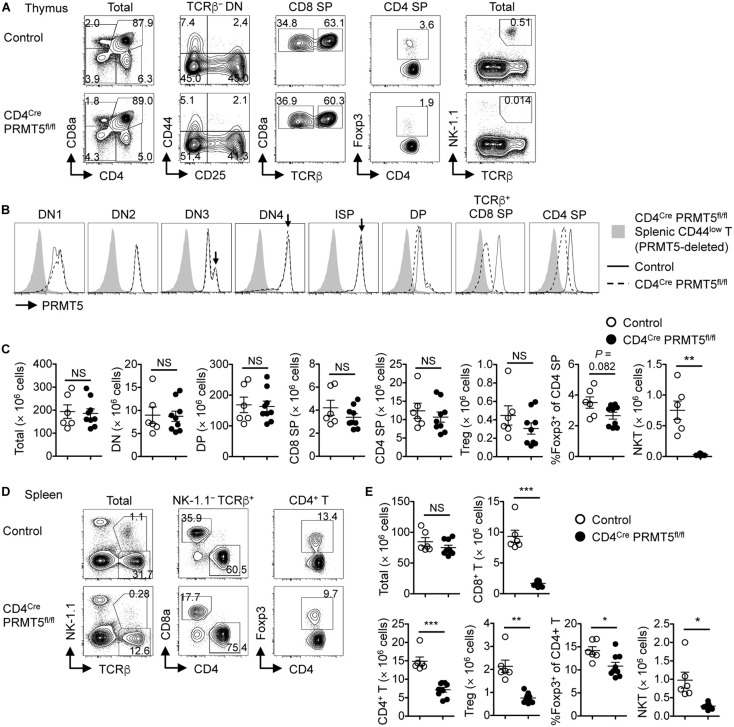
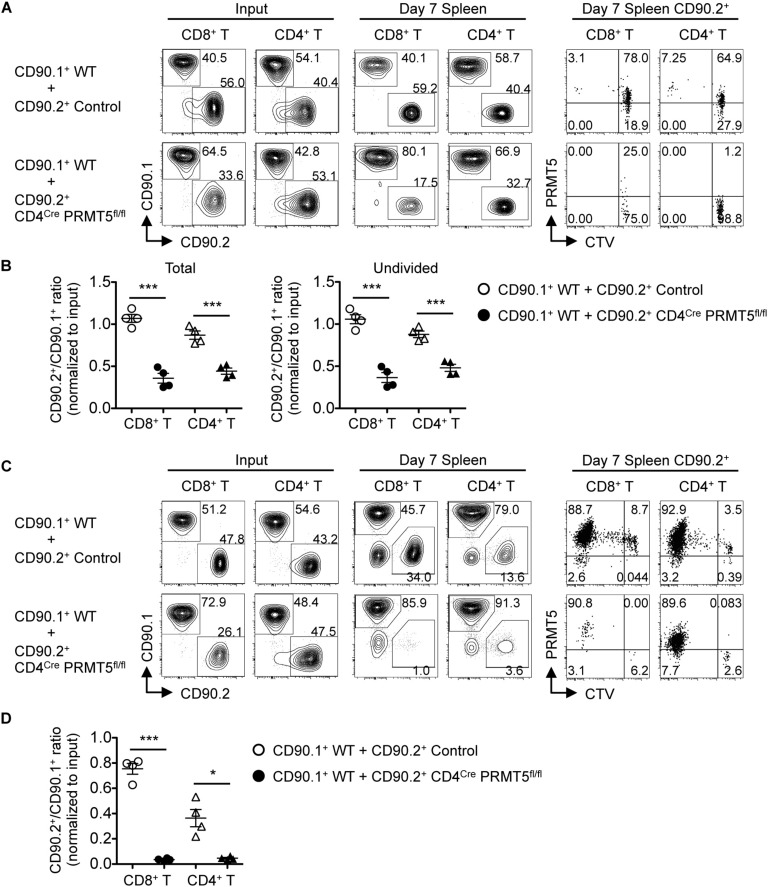
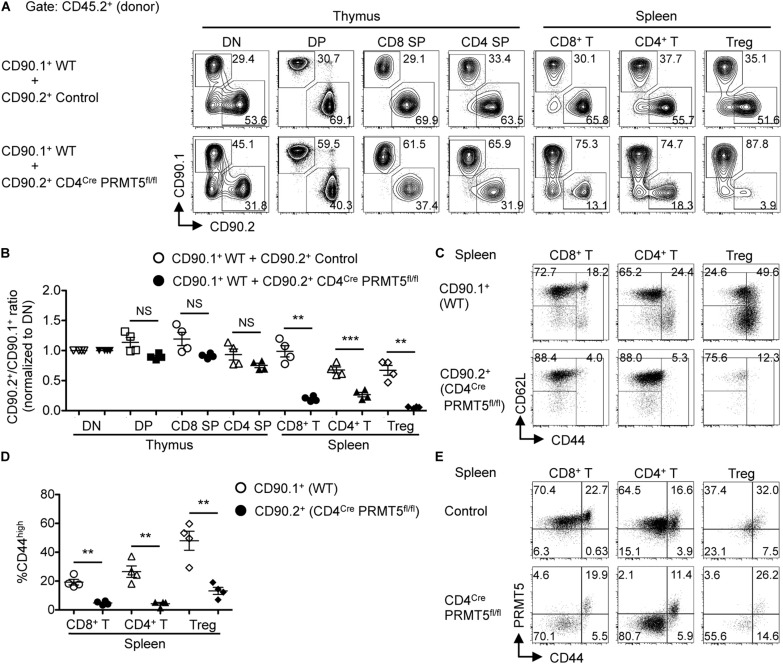
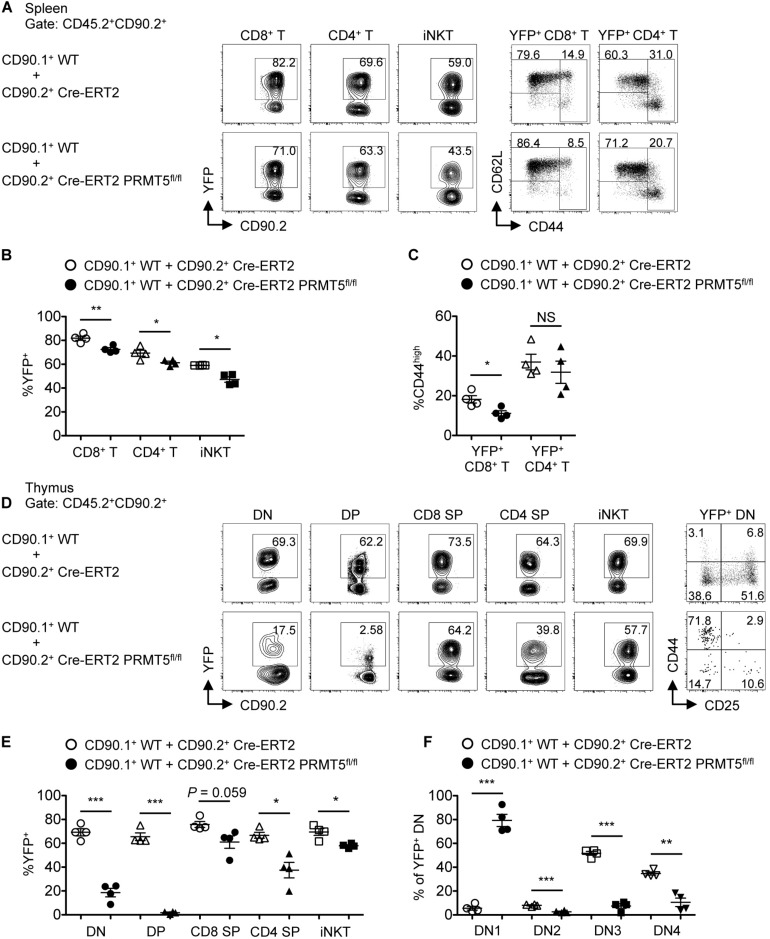
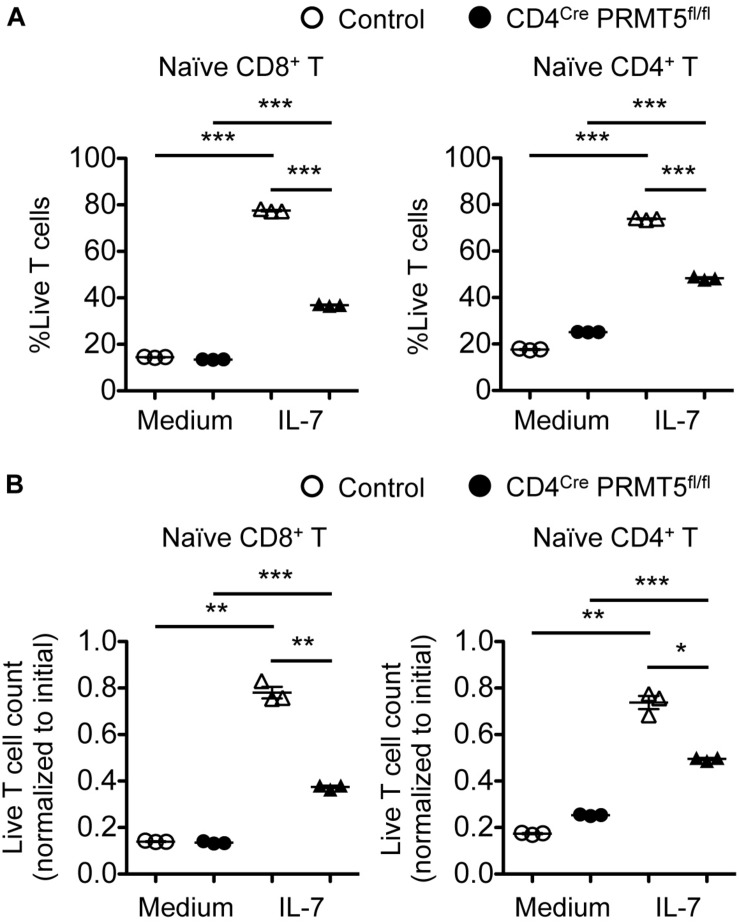
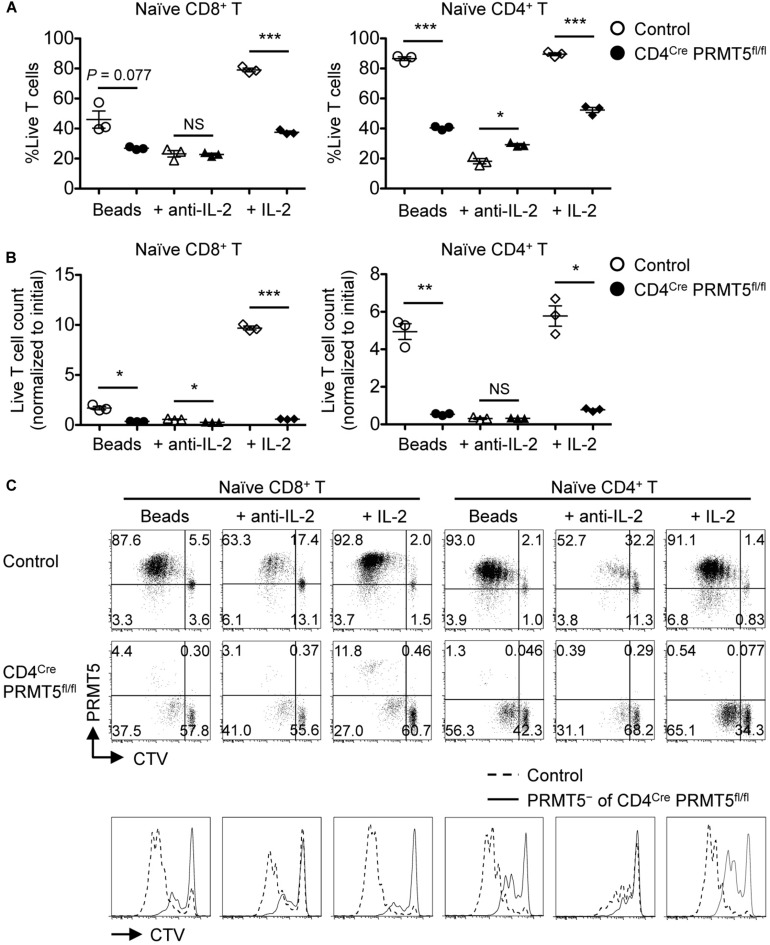
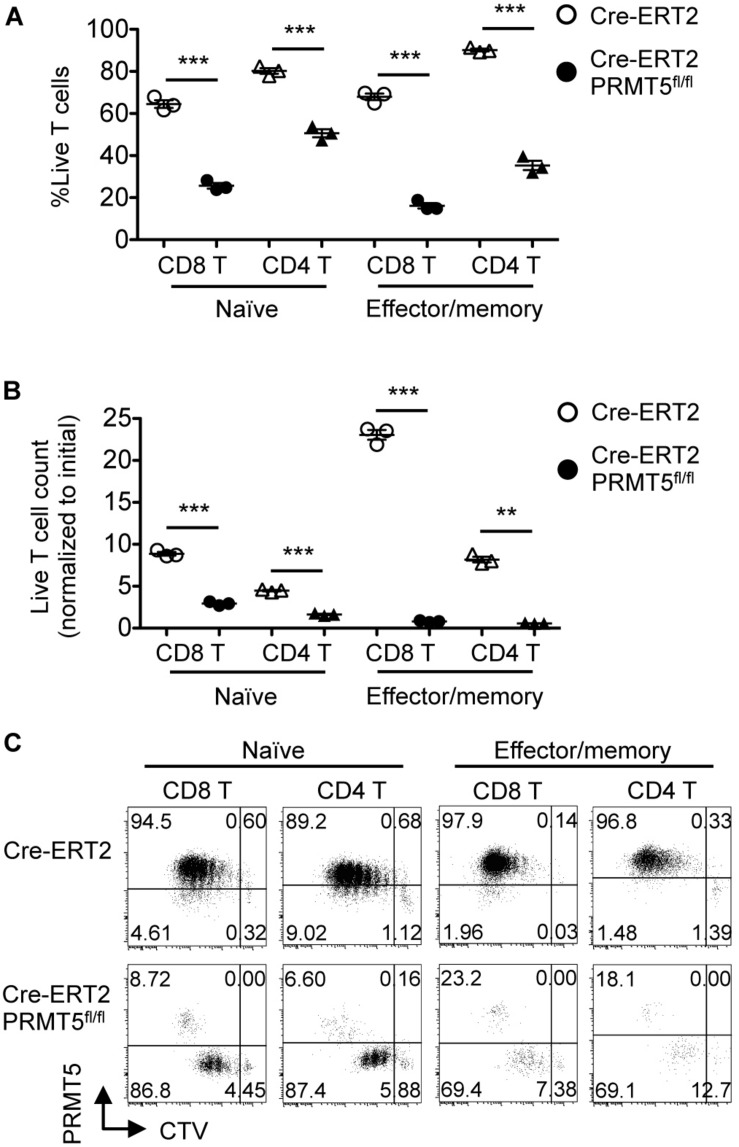
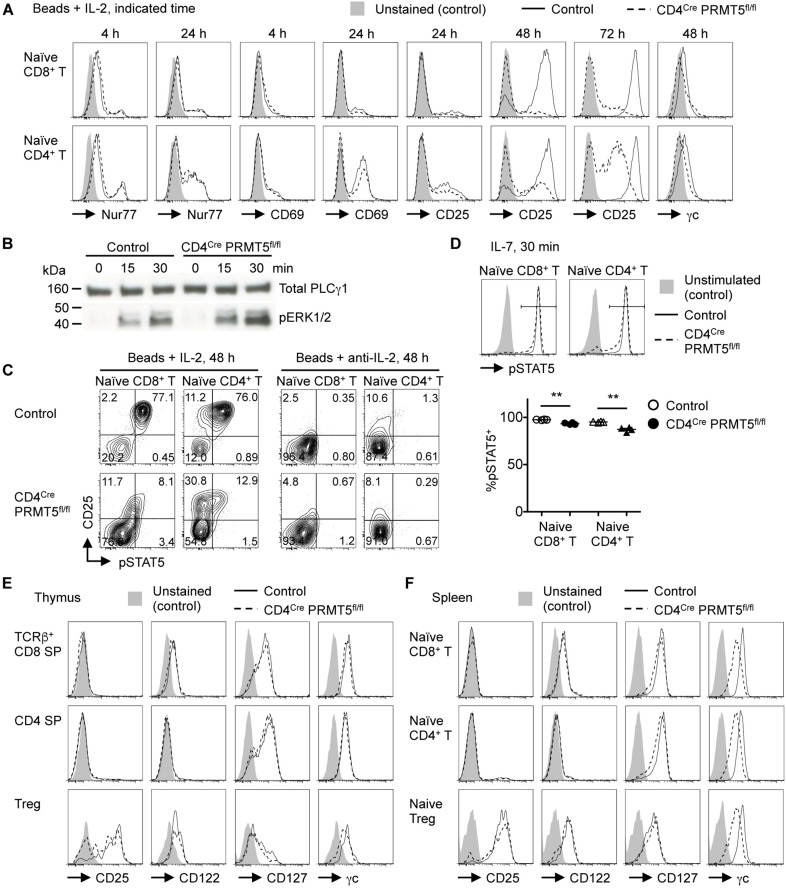
Arginine methylation is a post-translational modification that regulates many biological processes. However, the role of arginine methylation in immune cells is not well studied. Here we report an essential role of protein arginine methyltransferase 5 (PRMT5) in T cell homeostasis and activation-induced expansion. Using T cell-specific PRMT5 conditional knockout mice, we found that PRMT5 is required for natural killer T (NKT) cell but not for conventional or regulatory T (Treg) cell development after the double positive (DP) stage in the thymus. In contrast, PRMT5 was required for optimal peripheral T cell maintenance, for the transition of naïve T cells to effector/memory phenotype, and for early T cell development before the DP stage in a cell-intrinsic manner. Accordingly, PRMT5-deleted T cells showed impaired IL-7-mediated survival and TCR-induced proliferation . The latter was more pronounced and attributed to reduced responsiveness to IL-2. Acute deletion of PRMT5 revealed that not only naïve but also effector/memory T cells were impaired in TCR-induced proliferation in a development-independent manner. Reduced expression of common γ chain (γc), a shared receptor component for several cytokines including IL-7 and IL-2, on PRMT5-deleted T cells may be in part responsible for the defect. We further showed that PRMT5 was partially required for homeostatic T cell survival but absolutely required for lymphopenic T cell expansion . Thus, we propose that PRMT5 is required for T cell survival and proliferation by maintaining cytokine signaling, especially during proliferation. The inhibition of PRMT5 may provide a novel strategy for the treatment of diseases where uncontrolled T cell activation has a role, such as autoimmunity.
精氨酸甲基化是一种翻译后修饰,可调节许多生物过程。然而,精氨酸甲基化在免疫细胞中的作用尚未得到很好的研究。在这里,我们报告了蛋白质精氨酸甲基转移酶 5(PRMT5)在 T 细胞稳态和激活诱导扩张中的重要作用。使用 T 细胞特异性 PRMT5 条件性敲除小鼠,我们发现 PRMT5 是自然杀伤 T(NKT)细胞所必需的,但在胸腺中的双阳性(DP)阶段后,对于常规或调节性 T(Treg)细胞的发育则不是必需的。相比之下,PRMT5 对于外周 T 细胞的最佳维持、幼稚 T 细胞向效应/记忆表型的转化以及 DP 阶段之前的早期 T 细胞发育都是必需的,这种作用是细胞内的。因此,PRMT5 缺失的 T 细胞表现出受损的 IL-7 介导的存活和 TCR 诱导的增殖。后者更为明显,归因于对 IL-2 的反应性降低。PRMT5 的急性缺失揭示了不仅是幼稚 T 细胞,而且是效应/记忆 T 细胞在 TCR 诱导的增殖中都存在发育独立性缺陷。PRMT5 缺失的 T 细胞上共同 γ 链(γc)的表达降低,γc 是包括 IL-7 和 IL-2 在内的几种细胞因子的共享受体成分,这可能部分是缺陷的原因。我们进一步表明,PRMT5 部分需要用于 T 细胞的稳态存活,但绝对需要用于淋巴减少性 T 细胞的扩张。因此,我们提出 PRMT5 通过维持细胞因子信号,特别是在增殖过程中,来维持 T 细胞的存活和增殖。抑制 PRMT5 可能为治疗 T 细胞过度激活的疾病提供一种新策略,如自身免疫性疾病。