Liu Zhuoyi, Feng Songshan, Li Jing, Cao Hui, Huang Jun, Fan Fan, Cheng Li, Liu Zhixiong, Cheng Quan
Department of Neurosurgery, Xiangya Hospital, Center South University, Changsha, China.
National Clinical Research Center for Geriatric Disorders, Xiangya Hospital, Central South University, Changsha, China.
Front Oncol. 2020 Apr 9;10:391. doi: 10.3389/fonc.2020.00391. eCollection 2020.
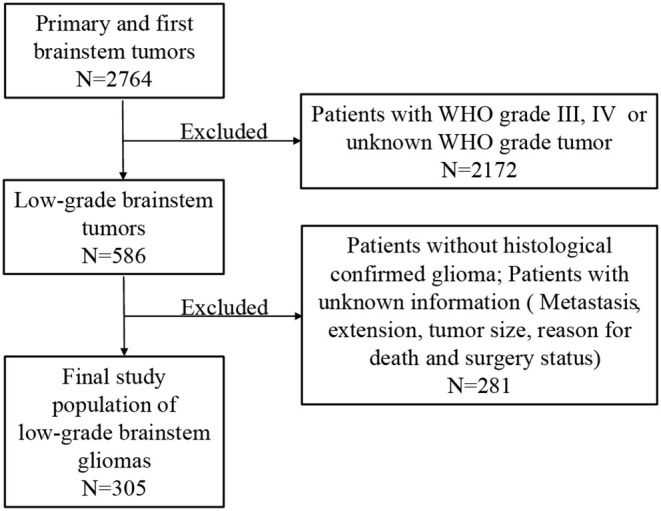
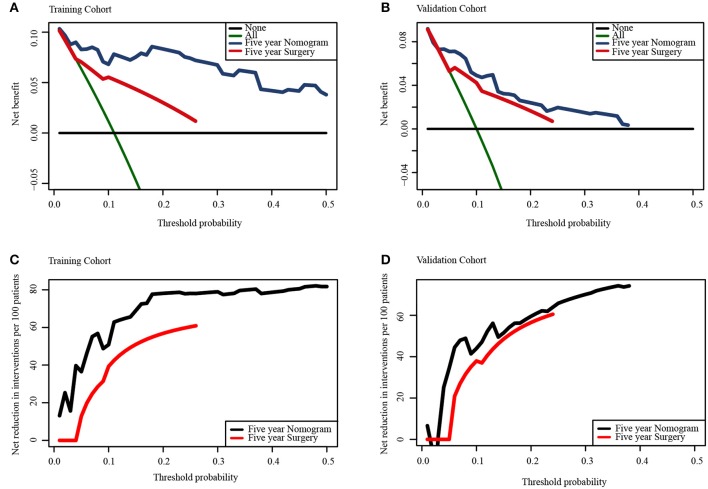
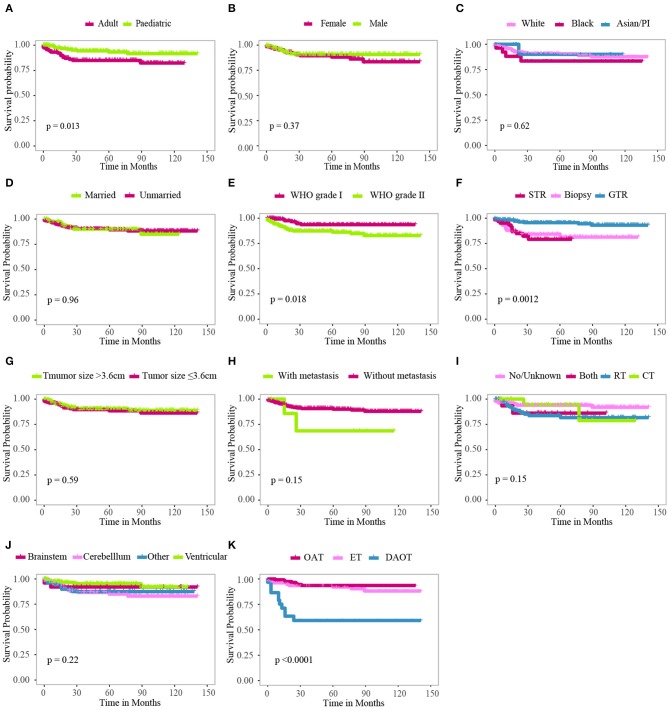
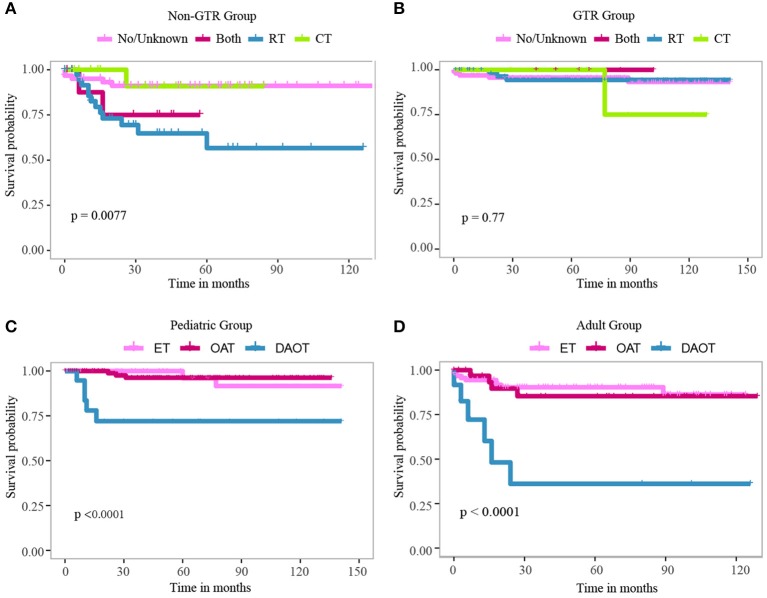
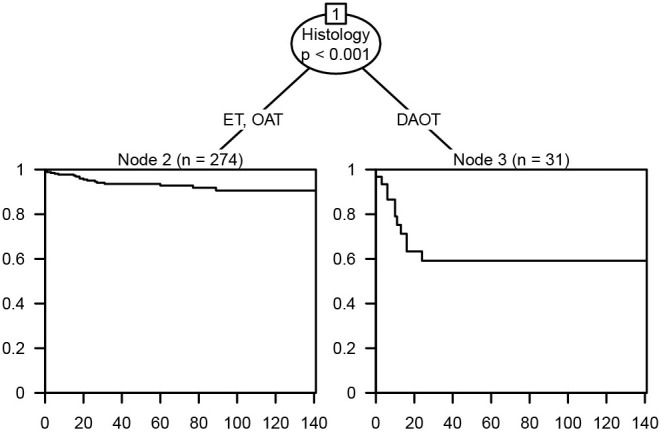
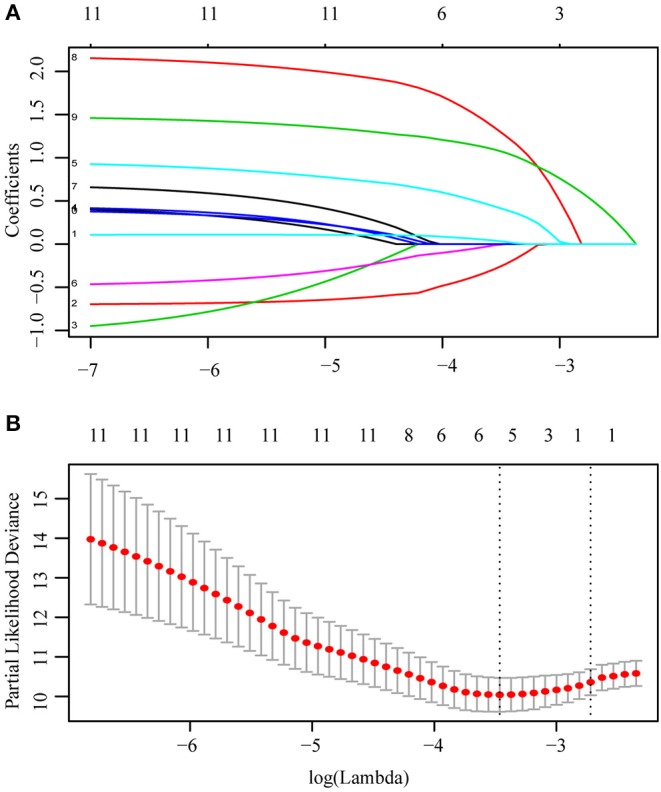
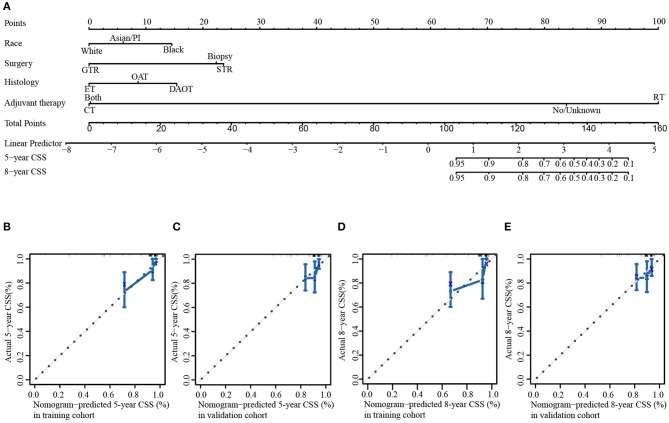
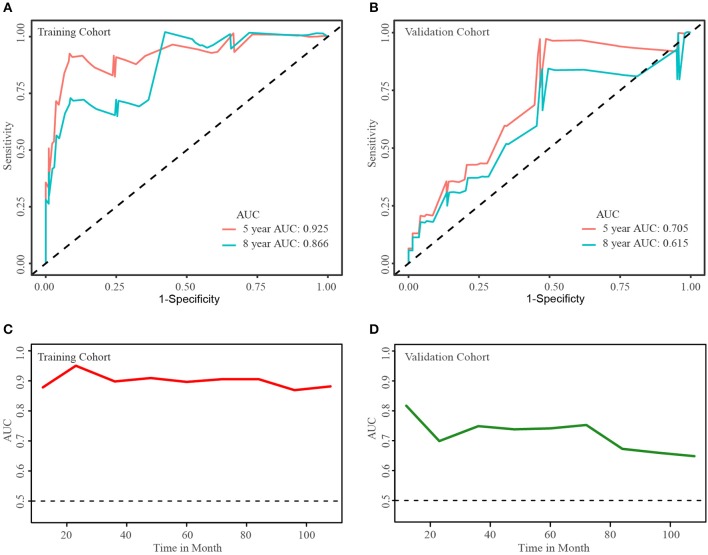
Our current understanding of low-grade brainstem glioma (LGBSG) is still limited. This study aimed to conduct a large-scale population-based real-world study to understand the epidemiological characteristics of LGBSG and determine the predictive factors of cancer-specific survival (CSS) and overall survival (OS) of LGBSG patients. We used Surveillance Epidemiology and End Results database to conduct this study of patients with histologically confirmed LGBSG. Patient demographics, tumor characteristics, and treatment options were compared between pediatric and adult patients. Univariate and multivariate analyses were employed to determine prognostic factors of CSS and OS. Kaplan-Meier curve and decision tree were used to confirm the prognostic factors. All variables were further identified by L1-penalized (Lasso) regression and then a nomogram was established to predict the 5- and 8-year CSS and OS rate. The precision of the nomogram was evaluated by calibration plots, Harrell's concordance index, and time-dependent receiver operating characteristic curve. The clinical use of nomogram was estimated by decision curve analysis. A cohort of 305 patients with LGBSG, including 165 pediatric and 140 adult patients, was analyzed. Adult and pediatric patients showed different patterns concerning tumor size, tumor extension, adjuvant therapy, and survival rate. Univariate analysis revealed that pediatric group, gross total resection (GTR), World Health Organization grade II, radiotherapy, extension to ventricular system, and diffuse astrocytic and oligodendroglial tumor (DAOT) were significantly associated with CSS. Multivariate analysis showed that pediatric group, metastasis, ventricular system involvement, and DAOT were independently associated with CSS. The prognostic factors were further confirmed by Kaplan-Meier curve and decision tree. Kaplan-Meier curve also showed that adjuvant therapy added no benefits in patients with GTR and non-GTR. In addition, the nomogram was developed and the C-index of internal validation for CSS was 0.87 (95% CI, 0.78-0.96). This study shows that pediatric and adult patients have different tumor characteristics, treatment options, and survival rate. Pediatric group, DAOT, ventricular system involvement, and metastasis were identified as independent prognostic factors for CSS by multivariate analysis. Adjuvant therapy showed no benefits on CSS in patients with GTR and non-GTR. The nomogram was discriminative and clinically useful.
我们目前对低级别脑干胶质瘤(LGBSG)的了解仍然有限。本研究旨在开展一项基于大规模人群的真实世界研究,以了解LGBSG的流行病学特征,并确定LGBSG患者癌症特异性生存(CSS)和总生存(OS)的预测因素。我们使用监测、流行病学和最终结果数据库对组织学确诊的LGBSG患者进行了这项研究。比较了儿童和成人患者的人口统计学特征、肿瘤特征及治疗方案。采用单因素和多因素分析来确定CSS和OS的预后因素。使用Kaplan-Meier曲线和决策树来确认预后因素。通过L1惩罚(套索)回归进一步确定所有变量,然后建立列线图以预测5年和8年CSS及OS率。通过校准图、Harrell一致性指数和时间依赖性受试者工作特征曲线评估列线图的准确性。通过决策曲线分析评估列线图的临床实用性。分析了一组305例LGBSG患者,其中包括165例儿童患者和140例成人患者。成人和儿童患者在肿瘤大小、肿瘤侵犯范围、辅助治疗及生存率方面表现出不同模式。单因素分析显示,儿童组、全切除(GTR)、世界卫生组织二级、放疗、侵犯脑室系统以及弥漫性星形细胞和少突胶质细胞瘤(DAOT)与CSS显著相关。多因素分析表明,儿童组、转移、脑室系统受累和DAOT与CSS独立相关。通过Kaplan-Meier曲线和决策树进一步确认了预后因素。Kaplan-Meier曲线还显示,辅助治疗对GTR和非GTR患者的CSS无益处。此外,还构建了列线图,CSS内部验证的C指数为0.87(95%CI,0.78 - 0.96)。本研究表明,儿童和成人患者具有不同的肿瘤特征、治疗方案和生存率。多因素分析确定儿童组、DAOT、脑室系统受累和转移是CSS的独立预后因素。辅助治疗对GTR和非GTR患者的CSS无益处。列线图具有鉴别能力且临床实用。