Wang Siqi, Li Chuanxi, Xia Yinqiang, Chen Shaohuang, Robert Jordan, Banquy Xavier, Huang Renliang, Qi Wei, He Zhimin, Su Rongxin
State Key Laboratory of Chemical Engineering, Tianjin Key Laboratory of Membrane Science and Desalination Technology, School of Chemical Engineering and Technology, Tianjin University, Tianjin 300072, PR China.
Faculty of Pharmacy, Université de Montréal, 2900 Édouard-Montpetit, Montreal, QC H3C 3J7, Canada.
iScience. 2020 May 22;23(5):101044. doi: 10.1016/j.isci.2020.101044. Epub 2020 Apr 10.
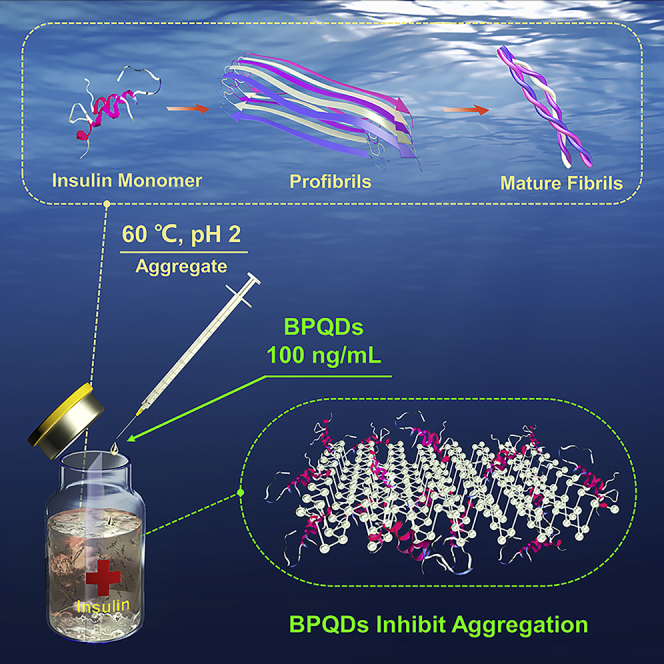
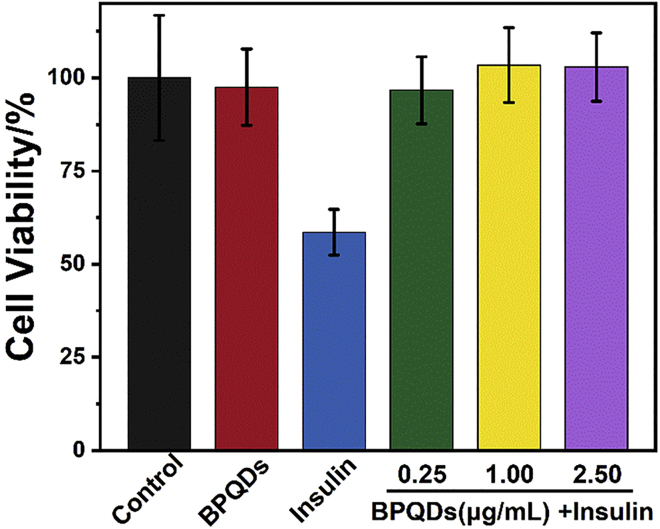
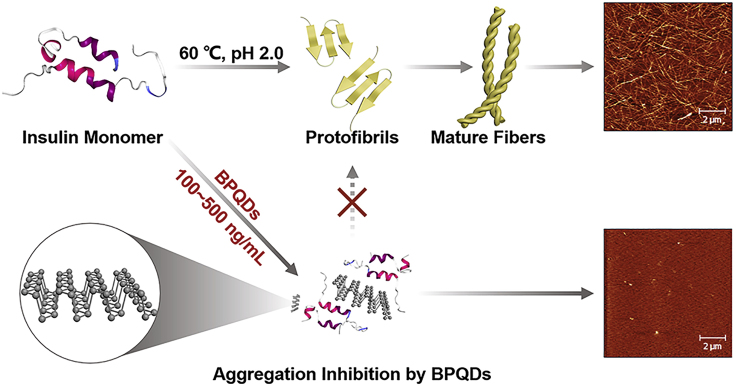
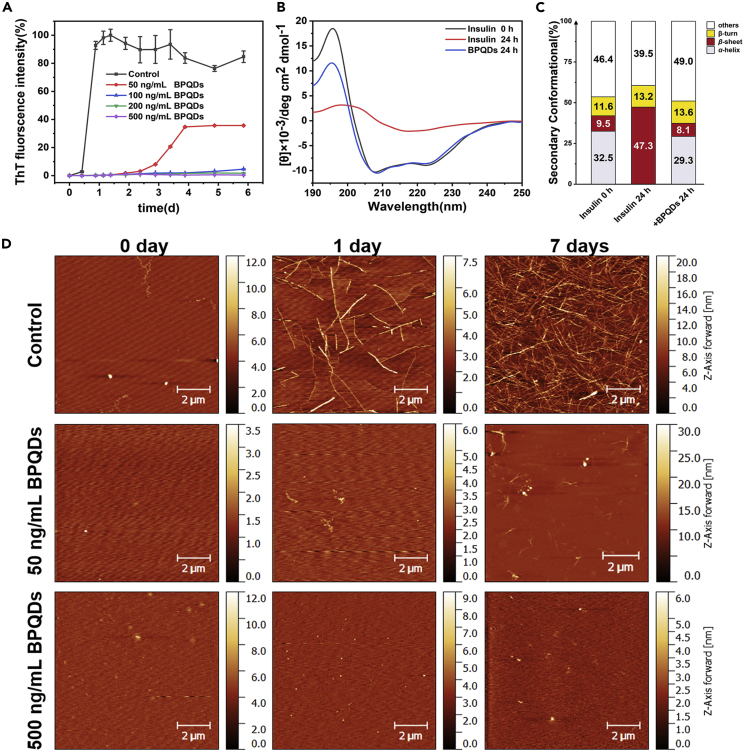
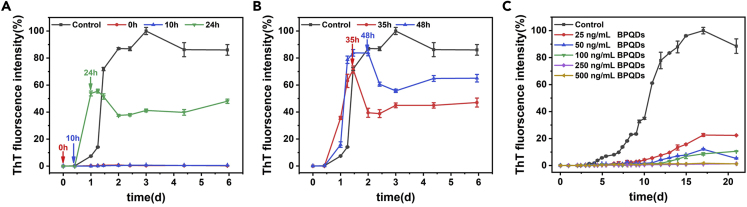
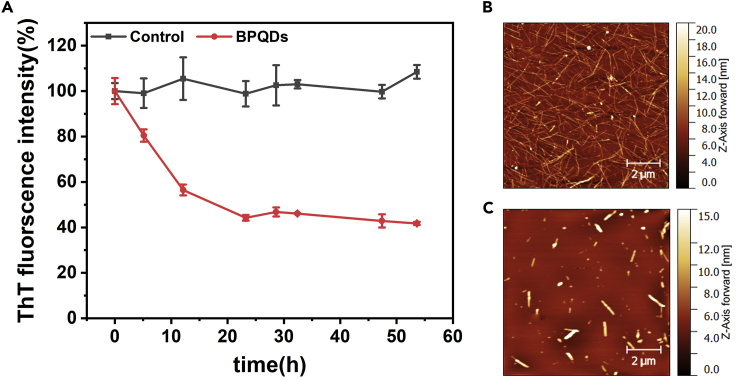
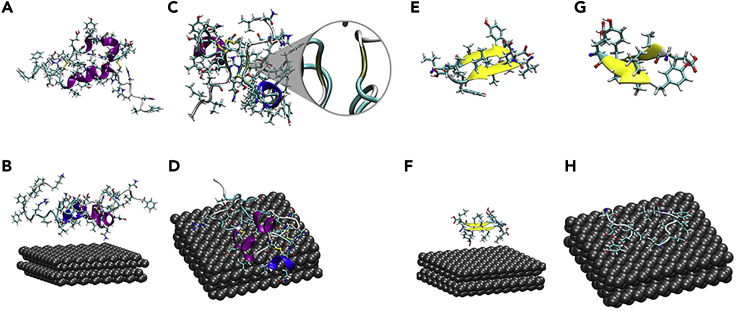
Amyloid are protein aggregates formed by cross β structures assemblies. Inhibiting amyloid aggregation or facilitating its disassembly are considered to be two major effective therapeutic strategies in diseases involving peptide or protein fibrillation such Alzheimer's disease or diabetes. Using thioflavin-T fluorescence, far-UV circular dichroism spectroscopy, and atomic force microscopy, we found nontoxic and biocompatible black phosphorus quantum dots (BPQDs) appear to have an exceptional capacity to inhibit insulin aggregation and to disassemble formed mature fibrils, even at an ultralow concentration (100 ng/mL). The inhibition of fibrillation persists at all stages of insulin aggregation and increases PC12 cells survival when exposed to amyloid fibrils. Molecular dynamics simulations suggest that BPQDs are able to stabilize the α-helix structure of insulin and obliterate the β-sheet structure to promote the fibril formation. These characteristics make BPQDs be promising candidate in preventing amyloidosis, disease treatment, as well as in the storage and processing of insulin.
淀粉样蛋白是由交叉β结构聚集体形成的蛋白质聚集体。在涉及肽或蛋白质纤维化的疾病(如阿尔茨海默病或糖尿病)中,抑制淀粉样蛋白聚集或促进其解聚被认为是两种主要的有效治疗策略。通过硫黄素-T荧光、远紫外圆二色光谱和原子力显微镜,我们发现无毒且具有生物相容性的黑磷量子点(BPQDs)似乎具有非凡的能力,即使在超低浓度(100 ng/mL)下,也能抑制胰岛素聚集并拆解已形成的成熟纤维。在胰岛素聚集的所有阶段,纤维化抑制作用持续存在,并且当PC12细胞暴露于淀粉样纤维时,可提高其存活率。分子动力学模拟表明,BPQDs能够稳定胰岛素的α-螺旋结构并消除β-折叠结构以促进纤维形成。这些特性使BPQDs成为预防淀粉样变性、疾病治疗以及胰岛素储存和加工方面有前景的候选物。