Tian Xiao-Jun, Zhou Dong, Fu Haiyan, Zhang Rong, Wang Xiaojie, Huang Sui, Liu Youhua, Xing Jianhua
Department of Computational and Systems Biology, School of Medicine, University of Pittsburgh, 3501 Fifth Avenue, Pittsburgh, PA 15261, USA; School of Biological and Health Systems Engineering, Arizona State University, Tempe, AZ 85287, USA.
Department of Pathology, School of Medicine, University of Pittsburgh, 200 Lothrop Street, Pittsburgh, PA 15261, USA.
iScience. 2020 May 22;23(5):101047. doi: 10.1016/j.isci.2020.101047. Epub 2020 Apr 11.
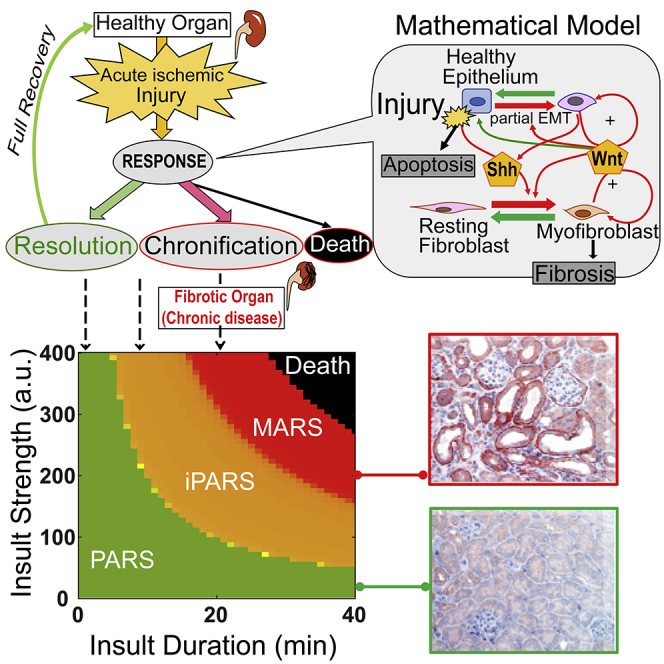
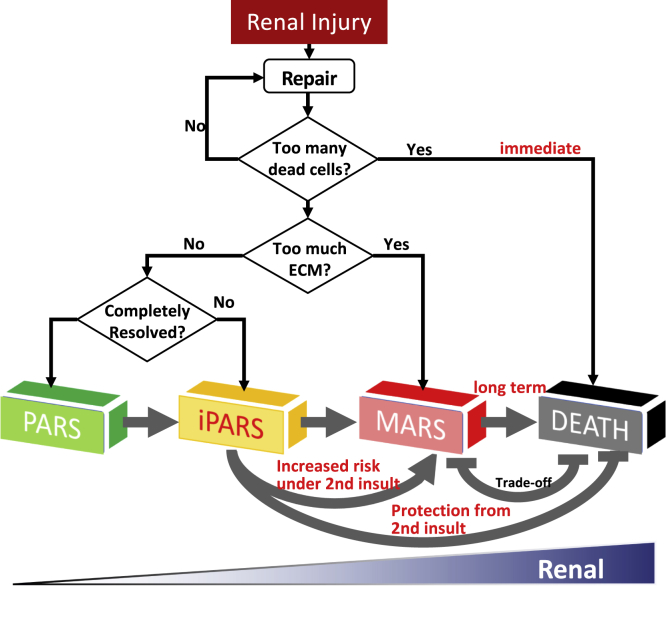
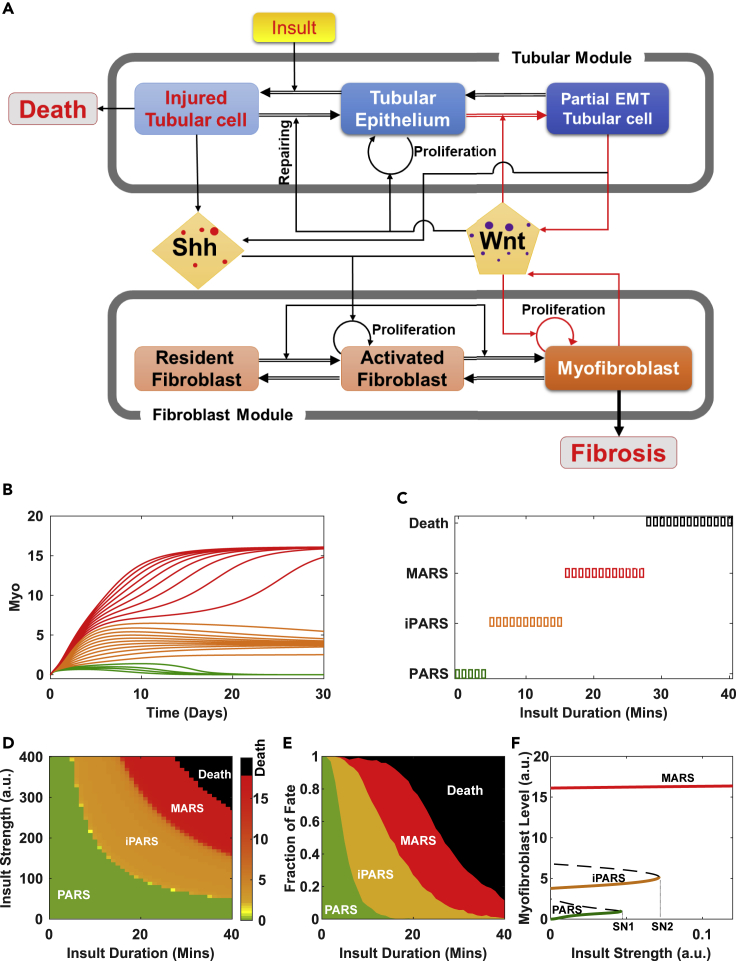
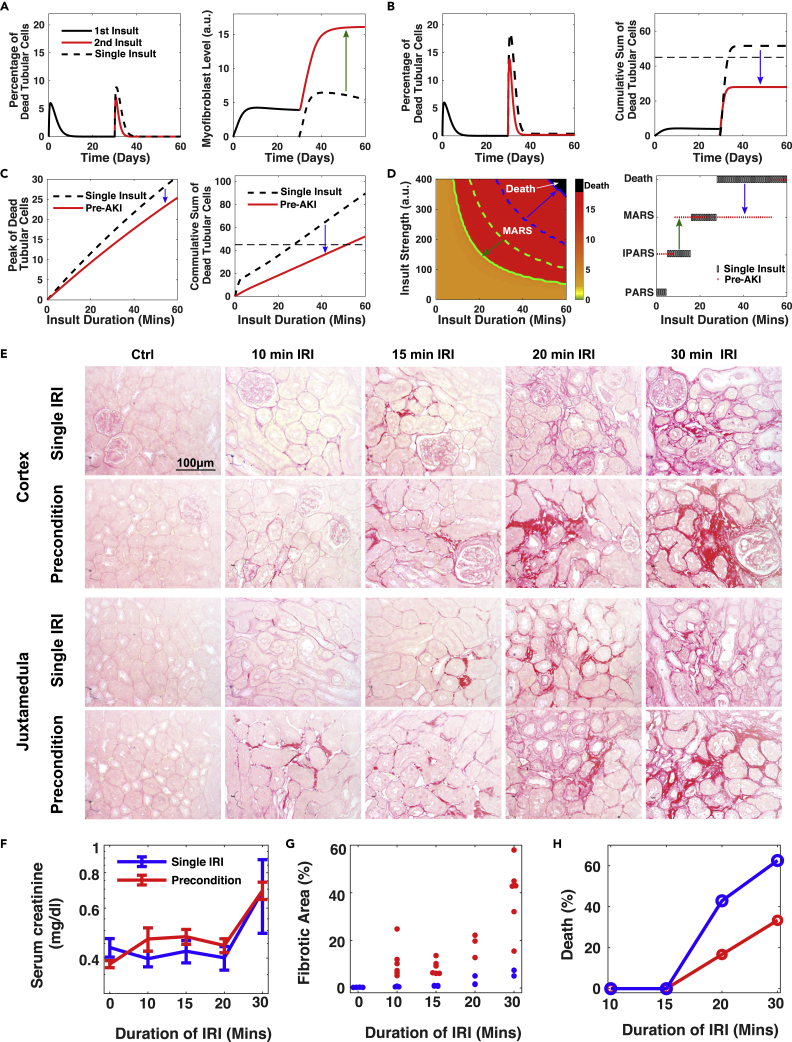
Tissue fibrosis compromises organ function and occurs as a potential long-term outcome in response to acute tissue injuries. Currently, lack of mechanistic understanding prevents effective prevention and treatment of the progression from acute injury to fibrosis. Here, we combined quantitative experimental studies with a mouse kidney injury model and a computational approach to determine how the physiological consequences are determined by the severity of ischemia injury and to identify how to manipulate Wnt signaling to accelerate repair of ischemic tissue damage while minimizing fibrosis. The study reveals that memory of prior injury contributes to fibrosis progression and ischemic preconditioning reduces the risk of death but increases the risk of fibrosis. Furthermore, we validated the prediction that sequential combination therapy of initial treatment with a Wnt agonist followed by treatment with a Wnt antagonist can reduce both the risk of death and fibrosis in response to acute injuries.
组织纤维化会损害器官功能,是急性组织损伤可能产生的长期后果。目前,由于缺乏对发病机制的了解,无法有效预防和治疗从急性损伤到纤维化的进展。在此,我们将定量实验研究与小鼠肾损伤模型以及计算方法相结合,以确定缺血损伤的严重程度如何决定生理后果,并确定如何操纵Wnt信号通路来加速缺血性组织损伤的修复,同时将纤维化降至最低。该研究表明,既往损伤的记忆会促进纤维化进展,缺血预处理可降低死亡风险,但会增加纤维化风险。此外,我们验证了以下预测:先用Wnt激动剂进行初始治疗,随后用Wnt拮抗剂进行治疗的序贯联合疗法可降低急性损伤后死亡和纤维化的风险。