Pharmacology Unit, Cancer Biology Department, National Cancer Institute, Cairo University, Kasr Al Eini Street, Fom El Khalig, Cairo 11796, Egypt.
Department of Experimental Therapeutics, The University of Texas MD Anderson Cancer Center, Houston, TX 77030, USA.
Int J Mol Sci. 2020 Apr 23;21(8):2974. doi: 10.3390/ijms21082974.
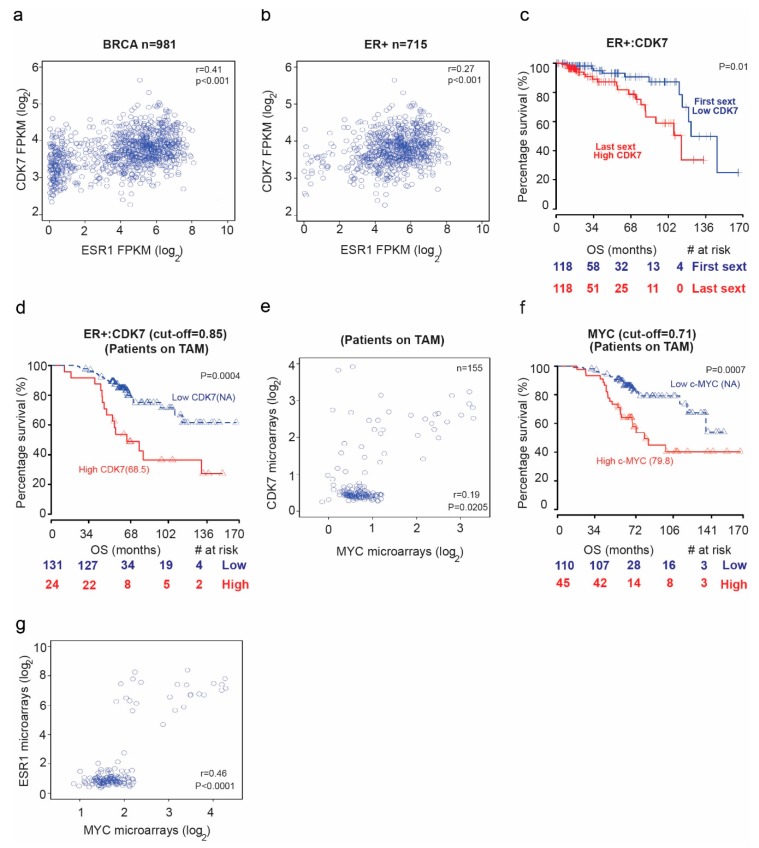
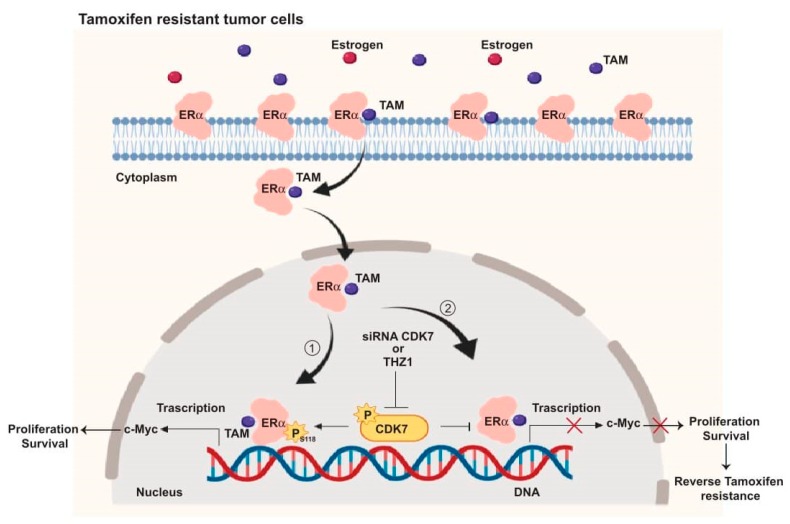
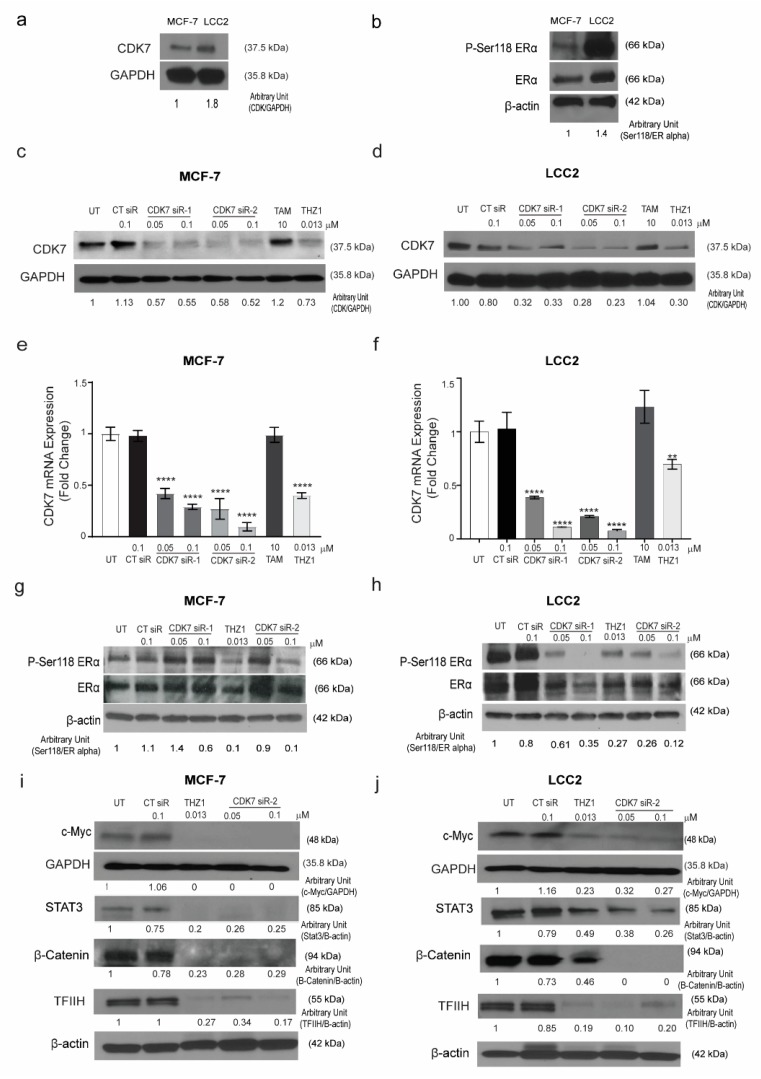
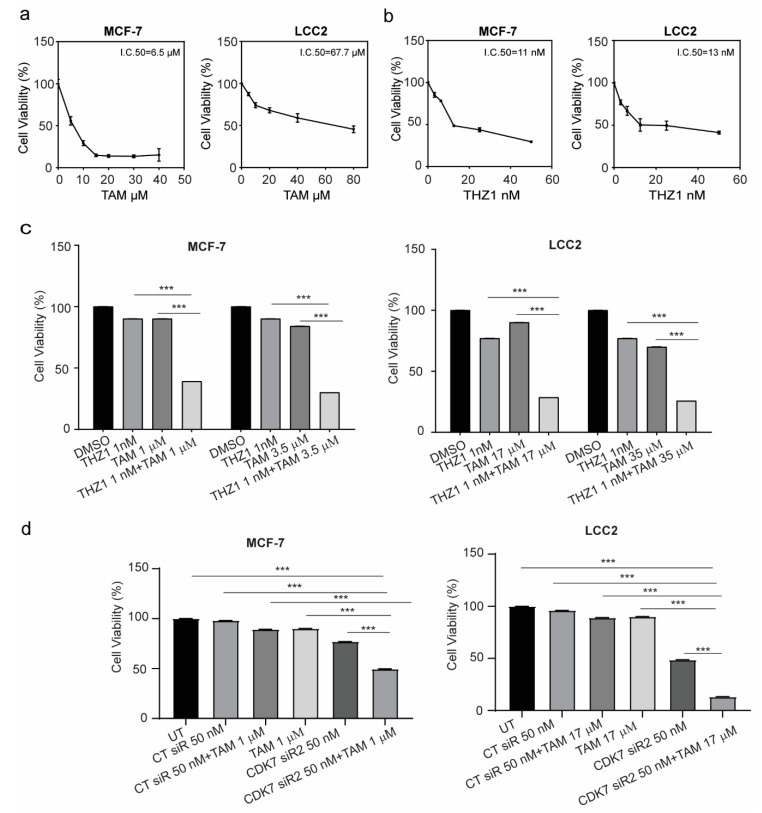
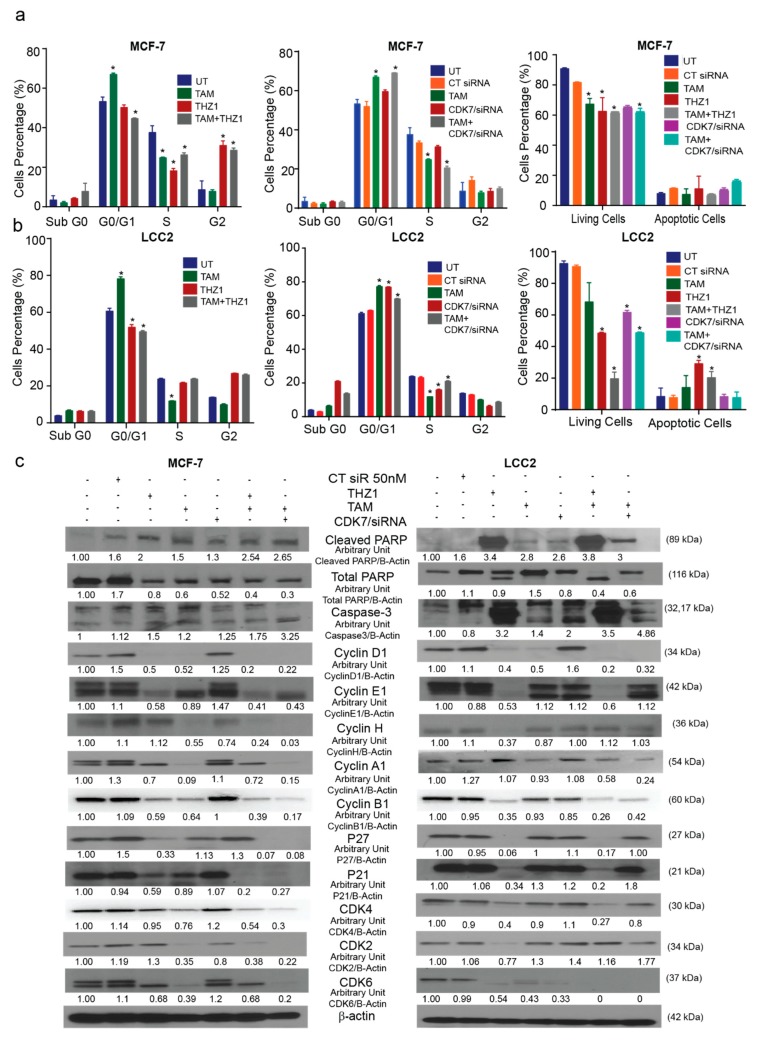
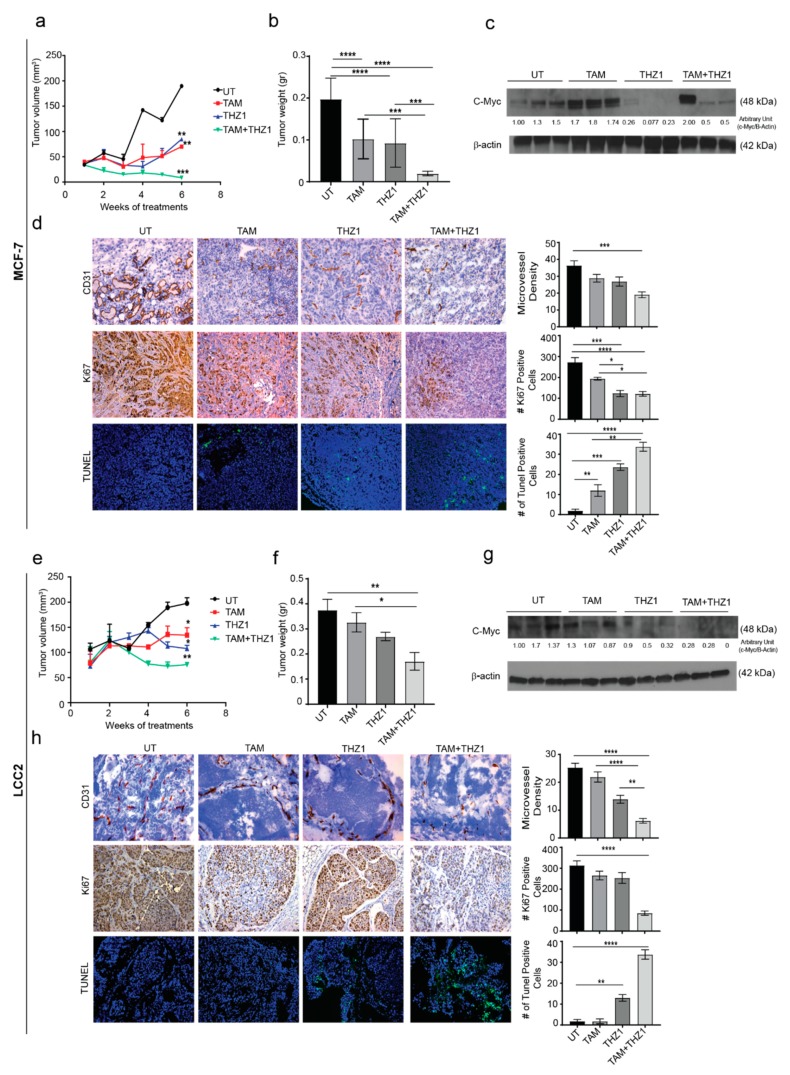
Cyclin-dependent kinase (CDK)-7 inhibitors are emerging as promising drugs for the treatment of different types of cancer that show chemotherapy resistance. Evaluation of the effects of CDK7 inhibitor, THZ1, alone and combined with tamoxifen is of paramount importance. Thus, in the current work, we assessed the effects of THZ1 and/or tamoxifen in two estrogen receptor-positive (ER+) breast cancer cell lines (MCF7) and its tamoxifen resistant counterpart (LCC2) in vitro and in xenograft mouse models of breast cancer. Furthermore, we evaluated the expression of CDK7 in clinical samples from breast cancer patients. Cell viability, apoptosis, and genes involved in cell cycle regulation and tamoxifen resistance were determined. Tumor volume and weight, proliferation marker (Ki67), angiogenic marker (CD31), and apoptotic markers were assayed. Bioinformatic data indicated CDK7 expression was associated with negative prognosis, enhanced pro-oncogenic pathways, and decreased response to tamoxifen. Treatment with THZ1 enhanced tamoxifen-induced cytotoxicity, while it inhibited genes involved in tumor progression in MCF-7 and LCC2 cells. In vivo, THZ1 boosted the effect of tamoxifen on tumor weight and tumor volume, reduced Ki67 and CD31 expression, and increased apoptotic cell death. Our findings identify CDK7 as a possible therapeutic target for breast cancer whether it is sensitive or resistant to tamoxifen therapy.
细胞周期蛋白依赖性激酶 (CDK)-7 抑制剂作为治疗表现出化疗耐药性的不同类型癌症的有前途的药物正在出现。评估 CDK7 抑制剂 THZ1 单独使用和与他莫昔芬联合使用的效果至关重要。因此,在目前的工作中,我们评估了 THZ1 和/或他莫昔芬对两种雌激素受体阳性 (ER+) 乳腺癌细胞系 (MCF7)及其他莫昔芬耐药对应物 (LCC2) 的体外和乳腺癌异种移植小鼠模型中的作用。此外,我们评估了 CDK7 在乳腺癌患者临床样本中的表达。测定了细胞活力、细胞凋亡以及参与细胞周期调控和他莫昔芬耐药的基因。测定了肿瘤体积和重量、增殖标志物 (Ki67)、血管生成标志物 (CD31) 和凋亡标志物。生物信息学数据表明 CDK7 的表达与不良预后、增强的致癌途径和对他莫昔芬反应降低有关。THZ1 治疗增强了他莫昔芬诱导的细胞毒性,同时抑制了 MCF-7 和 LCC2 细胞中与肿瘤进展相关的基因。在体内,THZ1 增强了他莫昔芬对肿瘤重量和肿瘤体积的作用,降低了 Ki67 和 CD31 的表达,并增加了凋亡细胞死亡。我们的研究结果确定 CDK7 是一种可能的治疗靶点,无论是对他莫昔芬治疗敏感还是耐药的乳腺癌。