Institute for Food Toxicology, Department of Food Toxicology and Replacement/Complementary Methods to Animal Testing, University of Veterinary Medicine, 30173 Hannover, Germany.
Institute of Nutritional Science, Department of Nutritional Biochemistry, University of Potsdam, 14558 Nuthetal, Germany.
Toxins (Basel). 2020 Apr 25;12(5):276. doi: 10.3390/toxins12050276.
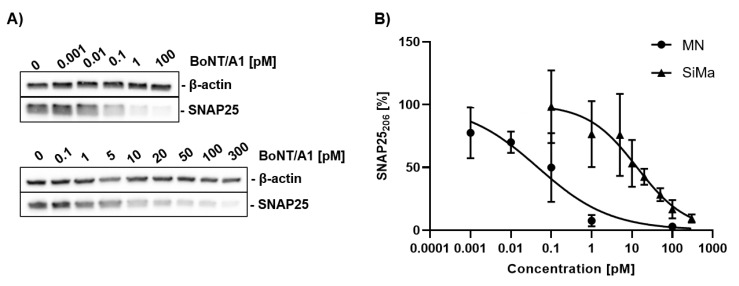
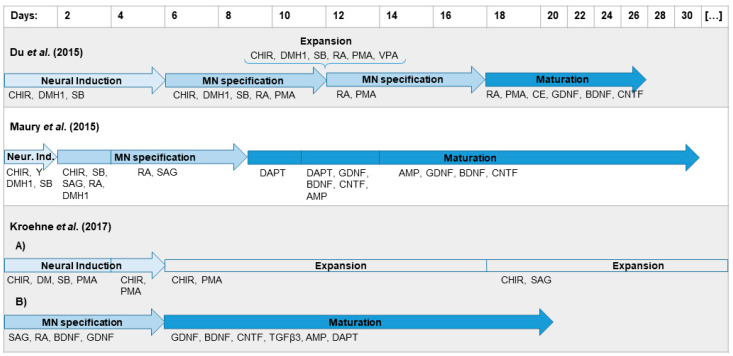
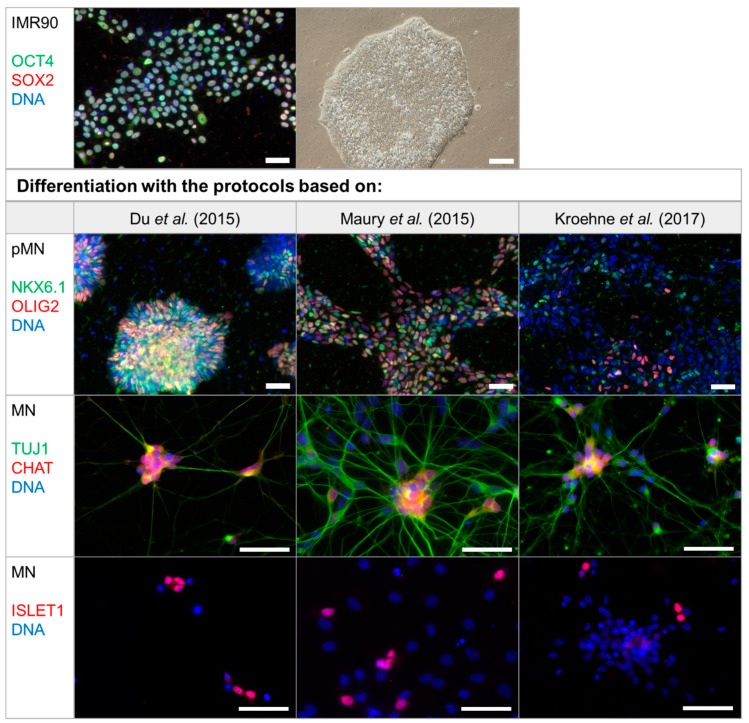
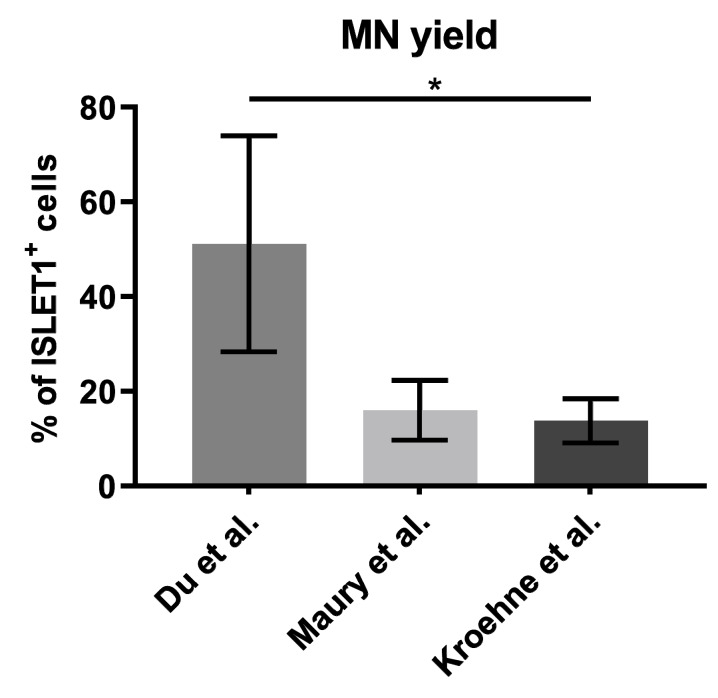
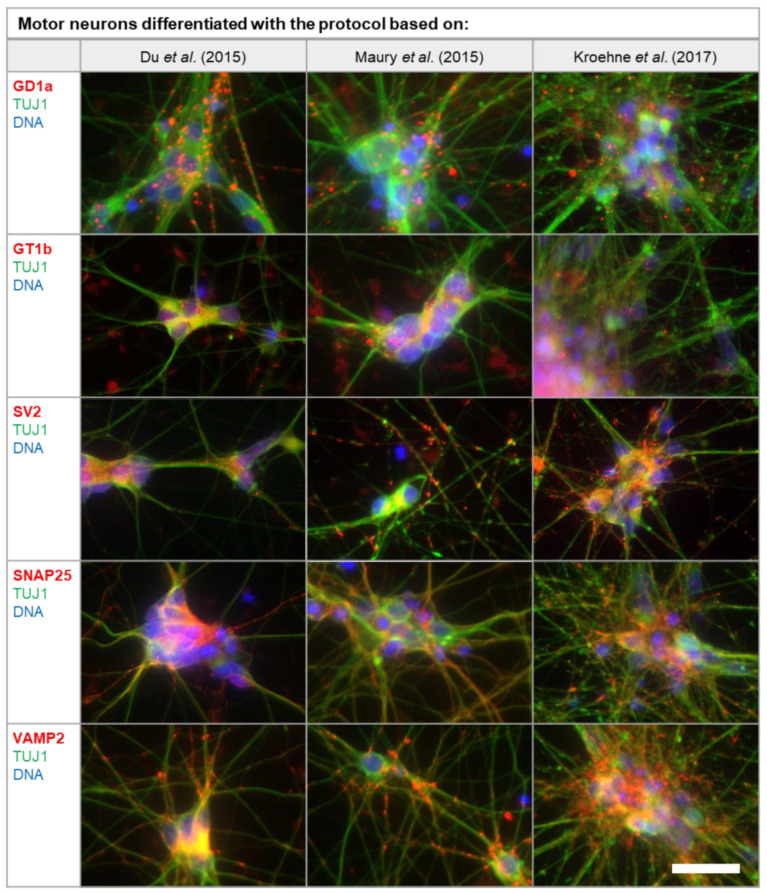
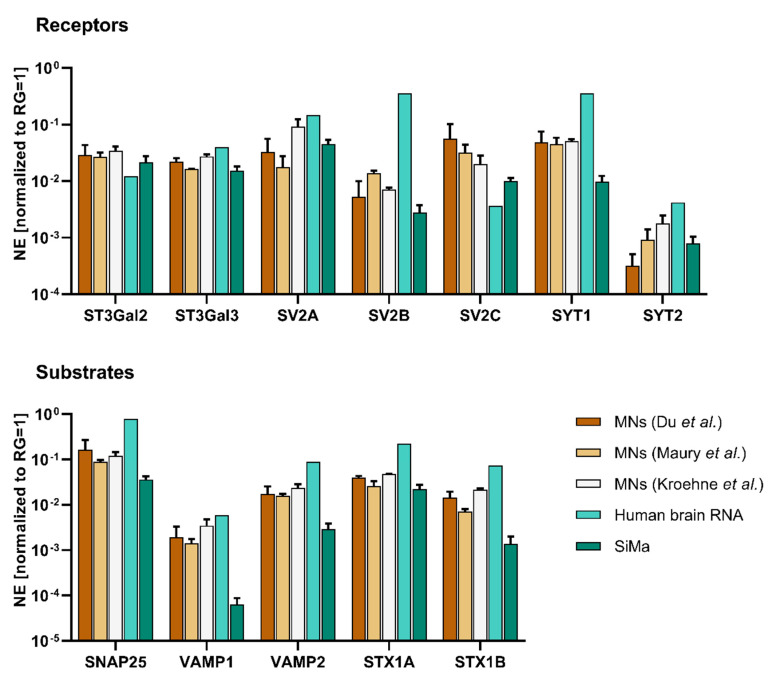
Botulinum neurotoxins (BoNTs) are potent neurotoxins produced by bacteria, which inhibit neurotransmitter release, specifically in their physiological target known as motor neurons (MNs). For the potency assessment of BoNTs produced for treatment in traditional and aesthetic medicine, the mouse lethality assay is still used by the majority of manufacturers, which is ethically questionable in terms of the 3Rs principle. In this study, MNs were differentiated from human induced pluripotent stem cells based on three published protocols. The resulting cell populations were analyzed for their MN yield and their suitability for the potency assessment of BoNTs. MNs produce specific gangliosides and synaptic proteins, which are bound by BoNTs in order to be taken up by receptor-mediated endocytosis, which is followed by cleavage of specific soluble N-ethylmaleimide-sensitive-factor attachment receptor (SNARE) proteins required for neurotransmitter release. The presence of receptors and substrates for all BoNT serotypes was demonstrated in MNs generated in vitro. In particular, the MN differentiation protocol based on Du et al. yielded high numbers of MNs in a short amount of time with high expression of BoNT receptors and targets. The resulting cells are more sensitive to BoNT/A1 than the commonly used neuroblastoma cell line SiMa. MNs are, therefore, an ideal tool for being combined with already established detection methods.
肉毒神经毒素(BoNTs)是由细菌产生的强效神经毒素,可特异性抑制其生理靶标运动神经元(MNs)中的神经递质释放。对于传统和美容医学中应用的 BoNTs 的效力评估,大多数制造商仍在使用基于小鼠的致死性检测法,这在伦理上与 3R 原则存在争议。在本研究中,基于三个已发表的方案,从人诱导多能干细胞中分化 MNs。对所得细胞群体进行分析,以评估其 MN 产量和用于 BoNTs 效力评估的适用性。MNs 产生特定的神经节苷脂和突触蛋白,BoNTs 通过与这些蛋白结合,通过受体介导的内吞作用被摄取,随后切割特定的可溶性 N-乙基马来酰亚胺敏感因子附着受体(SNARE)蛋白,这是神经递质释放所必需的。在体外生成的 MNs 中证实了所有 BoNT 血清型的受体和底物的存在。特别是,基于 Du 等人的 MN 分化方案可在短时间内产生大量 MNs,同时高表达 BoNT 受体和靶标。所得细胞对 BoNT/A1 的敏感性高于常用的神经母细胞瘤细胞系 SiMa。因此,MNs 是与已建立的检测方法相结合的理想工具。