Ipsen Bioinnovation Abingdon Oxford UK.
Ipsen Innovation Les Ulis France.
Pharmacol Res Perspect. 2018 Nov 22;6(6):e00446. doi: 10.1002/prp2.446. eCollection 2018 Dec.
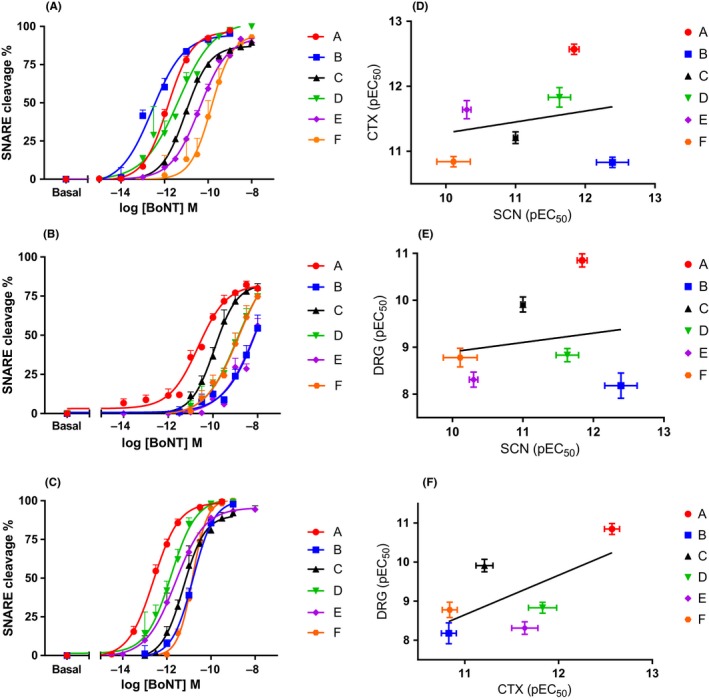
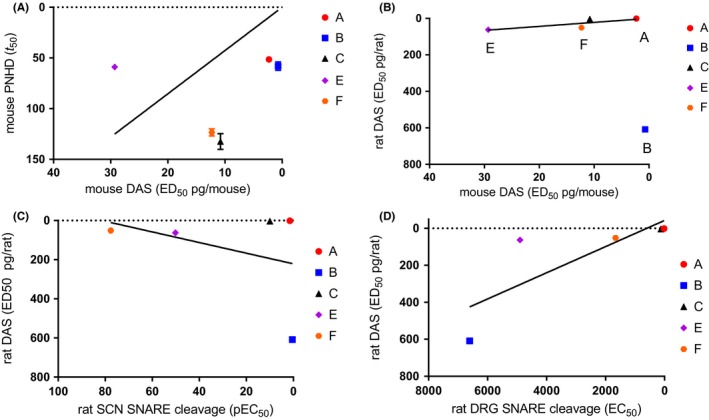
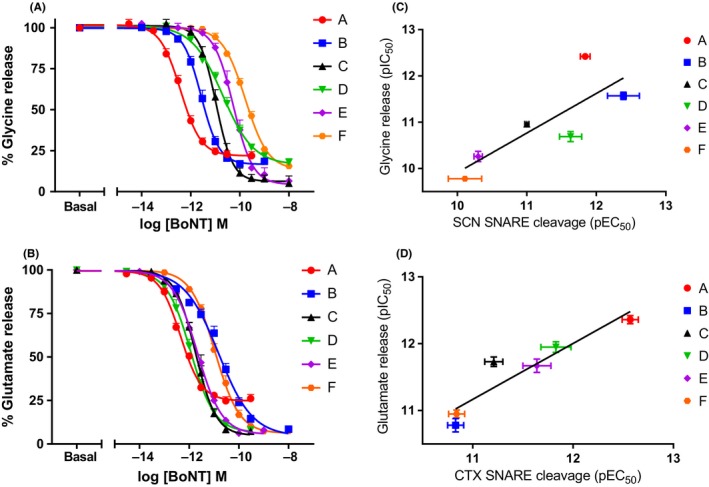
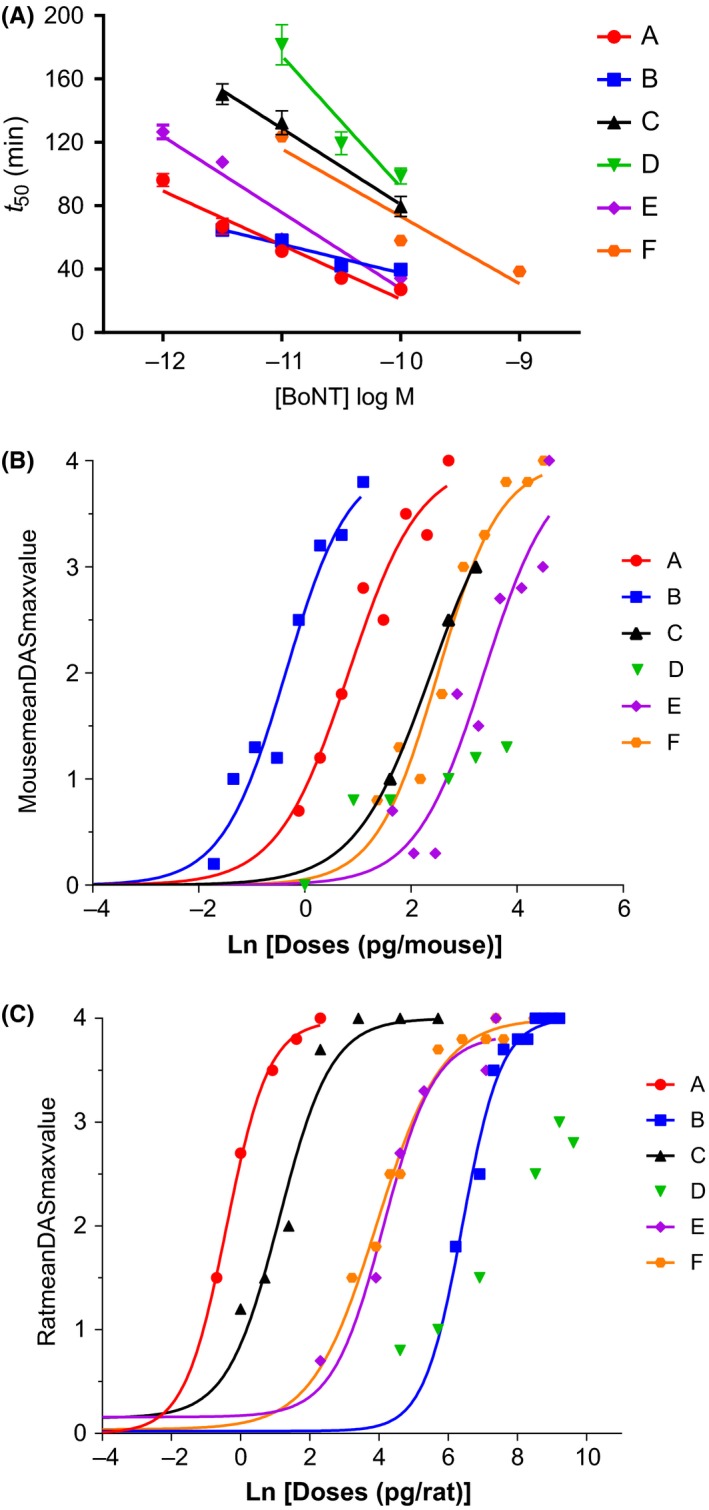
Botulinum neurotoxin (BoNT) is a major therapeutic agent. Of seven native BoNT serotypes (A to G), only A and B are currently used in the clinic. Here we compared the potency of commercially available purified native serotypes A1 to F1 across in vitro, ex vivo, and in vivo assays. BoNT potency in vitro was assessed in rat primary cells (target protein cleavage and neurotransmitter release assays) in supraspinal, spinal, and sensory systems. BoNT potency ex vivo was measured in the mouse phrenic nerve hemidiaphragm (PNHD) assay, measuring muscle contractility. In vivo BoNT-induced muscle relaxation in mice and rats was assessed in the Digit Abduction Score (DAS) test, while effects on body weight (BW) gain were used to assess tolerability. In all assays, all BoNT serotypes were potent toxins, except serotype D1 in vivo which failed to produce significant muscle flaccidity in mice and rats. In rats, all serotypes were well-tolerated, whereas in mice, reductions in BW were detected at high doses. Serotype A1 was the most potent serotype across in vitro, ex vivo, and in vivo assays. The rank order of potency of the serotypes revealed differences among assays. For example, species-specificity was seen for serotype B1, and to a lesser extent for serotype C1. Serotypes F1 and C1, not currently in the clinic, showed preference for sensory over motor models and therefore could be considered for development in conditions involving the somatosensory system.
肉毒神经毒素(BoNT)是一种主要的治疗药物。在七种天然 BoNT 血清型(A 到 G)中,目前只有 A 和 B 型在临床上使用。在这里,我们比较了市售的纯化天然血清型 A1 到 F1 在体外、离体和体内测定中的效力。BoNT 效力在体外通过大鼠原代细胞(靶蛋白切割和神经递质释放测定)在脊髓上、脊髓和感觉系统中进行评估。BoNT 效力在离体通过小鼠膈神经半膈肌(PNHD)测定中进行测量,测量肌肉收缩性。在体内,通过小鼠和大鼠的数字外展评分(DAS)测试评估 BoNT 诱导的肌肉松弛,同时使用体重(BW)增加来评估耐受性。在所有测定中,所有 BoNT 血清型都是有效的毒素,除了血清型 D1 在体内未能在小鼠和大鼠中产生显著的肌肉松弛。在大鼠中,所有血清型都耐受良好,而在小鼠中,高剂量时检测到 BW 减少。血清型 A1 在体外、离体和体内测定中是最有效的血清型。血清型的效力等级揭示了测定之间的差异。例如,血清型 B1 存在种属特异性,而血清型 C1 则较少见。目前不在临床上使用的血清型 F1 和 C1 对感觉模型的偏好超过运动模型,因此可以考虑在涉及躯体感觉系统的情况下进行开发。