Department of Fisheries and Aquatic Sciences, University of Eldoret, P.O. Box 1125-30100, Eldoret, Kenya.
Department of Ecohydrology, Leibniz-Institute of Freshwater Ecology and Inland Fisheries (IGB), Berlin, Germany.
Proc Biol Sci. 2020 May 13;287(1926):20193000. doi: 10.1098/rspb.2019.3000. Epub 2020 Apr 29.
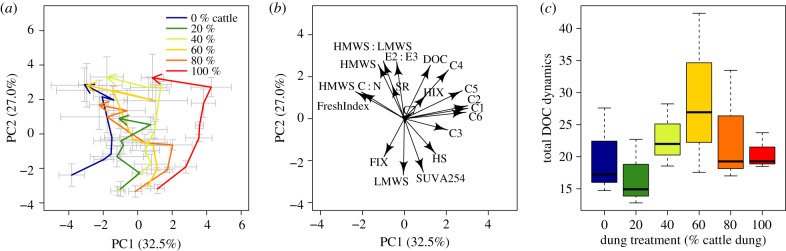
In many regions of the world, populations of large wildlife have been displaced by livestock, and this may change the functioning of aquatic ecosystems owing to significant differences in the quantity and quality of their dung. We developed a model for estimating loading rates of organic matter (dung) by cattle for comparison with estimated rates for hippopotamus in the Mara River, Kenya. We then conducted a replicated mesocosm experiment to measure ecosystem effects of nutrient and carbon inputs associated with dung from livestock (cattle) versus large wildlife (hippopotamus). Our loading model shows that per capita dung input by cattle is lower than for hippos, but total dung inputs by cattle constitute a significant portion of loading from large herbivores owing to the large numbers of cattle on the landscape. Cattle dung transfers higher amounts of limiting nutrients, major ions and dissolved organic carbon to aquatic ecosystems relative to hippo dung, and gross primary production and microbial biomass were higher in cattle dung treatments than in hippo dung treatments. Our results demonstrate that different forms of animal dung may influence aquatic ecosystems in fundamentally different ways when introduced into aquatic ecosystems as a terrestrially derived resource subsidy.
在世界上许多地区,大型野生动物的种群已被牲畜所取代,这可能会改变水生生态系统的功能,因为它们的粪便数量和质量存在显著差异。我们开发了一个模型来估算牛的有机物质(粪便)加载率,以便与肯尼亚马拉河河马的估计率进行比较。然后,我们进行了复制的中观生态实验,以测量与牲畜(牛)和大型野生动物(河马)粪便相关的养分和碳输入对生态系统的影响。我们的加载模型表明,每头牛的人均粪便输入量低于河马,但由于景观上有大量的牛,牛的总粪便输入量构成了大型食草动物粪便输入的重要部分。与河马粪便相比,牛粪便向水生生态系统转移的限制养分、主要离子和溶解有机碳的数量更多,而在牛粪便处理中,总初级生产力和微生物生物量比在河马粪便处理中更高。我们的研究结果表明,当作为陆地来源的资源补贴引入水生生态系统时,不同形式的动物粪便可能会以根本不同的方式影响水生生态系统。