Centre for Public Health, Queen's University Belfast, Belfast, Northern Ireland.
Regional Genetics Centre, Belfast City Hospital, Level A, Tower Block, Lisburn Road, Belfast, BT9 7AB, Northern Ireland.
Orphanet J Rare Dis. 2020 Apr 28;15(1):107. doi: 10.1186/s13023-020-01376-x.
Patients with rare diseases face unique challenges in obtaining a diagnosis, appropriate medical care and access to support services. Whole genome and exome sequencing have increased identification of causal variants compared to single gene testing alone, with diagnostic rates of approximately 50% for inherited diseases, however integrated multi-omic analysis may further increase diagnostic yield. Additionally, multi-omic analysis can aid the explanation of genotypic and phenotypic heterogeneity, which may not be evident from single omic analyses.
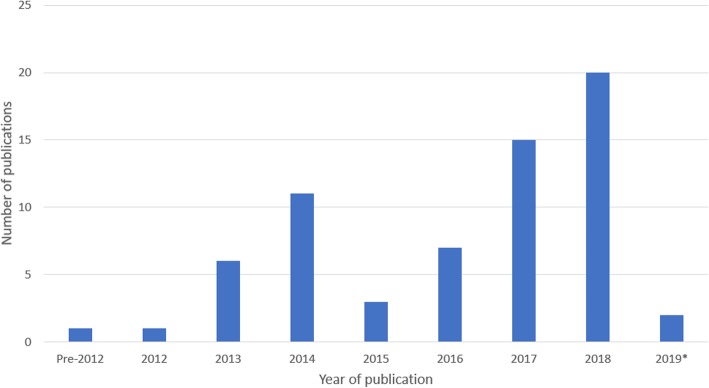
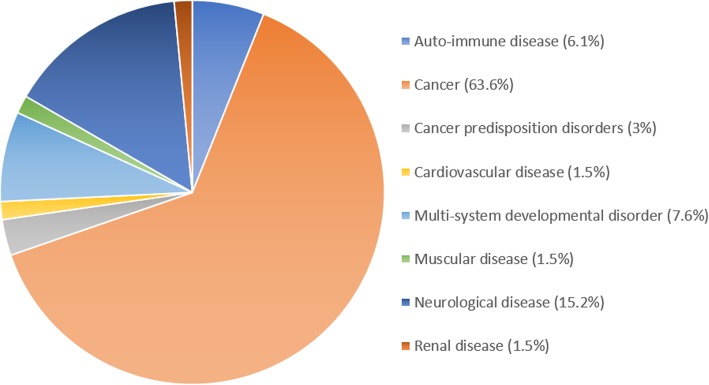
This scoping review took a systematic approach to comprehensively search the electronic databases MEDLINE, EMBASE, PubMed, Web of Science, Scopus, Google Scholar, and the grey literature databases OpenGrey / GreyLit for journal articles pertaining to multi-omics and rare disease, written in English and published prior to the 30th December 2018. Additionally, The Cancer Genome Atlas publications were searched for relevant studies and forward citation searching / screening of reference lists was performed to identify further eligible articles. Following title, abstract and full text screening, 66 articles were found to be eligible for inclusion in this review. Of these 42 (64%) were studies of multi-omics and rare cancer, two (3%) were studies of multi-omics and a pre-cancerous condition, and 22 (33.3%) were studies of non-cancerous rare diseases. The average age of participants (where known) across studies was 39.4 years. There has been a significant increase in the number of multi-omic studies in recent years, with 66.7% of included studies conducted since 2016 and 33% since 2018. Fourteen combinations of multi-omic analyses for rare disease research were returned spanning genomics, epigenomics, transcriptomics, proteomics, phenomics and metabolomics.
This scoping review emphasises the value of multi-omic analysis for rare disease research in several ways compared to single omic analysis, ranging from the provision of a diagnosis, identification of prognostic biomarkers, distinct molecular subtypes (particularly for rare cancers), and identification of novel therapeutic targets. Moving forward there is a critical need for collaboration of multi-omic rare disease studies to increase the potential to generate robust outcomes and development of standardised biorepository collection and reporting structures for multi-omic studies.
与单基因检测相比,全基因组和外显子组测序可增加对因果变异的识别,遗传性疾病的诊断率约为 50%,但整合多组学分析可能会进一步提高诊断率。此外,多组学分析有助于解释基因型和表型异质性,而单组学分析可能无法解释这些异质性。
本范围界定综述采用系统方法,全面搜索电子数据库 MEDLINE、EMBASE、PubMed、Web of Science、Scopus、Google Scholar 和灰色文献数据库 OpenGrey / GreyLit,以获取与多组学和罕见疾病相关的英文期刊文章,这些文章发表于 2018 年 12 月 30 日之前。此外,还对癌症基因组图谱(The Cancer Genome Atlas)的出版物进行了相关研究的搜索,并进行了引文搜索/参考文献筛选,以确定其他合格文章。经过标题、摘要和全文筛选,发现 66 篇文章符合纳入本综述的标准。其中 42 篇(64%)为多组学和罕见癌症研究,2 篇(3%)为多组学和癌前状态研究,22 篇(33.3%)为非癌症罕见疾病研究。研究中参与者的平均年龄(如已知)为 39.4 岁。近年来,多组学研究的数量显著增加,66.7%的纳入研究是在 2016 年以后进行的,33%是在 2018 年以后进行的。返回的用于罕见疾病研究的多组学分析组合有 14 种,涵盖了基因组学、表观基因组学、转录组学、蛋白质组学、表型组学和代谢组学。
本范围界定综述强调了多组学分析在以下几个方面对罕见疾病研究的价值,与单组学分析相比,包括提供诊断、识别预后生物标志物、独特的分子亚型(特别是罕见癌症)以及鉴定新的治疗靶点。展望未来,需要对多组学罕见疾病研究进行合作,以提高产生稳健结果的潜力,并为多组学研究制定标准化生物库收集和报告结构。