Lawrence Jeanne-Marie, Ibne Hossain Niamat Ullah, Jaradat Raed, Hamilton Michael
Department of Industrial and Systems Engineering, Mississippi State University, PO Box 9542, Mississippi State, 39762, USA.
Institute for Systems Engineering Research, Mississippi State University, USA.
Int J Disaster Risk Reduct. 2020 Oct;49:101607. doi: 10.1016/j.ijdrr.2020.101607. Epub 2020 Apr 28.
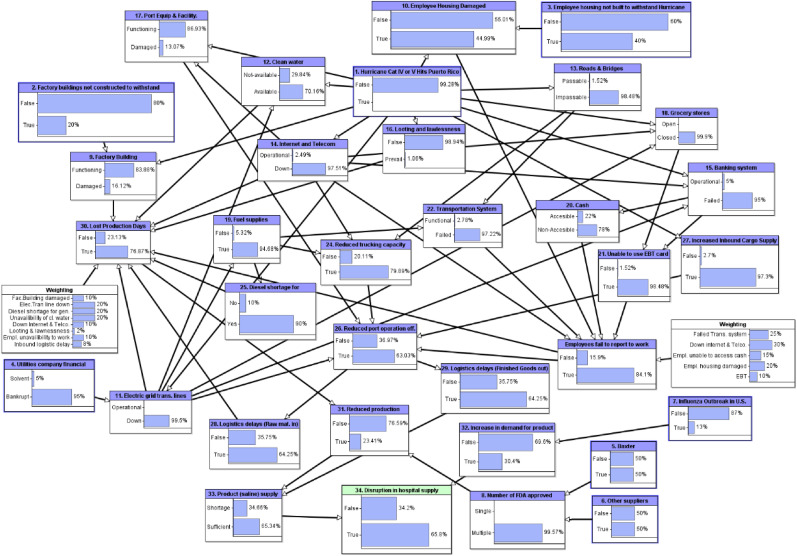
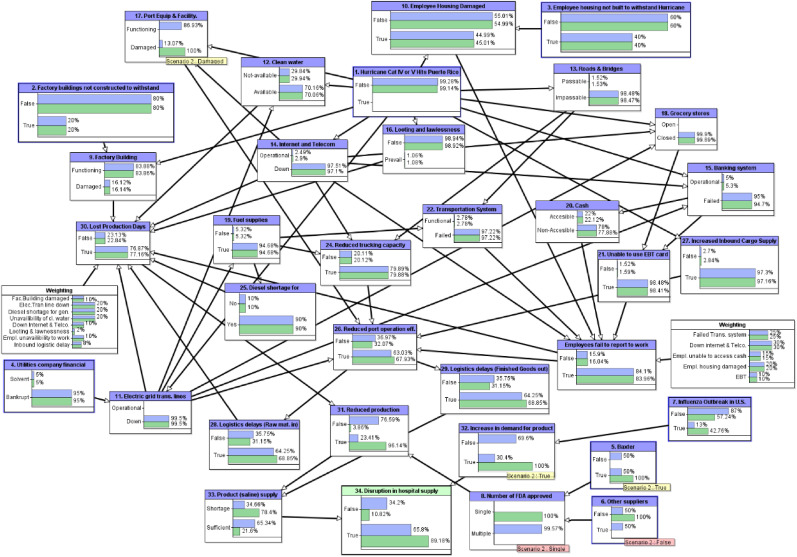
The United States government has identified the health care sector as part of the critical infrastructure for homeland security to protect citizens against health risks arising from terrorism, natural disasters, and epidemics. Citizens also have expectations about the role that health care plays in enjoying a good quality of life, by providing response systems to handle emergencies and other illness situations adequately. Among the systems required to supportdesired performance levels is a robust and resilient pharmaceutical supply chain that is free of disruption. Shortages of drugs place undue pressure on healthcare providers to devise alternative approaches to administer patient care. With climate change expected to result in increasingly severe weather patterns in the future, it is critical that logistics engineers understand the impact that a catastrophic weather event could have on supply chain disruption to facilitate the design of supply systems that are robust and resilient. This study investigates the main causal and intermediate events that led to risk propagation in, and disruption of, the U.S. pharmaceutical supply chain following Hurricane Maria. A causality Bayesian model is developed to depict linkages between risk events and quantify the associated cumulative risk. The quantification is further examined through different advanced techniques such as predictive inference reasoning and sensitivity analysis. The general interpretation of these analyses suggests that port resilience is imperative to pharmaceutical supply chain performance in the case of Puerto Rico.
美国政府已将医疗保健部门确定为国土安全关键基础设施的一部分,以保护公民免受恐怖主义、自然灾害和流行病引发的健康风险。公民也期望医疗保健在通过提供应对系统来充分应对紧急情况和其他疾病状况从而享受高质量生活方面发挥作用。支持期望的绩效水平所需的系统之一是强大且有韧性、不受干扰的药品供应链。药品短缺给医疗保健提供者带来了过大压力,促使他们设计替代方法来管理患者护理。鉴于预计气候变化将导致未来天气模式愈发恶劣,物流工程师必须了解灾难性天气事件可能对供应链中断产生的影响,以便设计出强大且有韧性的供应系统。本研究调查了飓风玛丽亚过后导致美国药品供应链风险传播和中断的主要因果及中间事件。开发了一个因果贝叶斯模型来描述风险事件之间的联系,并量化相关的累积风险。通过预测推理和敏感性分析等不同的先进技术对量化结果进行了进一步研究。这些分析的总体解释表明,对于波多黎各而言,港口韧性对药品供应链绩效至关重要。