Department of Respiratory Disease, Jinshan Hospital of Fudan University, Shanghai, China.
Xuanqiao Community Health Service Center, Shanghai, China.
Cancer Med. 2020 Jun;9(12):4360-4370. doi: 10.1002/cam4.3062. Epub 2020 Apr 29.
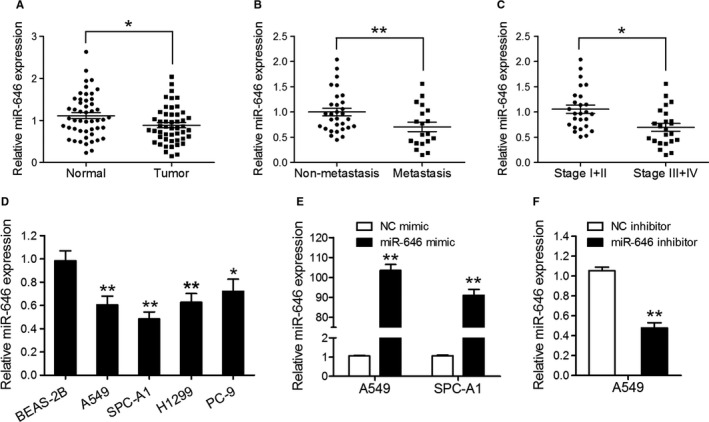
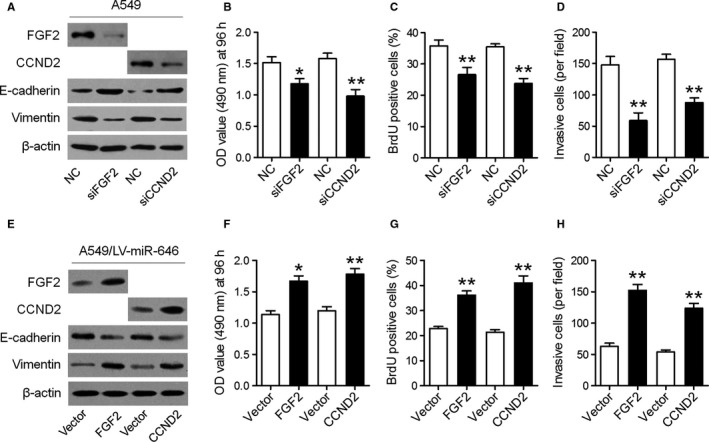
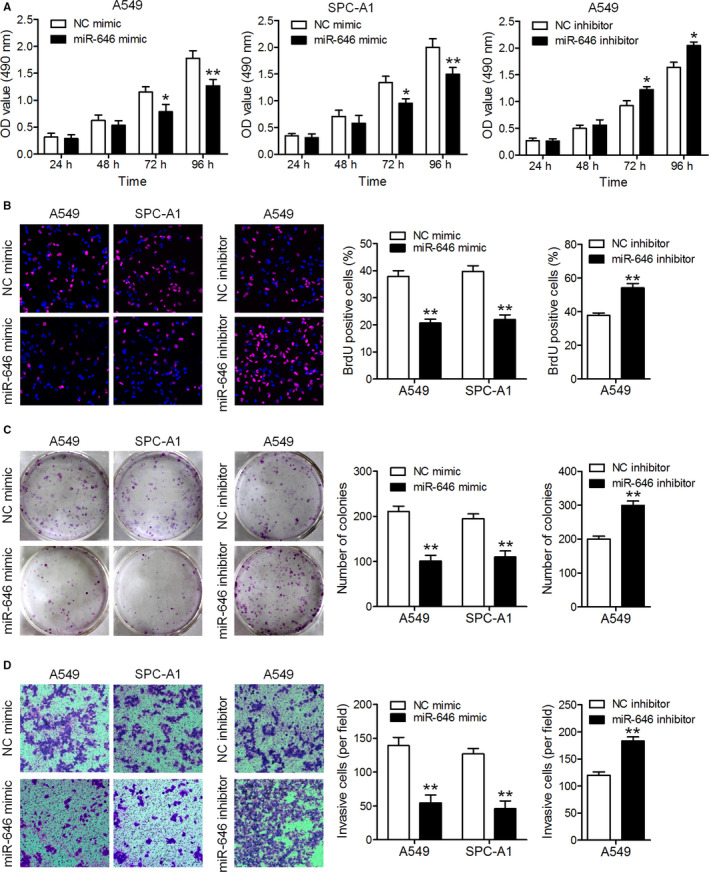
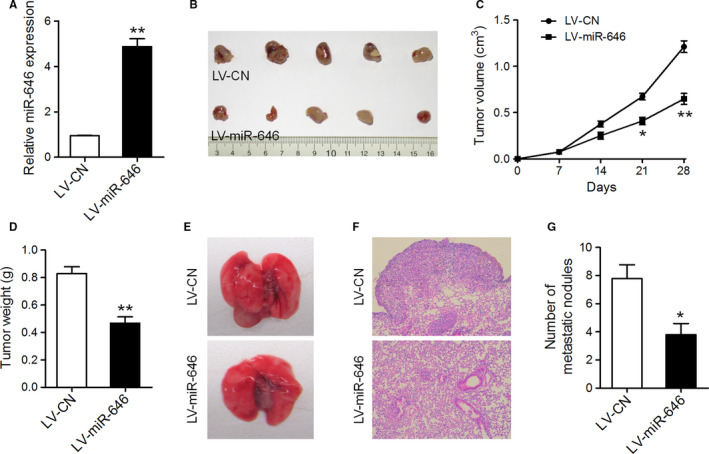
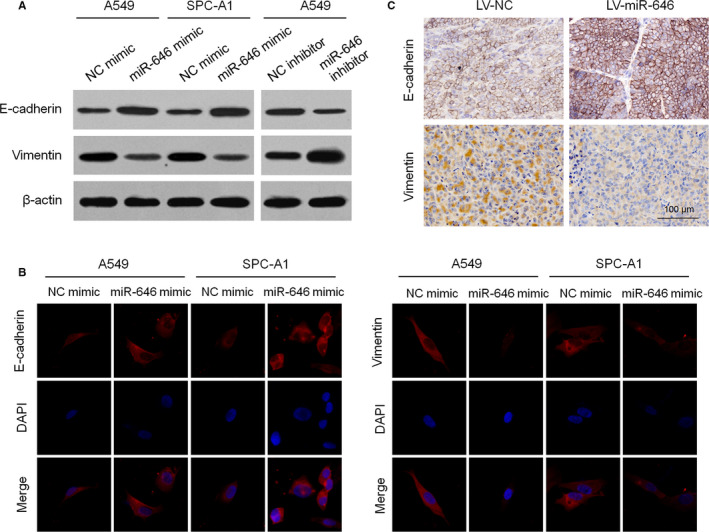
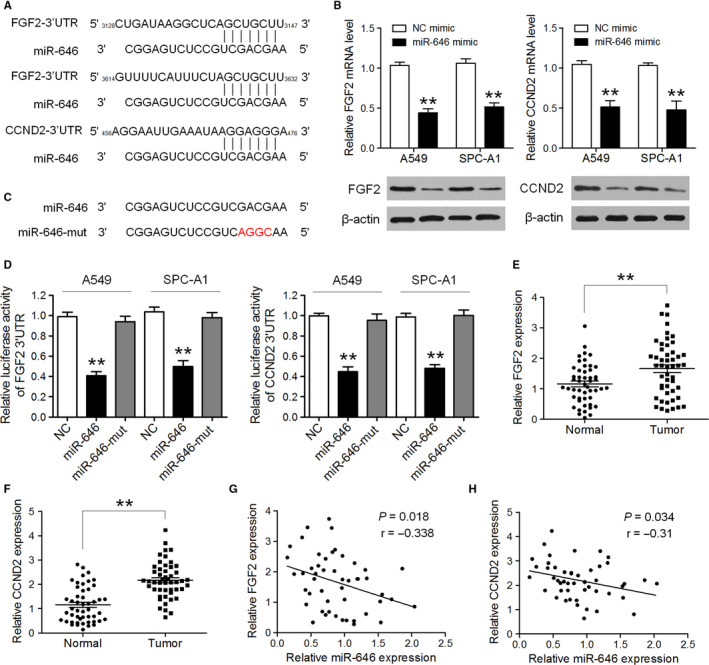
MicroRNA-646 (miR-646) has been implicated in several other cancers; however, its functional mechanism in non-small cell lung cancer (NSCLC) remains unclear. In this study, we observed the downregulation of miR-646 expression in NSCLC tissues and cell lines. Low-level expression of miR-646 was associated with metastasis and stage of NSCLCs. Functional assays showed that overexpression of miR-646 could suppress NSCLC cell proliferation, clonogenicity, invasion, and inhibit epithelial-mesenchymal transition (EMT), whereas decreased miR-646 expression showed the opposite effects. Importantly, miR-646 overexpression attenuated in vivo tumor growth and metastasis in nude mice models. Mechanically, miR-646 directly targeted and suppressed fibroblast growth factor 2 (FGF2) and cyclin D2 (CCND2) expression. Reintroduction of FGF2 and CCND2 attenuated miR-646-mediated suppression of proliferation and invasion in NSCLC. Collectively, these results demonstrate that miR-646 acts as a tumor suppressor in NSCLC by targeting FGF2 and CCND2, and may serve as a therapeutic target for patients with NSCLC.
微小 RNA-646(miR-646)已被牵涉到多种其他癌症中;然而,其在非小细胞肺癌(NSCLC)中的功能机制仍不清楚。在本研究中,我们观察到 miR-646 在 NSCLC 组织和细胞系中的表达下调。miR-646 的低水平表达与 NSCLC 的转移和分期相关。功能分析表明,miR-646 的过表达可抑制 NSCLC 细胞的增殖、集落形成、侵袭,并抑制上皮-间充质转化(EMT),而降低 miR-646 的表达则表现出相反的效果。重要的是,miR-646 的过表达在裸鼠模型中减弱了体内肿瘤的生长和转移。在机制上,miR-646 直接靶向并抑制成纤维细胞生长因子 2(FGF2)和周期蛋白 D2(CCND2)的表达。FGF2 和 CCND2 的再引入减弱了 miR-646 对 NSCLC 增殖和侵袭的抑制作用。综上所述,这些结果表明,miR-646 通过靶向 FGF2 和 CCND2 发挥 NSCLC 中的肿瘤抑制作用,可能成为 NSCLC 患者的治疗靶点。