Pfammatter Angela Fidler, Marchese Sara Hoffman, Pellegrini Christine, Daly Elyse, Davidson Miriam, Spring Bonnie
Department of Preventive Medicine, Northwestern University Feinberg School of Medicine, Chicago, IL, United States.
Department of Exercise Science, Arnold School of Public Health, University of South Carolina, Columbia, SC, United States.
JMIR Form Res. 2020 May 13;4(5):e16297. doi: 10.2196/16297.
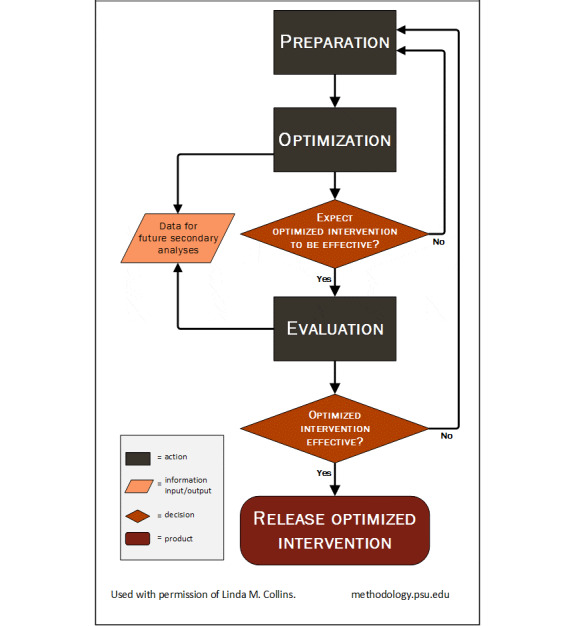
Mobile messaging is often used in behavioral weight loss interventions, yet little is known as to the extent to which they contribute to weight loss when part of a multicomponent treatment package. The multiphase optimization strategy (MOST) is a framework that researchers can use to systematically investigate interventions that achieve desirable outcomes given specified constraints.
This study describes the use of MOST to develop a messaging intervention as a component to test as part of a weight loss treatment package in a subsequent optimization trial.
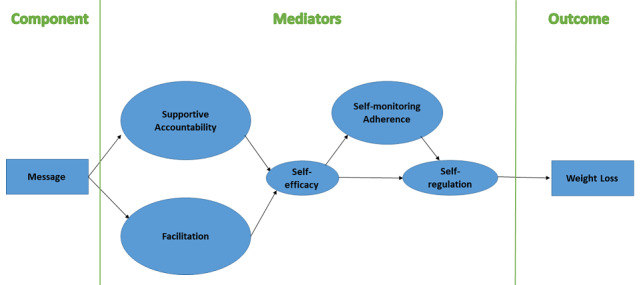
On the basis of our conceptual model, a text message intervention was created to support self-regulation of weight-related behaviors. We tested the messages in the ENLIGHTEN feasibility pilot study. Adults with overweight and obesity were recruited to participate in an 8-week weight loss program. Participants received a commercially available self-monitoring smartphone app, coaching calls, and text messages. The number and frequency of text messages sent were determined by individual preferences, and weight was assessed at 8 weeks.
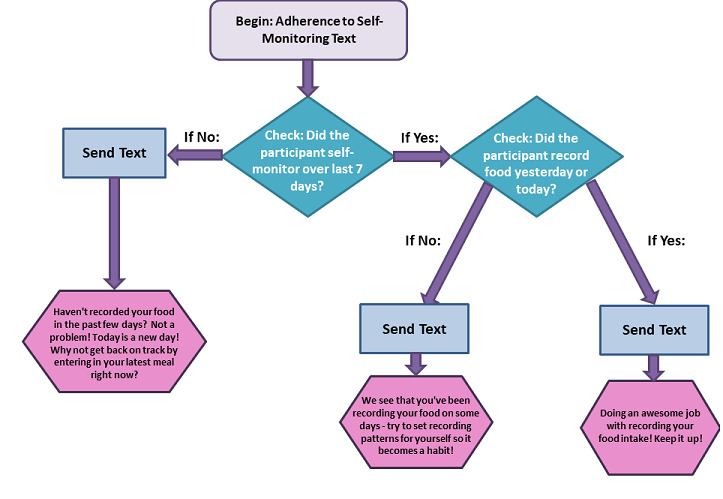
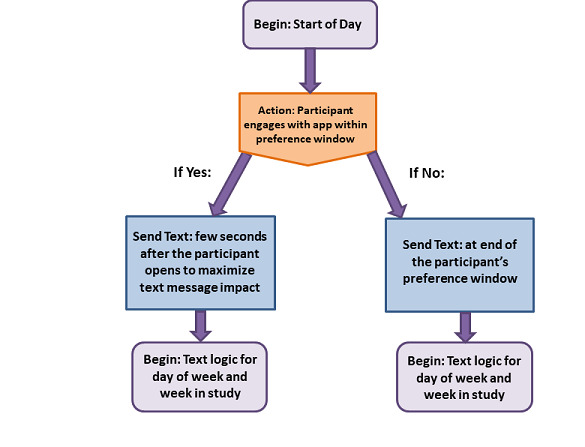
Participants (n=9) in the feasibility pilot study lost 3.2% of their initial body weight over the 8-week intervention and preferred to receive 1.8 texts per day for 4.3 days per week. Researcher burden in manually sending messages was high, and the cost of receiving text messages was a concern. Therefore, a fully automated push notification system was developed to facilitate sending tailored daily messages to participants to support weight loss.
Following the completion of specifying the conceptual model and the feasibility pilot study, the message intervention went through a final iteration. Theory and feasibility pilot study results during the preparation phase informed critical decisions about automation, frequency, triggers, and content before inclusion as a treatment component in a factorial optimization trial.
ClinicalTrials.gov NCT01814072; https://clinicaltrials.gov/ct2/show/NCT01814072.
移动消息传递常用于行为减肥干预措施,但对于其作为多成分治疗方案的一部分时对减肥的贡献程度,人们了解甚少。多阶段优化策略(MOST)是一个框架,研究人员可利用该框架在特定限制条件下系统地研究能实现理想结果的干预措施。
本研究描述了使用MOST来开发一种消息传递干预措施,作为后续优化试验中减肥治疗方案的一部分进行测试。
基于我们的概念模型,创建了一种短信干预措施来支持与体重相关行为的自我调节。我们在ENLIGHTEN可行性预试验中对这些短信进行了测试。招募超重和肥胖的成年人参加为期8周的减肥计划。参与者收到一款商业可用的自我监测智能手机应用程序、辅导电话和短信。发送短信的数量和频率由个人偏好决定,并在8周时评估体重。
可行性预试验中的参与者(n = 9)在8周的干预期间体重减轻了初始体重的3.2%,且更喜欢每周4.3天每天接收1.8条短信。研究人员手动发送短信的负担很重,接收短信的费用也是一个问题。因此,开发了一个全自动推送通知系统,以便向参与者发送量身定制的每日短信以支持减肥。
在完成概念模型的确定和可行性预试验后,消息传递干预措施进行了最后一次迭代。准备阶段的理论和可行性预试验结果为在析因优化试验中将其作为治疗成分纳入之前关于自动化、频率、触发因素和内容的关键决策提供了依据。
ClinicalTrials.gov NCT01814072;https://clinicaltrials.gov/ct2/show/NCT01814072 。