Montagni Ilaria, Mabchour Inass, Tzourio Christophe
Bordeaux Population Health U1219, Inserm-University of Bordeaux, Bordeaux, France.
Institute of Public Health, Epidemiology and Development (ISPED), University of Bordeaux, Bordeaux, France.
JMIR Serious Games. 2020 May 18;8(2):e16983. doi: 10.2196/16983.
Vaccine hesitancy is a growing threat to population health, and effective interventions are needed to reduce its frequency. Digital gamification is a promising new approach to tackle this public health issue.
The purpose of this scoping review was to assess the amount and quality of outcomes in studies evaluating gamified digital tools created to increase vaccine knowledge and uptake.
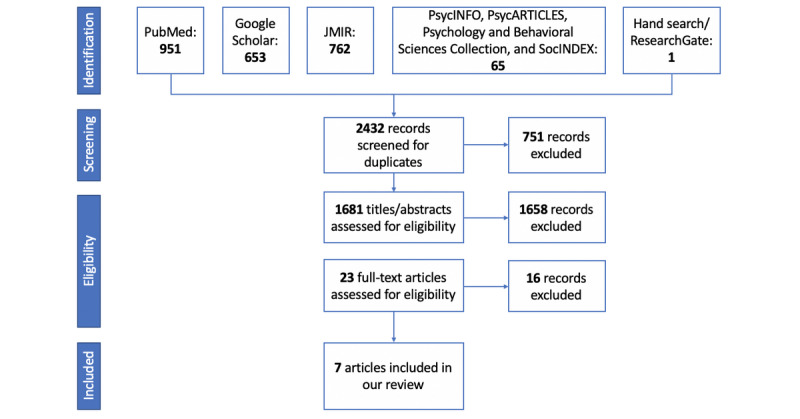
We searched for peer-reviewed articles published between July 2009 and August 2019 in PubMed, Google Scholar, Journal of Medical Internet Research, PsycINFO, PsycARTICLES, Psychology and Behavioral Sciences Collection, and SocINDEX. Studies were coded by author, year of publication, country, journal, research design, sample size and characteristics, type of vaccine, theory used, game content, game modality, gamification element(s), data analysis, type of outcomes, and mean quality score. Outcomes were synthesized through the textual narrative synthesis method.
A total of 7 articles met the inclusion criteria and were critically reviewed. Game modalities and gamification elements were diverse, but role play and a reward system were present in all studies. These articles included a mixture of randomized controlled trials, quasi-experimental studies, and studies comprising quantitative and qualitative measures. The majority of the studies were theory-driven. All the identified gamified digital tools were highly appreciated for their usability and were effective in increasing awareness of vaccine benefits and motivation for vaccine uptake.
Despite the relative paucity of studies on this topic, this scoping review suggests that digital gamification has strong potential for increasing vaccination knowledge and, eventually, vaccination coverage.
疫苗犹豫对人群健康构成的威胁日益增大,需要有效的干预措施来降低其发生率。数字游戏化是解决这一公共卫生问题的一种有前景的新方法。
本范围综述的目的是评估在评估为增加疫苗知识和接种率而创建的游戏化数字工具的研究中,结果的数量和质量。
我们在PubMed、谷歌学术、《医学互联网研究杂志》、PsycINFO、PsycARTICLES、《心理学与行为科学合集》和SocINDEX中检索了2009年7月至2019年8月发表的同行评议文章。研究由作者、发表年份、国家、期刊、研究设计、样本量及特征、疫苗类型、使用的理论、游戏内容、游戏模式、游戏化元素、数据分析、结果类型和平均质量得分进行编码。通过文本叙述综合法对结果进行综合。
共有7篇文章符合纳入标准并进行了严格审查。游戏模式和游戏化元素多种多样,但所有研究中都存在角色扮演和奖励系统。这些文章包括随机对照试验、准实验研究以及包含定量和定性测量的研究的混合。大多数研究是理论驱动的。所有已识别的游戏化数字工具因其易用性而受到高度评价,并且在提高对疫苗益处的认识和接种疫苗的积极性方面有效。
尽管关于该主题的研究相对较少,但本范围综述表明数字游戏化在增加疫苗接种知识以及最终提高疫苗接种覆盖率方面具有强大潜力。