Lines Kate E, Javid Mahsa, Reed Anita A C, Walls Gerard V, Stevenson Mark, Simon Michelle, Kooblall Kreepa G, Piret Sian E, Christie Paul T, Newey Paul J, Mallon Ann-Marie, Thakker Rajesh V
Academic Endocrine Unit, Radcliffe Department of Medicine, University of Oxford, Oxford Centre for Diabetes, Endocrinology and Metabolism (OCDEM), Churchill Hospital, Headington, Oxford, UK.
MRC Harwell Institute, Mammalian Genetics Unit, Harwell Campus, Oxfordshire, UK.
Endocr Connect. 2020 May;9(5):426-437. doi: 10.1530/EC-20-0103.
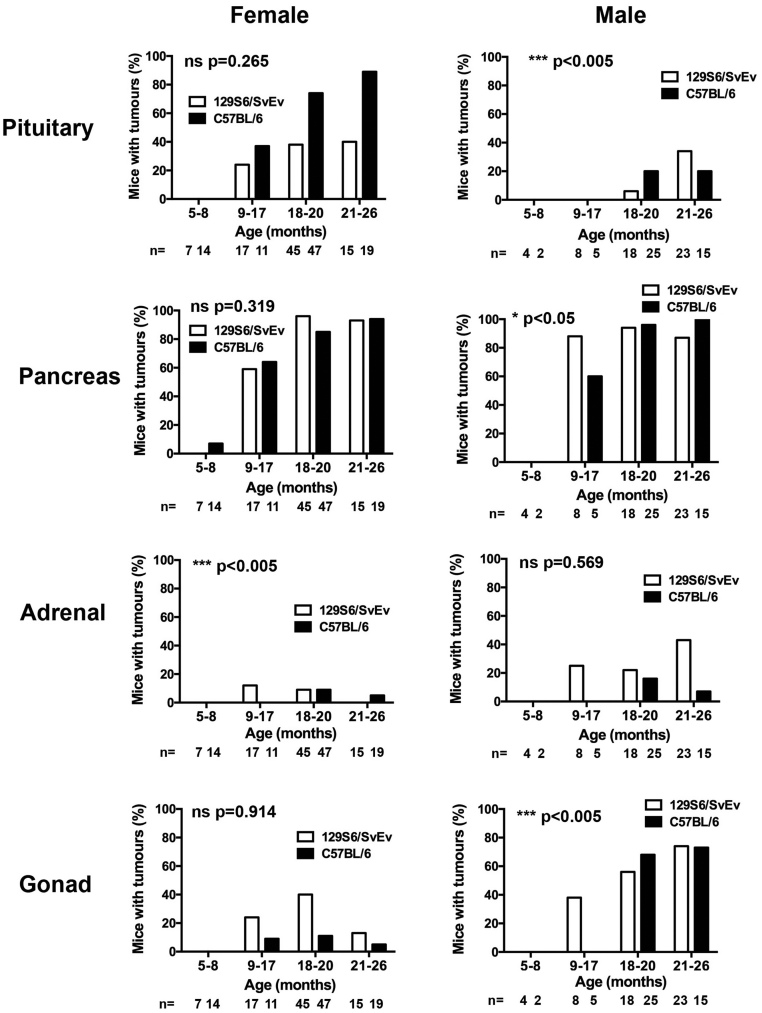
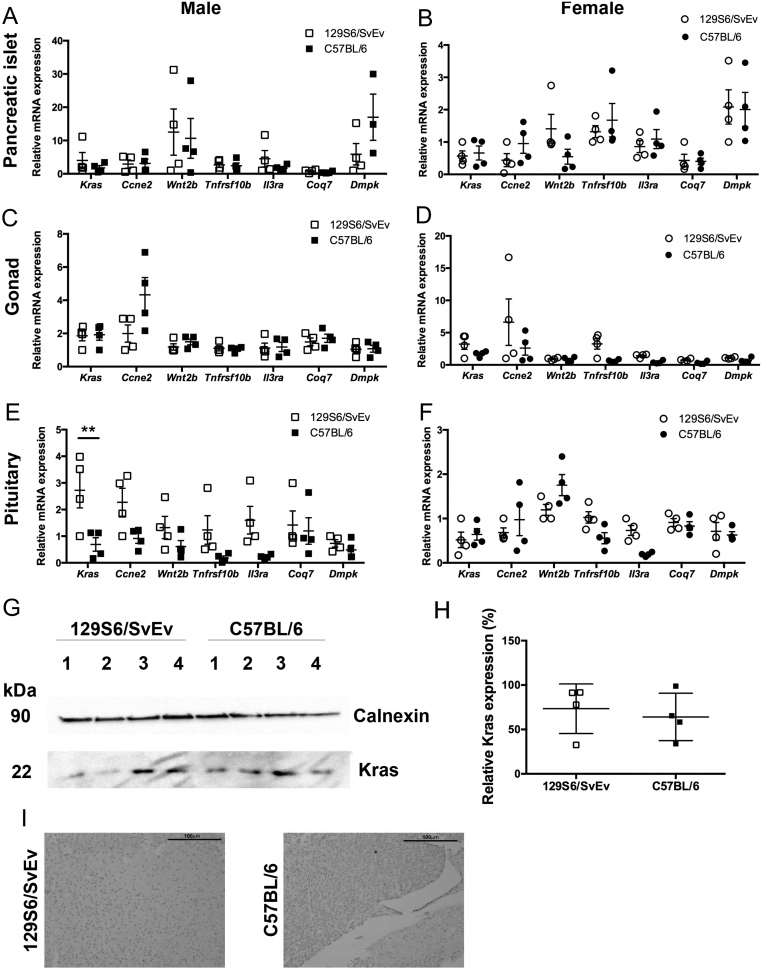
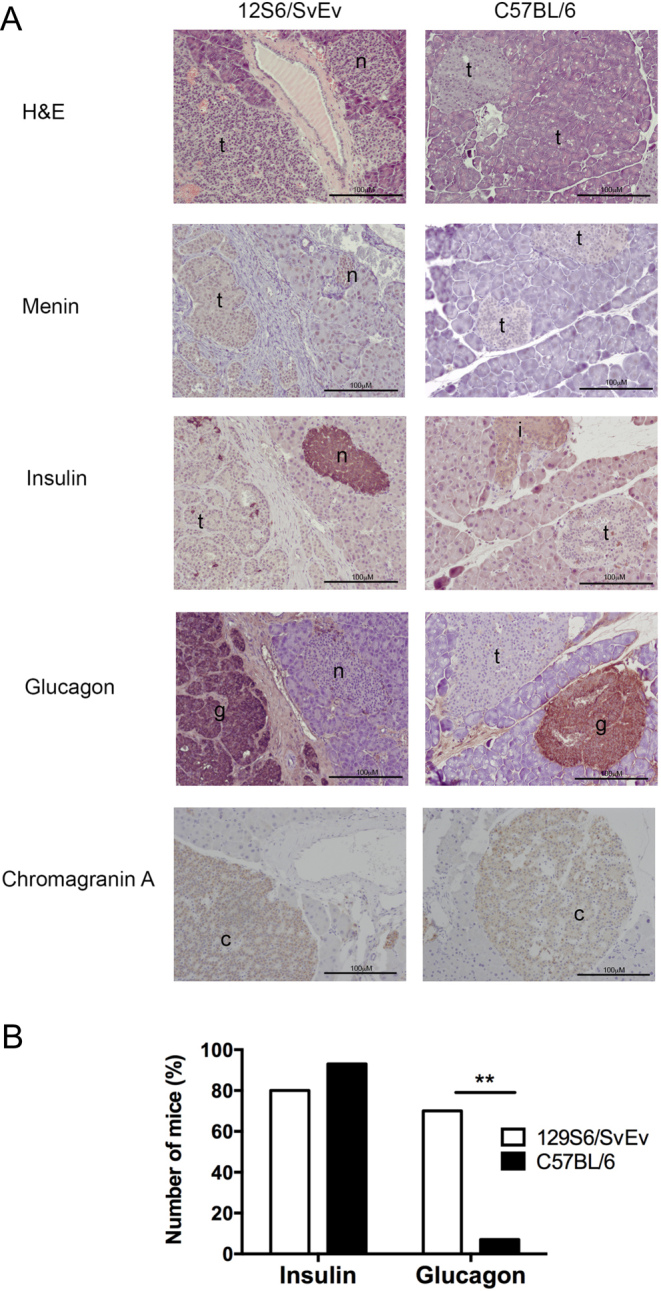
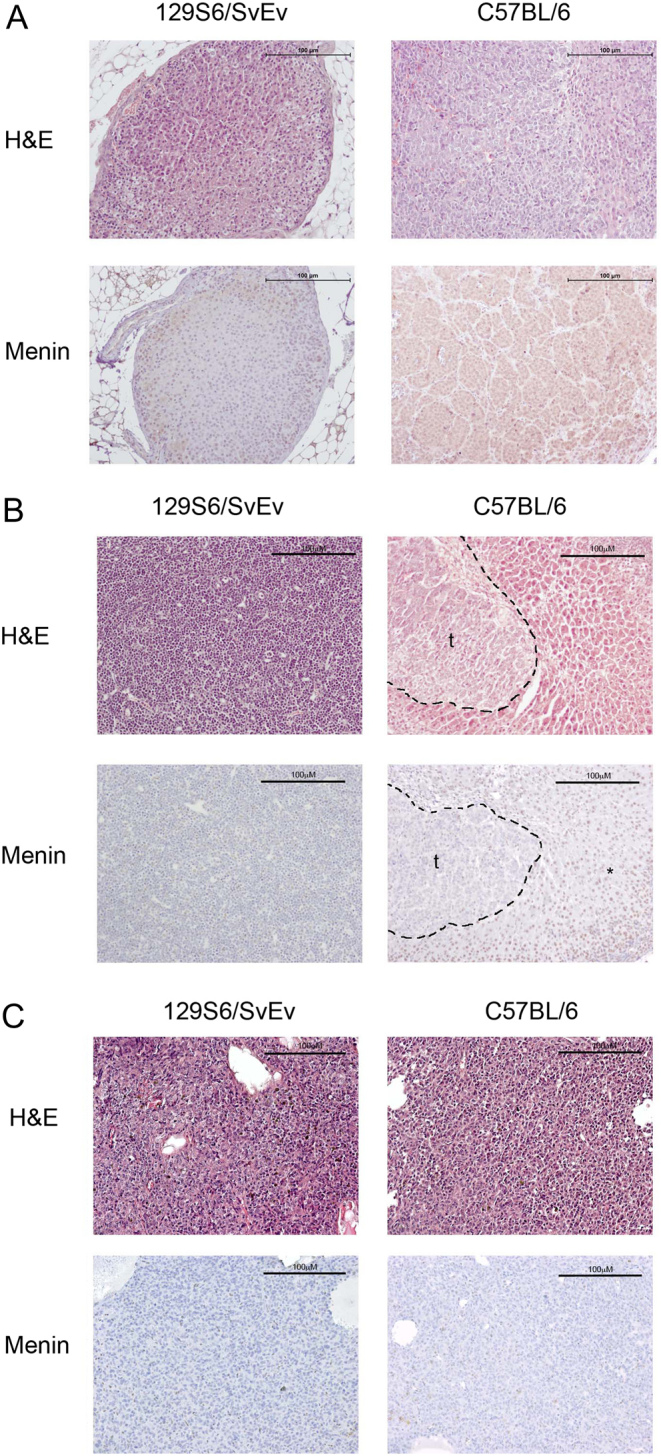
Multiple endocrine neoplasia type 1 (MEN1), an autosomal dominant disorder caused by MEN1 germline mutations, is characterised by parathyroid, pancreatic and pituitary tumours. MEN1 mutations also cause familial isolated primary hyperparathyroidism (FIHP), a milder condition causing hyperparathyroidism only. Identical mutations can cause either MEN1 or FIHP in different families, thereby implicating a role for genetic modifiers in altering phenotypic expression of tumours. We therefore investigated the effects of genetic background and potential for genetic modifiers on tumour development in adult Men1+/- mice, which develop tumours of the parathyroids, pancreatic islets, anterior pituitary, adrenal cortex and gonads, that had been backcrossed to generate C57BL/6 and 129S6/SvEv congenic strains. A total of 275 Men1+/- mice, aged 5-26 months were macroscopically studied, and this revealed that genetic background significantly influenced the development of pituitary, adrenal and ovarian tumours, which occurred in mice over 12 months of age and more frequently in C57BL/6 females, 129S6/SvEv males and 129S6/SvEv females, respectively. Moreover, pituitary and adrenal tumours developed earlier, in C57BL/6 males and 129S6/SvEv females, respectively, and pancreatic and testicular tumours developed earlier in 129S6/SvEv males. Furthermore, glucagon-positive staining pancreatic tumours occurred more frequently in 129S6/SvEv Men1+/- mice. Whole genome sequence analysis of 129S6/SvEv and C57BL/6 Men1+/- mice revealed >54,000 different variants in >300 genes. These included, Coq7, Dmpk, Ccne2, Kras, Wnt2b, Il3ra and Tnfrsf10a, and qRT-PCR analysis revealed that Kras was significantly higher in pituitaries of male 129S6/SvEv mice. Thus, our results demonstrate that Kras and other genes could represent possible genetic modifiers of Men1.
多发性内分泌腺瘤1型(MEN1)是一种由MEN1种系突变引起的常染色体显性疾病,其特征为甲状旁腺、胰腺和垂体肿瘤。MEN1突变还会导致家族性孤立性原发性甲状旁腺功能亢进症(FIHP),这是一种仅导致甲状旁腺功能亢进的较轻病症。相同的突变在不同家族中可导致MEN1或FIHP,从而暗示遗传修饰因子在改变肿瘤表型表达中发挥作用。因此,我们研究了遗传背景和遗传修饰因子潜力对成年Men1+/-小鼠肿瘤发生发展的影响,这些小鼠会发生甲状旁腺、胰岛、垂体前叶、肾上腺皮质和性腺肿瘤,并且已经回交以产生C57BL/6和129S6/SvEv同源品系。对总共275只年龄在5至26个月的Men1+/-小鼠进行了宏观研究,结果显示遗传背景显著影响垂体、肾上腺和卵巢肿瘤的发生发展,这些肿瘤发生在12个月以上的小鼠中,且分别在C57BL/6雌性、129S6/SvEv雄性和129S6/SvEv雌性小鼠中更常见。此外,垂体和肾上腺肿瘤分别在C57BL/6雄性和129S6/SvEv雌性小鼠中出现得更早,胰腺和睾丸肿瘤在129S6/SvEv雄性小鼠中出现得更早。此外,胰高血糖素阳性染色的胰腺肿瘤在129S6/SvEv Men1+/-小鼠中更常见。对129S6/SvEv和C57BL/6 Men1+/-小鼠进行的全基因组序列分析揭示了300多个基因中存在超过54,000个不同变异。这些基因包括Coq7、Dmpk、Ccne2、Kras、Wnt2b、Il3ra和Tnfrsf10a,定量逆转录聚合酶链反应(qRT-PCR)分析显示Kras在雄性129S6/SvEv小鼠的垂体中显著更高。因此,我们的结果表明Kras和其他基因可能是Men1潜在的遗传修饰因子。