Antonouli Sevastiani, Palmerini Maria Grazia, Bianchi Serena, Rossi Gianna, Cecconi Sandra, Belli Manuel, Bernardi Sara, Khalili Mohammad Ali, Familiari Giuseppe, Nottola Stefania Annarita, Macchiarelli Guido
Department of Life, Health and Environmental Sciences, University of L'Aquila, 67100 L'Aquila, Italy.
Department of Reproductive Biology, Yazd Institute for Reproductive Sciences, Shahid Sadoughi University of Medical Sciences, Yazd, Iran.
J Reprod Dev. 2020 Aug 20;66(4):387-397. doi: 10.1262/jrd.2019-147. Epub 2020 Apr 28.
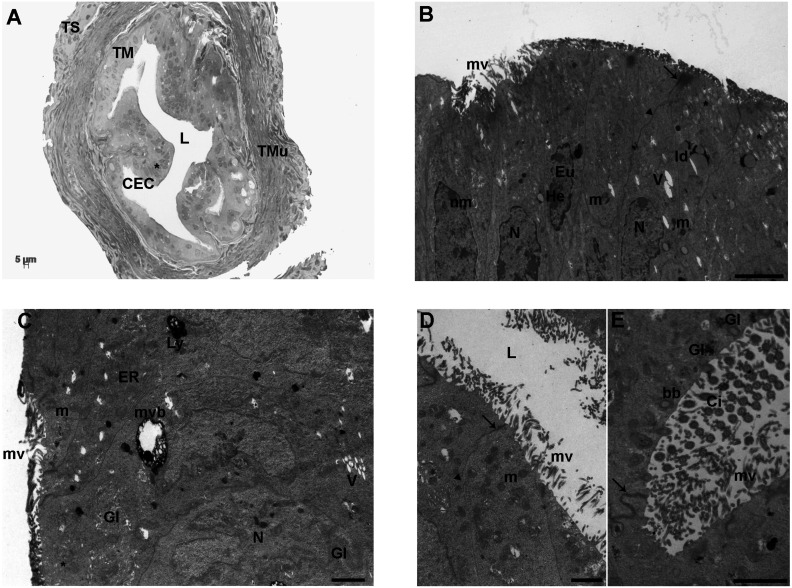
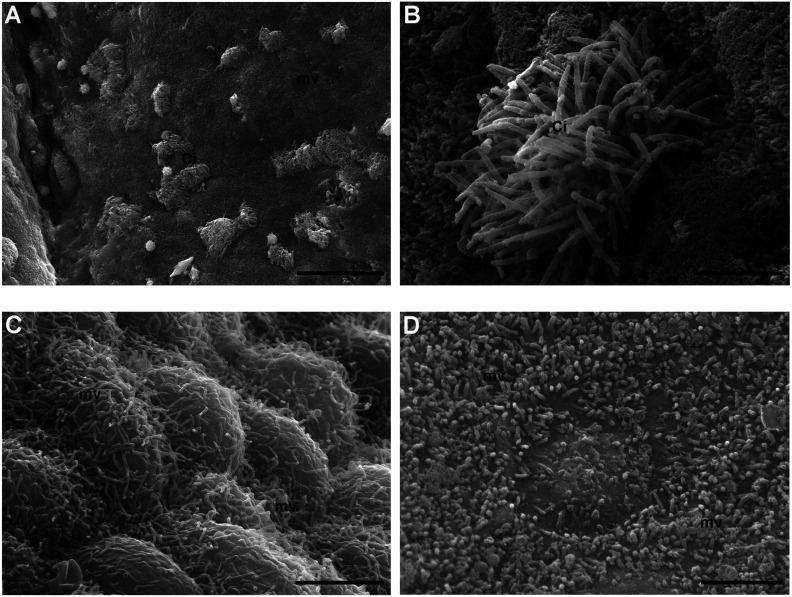
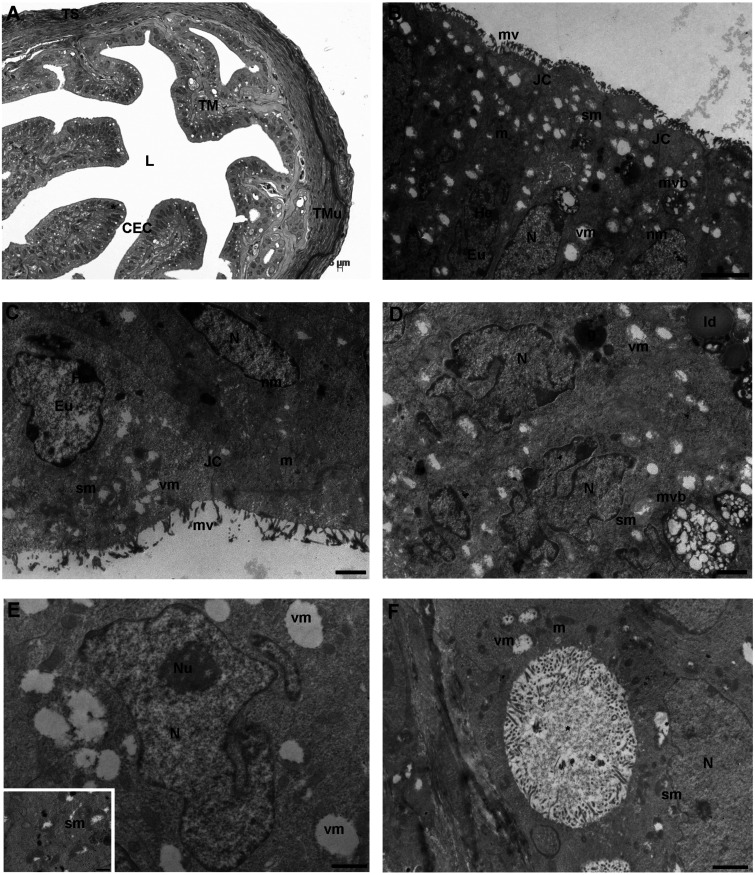
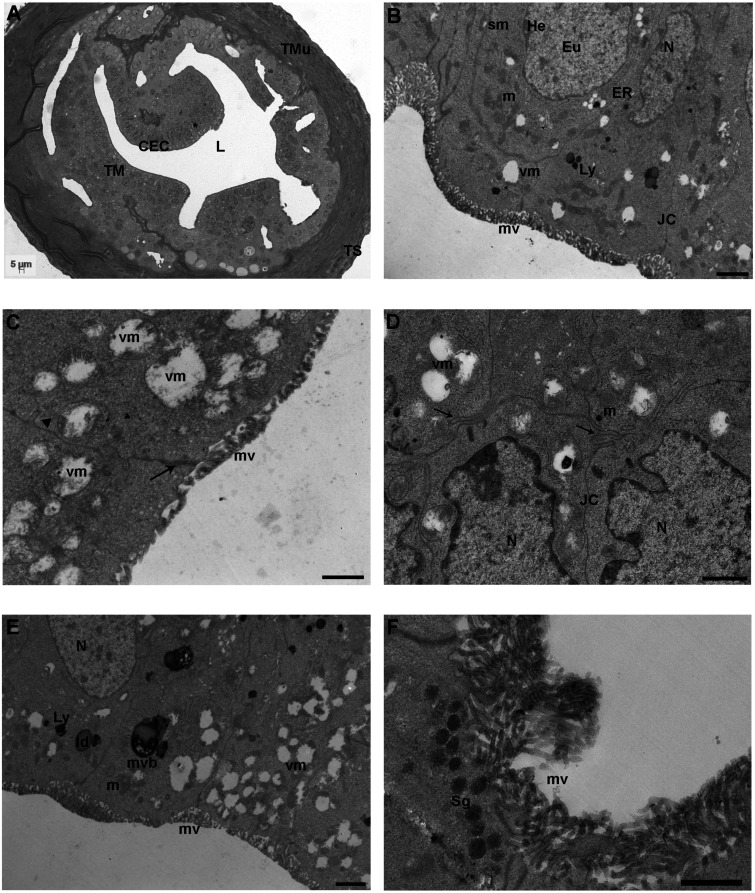
Controlled ovarian hyperstimulation (COH) is routinary used in assisted reproductive technologies (ARTs) to increase the yields of mature oocytes. The possibility that patients with a history of failures or poor-responders may develop side-effects following these treatments is still debated. Epidemiological studies reported controversial results about pregnancy outcome and the risk of developing gynecological cancers. By using a mouse model, here we compared the ultrastructural features of fallopian tubes (FTs) obtained from mice undergoing or not (control, CTR) four (4R) and eight (8R) rounds of gonadotropin stimulation. Although the morphological characteristics of oviductal layers seemed unaffected by repeated treatments, dose-response ultrastructural alterations in the ampulla appeared in the 4R group and even more in the 8R group. The targets were oviductal ciliated (CCs) and non-ciliated (NCCs) cells, which showed damaged mitochondria and glycogen accumulations in the cytoplasm. The drastic reduction of CCs, evident after 4R, was supported by the absence of cilia. After 8R, glycogen granules were significantly reduced and massive degeneration of mitochondria, which appeared swollen and/or vacuolated, occurred in NCCs. Moreover, disintegrated mitochondria were found at the periphery of mitophagic vacuoles with evident signs of cristolysis. The morphometric analysis evidenced a significant increase in the density and frequency of damaged mitochondria after 4R and 8R. The absence of cilia, necessary to sustain oviductal transport of oocytes, spermatozoa and embryos, may originate from either mitochondrial dysfunction or glycogen consumption. These results suggest that repeated COH treatments could induce alterations impairing fertilization and embryo transport toward the uterus.
控制性卵巢过度刺激(COH)在辅助生殖技术(ART)中常规使用,以提高成熟卵母细胞的产量。有失败史或反应不良的患者在这些治疗后可能出现副作用的可能性仍存在争议。流行病学研究报告了关于妊娠结局和发生妇科癌症风险的有争议的结果。通过使用小鼠模型,我们在此比较了接受或未接受(对照,CTR)四轮(4R)和八轮(8R)促性腺激素刺激的小鼠的输卵管(FT)的超微结构特征。尽管输卵管层的形态特征似乎不受重复治疗的影响,但壶腹部的剂量反应超微结构改变在4R组出现,在8R组更明显。靶细胞是输卵管纤毛细胞(CCs)和非纤毛细胞(NCCs),它们的线粒体受损,细胞质中出现糖原积累。4R后CCs明显减少,这由纤毛的缺失所证实。8R后,糖原颗粒显著减少,NCCs中出现线粒体大量变性,线粒体肿胀和/或空泡化。此外,在有明显嵴溶解迹象的线粒体自噬泡周围发现了解体的线粒体。形态计量分析表明,4R和8R后受损线粒体的密度和频率显著增加。维持卵母细胞、精子和胚胎输卵管运输所必需的纤毛缺失可能源于线粒体功能障碍或糖原消耗。这些结果表明,重复的COH治疗可能会诱导损害受精和胚胎向子宫运输的改变。