Hubei Collaborative Innovation Center for Grain Industry/Engineering Research Center of Ecology and Agricultural Use of Wetland of Ministry of Education, Yangtze University, Jingzhou, P.R. China.
Institute of Food Crops, Hubei Academy of Agricultural Sciences/Hubei Key Laboratory of Food Crop Germplasm and Genetic, Wuhan, P.R. China.
Sci Rep. 2020 Apr 29;10(1):7250. doi: 10.1038/s41598-020-64288-7.
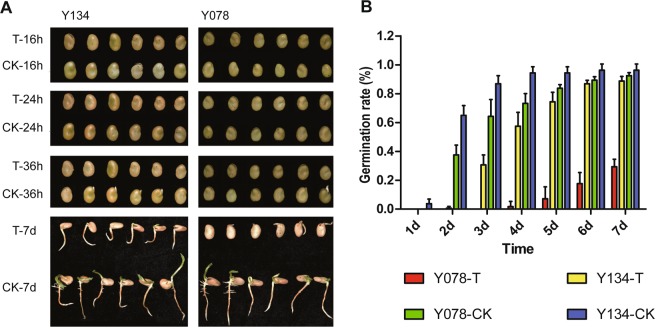
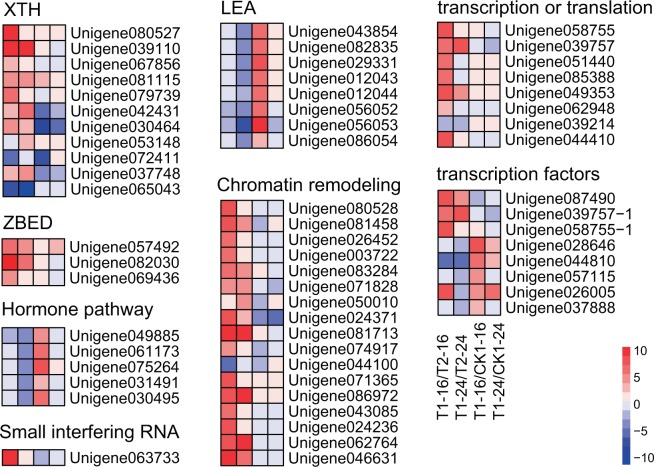
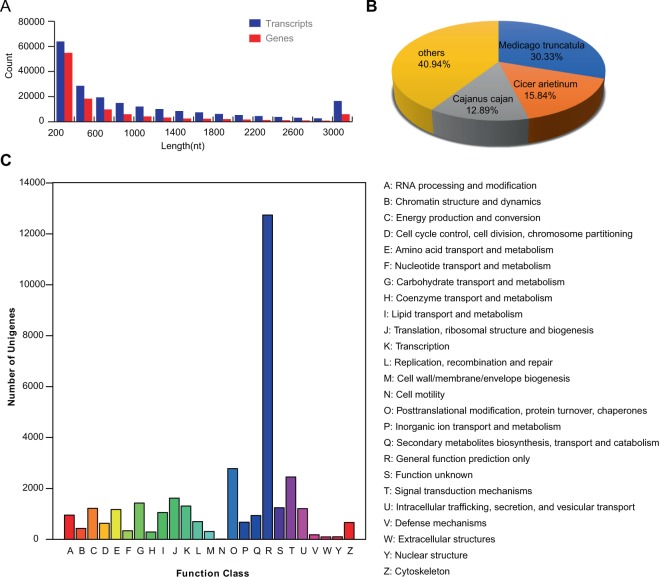
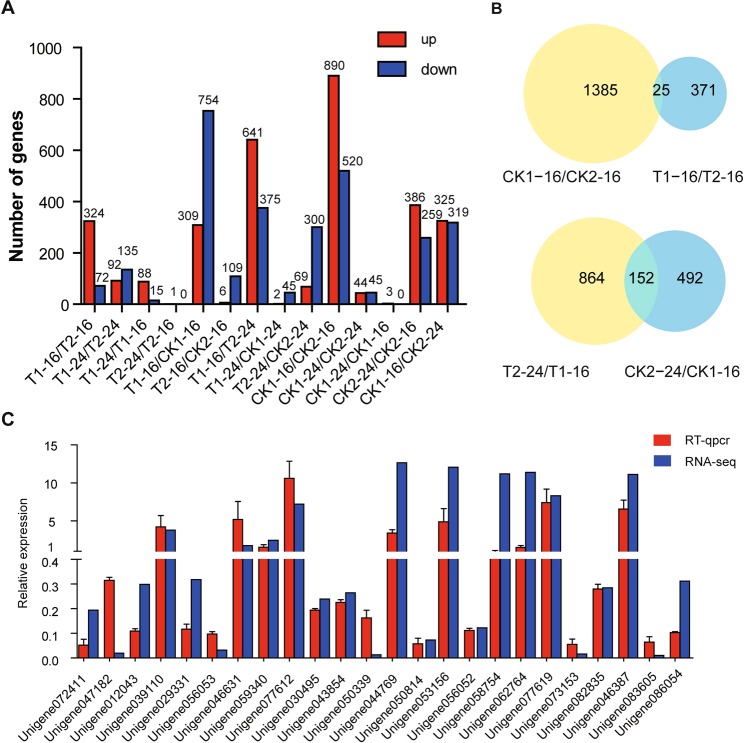
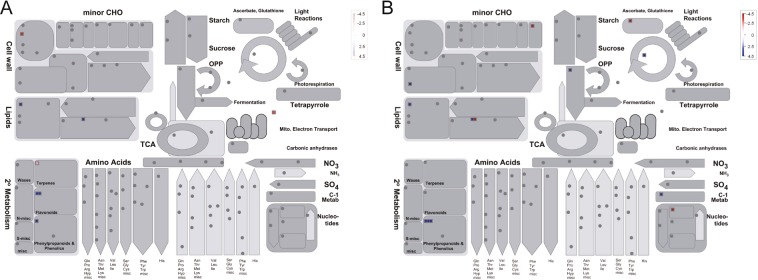
Faba bean (Vicia faba L.) is an important food legume crop. Salinity soils severely constrain the production of faba bean, however, the seed germination of faba bean, which is a vital plant growth stage, is sensitive to salinity. Planting improved varieties of faba bean, which exhibit salt tolerance in seed germination stage, is an optimal strategy for faba bean product. To investigate the genes dynamics during the seed germination stage under salinity, RNA-seq method was used to investigate genome-wide transcription profiles of two faba bean varieties with contrast salt-tolerance during the seed germination. A total of 4,486 differentially expressed genes (DEGs) were identified among the comparison of salt-tolerant variety Y134 and salt-sensitive variety Y078 treated with salinity or not. Of these, 1,410 candidate DEGs were identified as salt-stress response genes. Furthermore, 623 DEGs were identified as variety-specific response gene during seed germination at 16 h or 24 h with salt treatment. Based on the pathway enrichment according to the Kyoto Encyclopedia of Genes and Genomes database (KEGG), these DEGs involving in cell wall loosening (e.g., xyloglucan endotransglucosylase/hydrolase, chitinase, and expansin), hormone metabolism (e.g., LEA genes, genes associated with ABA or ethylene signal pathway), chromatin remodeling (e.g., chromatin structure proteins, LHP1), small interfering RNA pathway, etc., were significantly up-regulated in salt-tolerance variety with salt treatment, indicating that they play critical roles in regulation of seed germination. The results indicated that a clearer mechanism of gene regulation that regulates the seed germination responding to salinity in faba bean. These findings are helpful to increase the understanding of the salt tolerance mechanism of crops during seed germination, and provide valuable genetic resource for the breeding of salt-tolerant faba bean varieties in future.
蚕豆(Vicia faba L.)是一种重要的食用豆类作物。然而,盐渍土严重限制了蚕豆的生产,而蚕豆的种子发芽是植物生长的关键阶段,对盐度敏感。种植具有耐盐性的蚕豆改良品种是提高蚕豆产量的最佳策略。为了研究种子发芽阶段在盐胁迫下的基因动态,采用 RNA-seq 方法研究了在种子发芽过程中具有耐盐性差异的两个蚕豆品种的全基因组转录谱。在耐盐品种 Y134 和盐敏感品种 Y078 与盐处理或未处理的比较中,共鉴定出 4486 个差异表达基因(DEGs)。其中,1410 个候选 DEGs 被鉴定为盐胁迫响应基因。此外,在有盐处理的情况下,在种子发芽 16 小时或 24 小时,鉴定出 623 个品种特异的响应基因。根据京都基因与基因组百科全书数据库(KEGG)的通路富集分析,这些 DEGs 涉及细胞壁疏松(如木葡聚糖内转葡糖苷酶/水解酶、几丁质酶和扩展蛋白)、激素代谢(如 LEA 基因、与 ABA 或乙烯信号通路相关的基因)、染色质重塑(如染色质结构蛋白、LHP1)、小干扰 RNA 通路等,在耐盐品种中这些基因在盐处理下显著上调,表明它们在调控种子发芽中起关键作用。结果表明,一个更清晰的基因调控机制调节蚕豆种子发芽对盐度的响应。这些发现有助于增加对作物种子发芽过程中耐盐性机制的理解,并为未来培育耐盐性蚕豆品种提供有价值的遗传资源。