• 文献检索
  • 文档翻译
  • 深度研究
  • 学术资讯
  • Suppr Zotero 插件Zotero 插件
  • 邀请有礼
  • 套餐&价格
  • 历史记录
应用&插件
Suppr Zotero 插件Zotero 插件浏览器插件Mac 客户端Windows 客户端微信小程序
定价
高级版会员购买积分包购买API积分包
服务
文献检索文档翻译深度研究API 文档MCP 服务
关于我们
关于 Suppr公司介绍联系我们用户协议隐私条款
关注我们

Suppr 超能文献

核心技术专利:CN118964589B侵权必究
粤ICP备2023148730 号-1Suppr @ 2026

文献检索

告别复杂PubMed语法,用中文像聊天一样搜索,搜遍4000万医学文献。AI智能推荐,让科研检索更轻松。

立即免费搜索

文件翻译

保留排版,准确专业,支持PDF/Word/PPT等文件格式,支持 12+语言互译。

免费翻译文档

深度研究

AI帮你快速写综述,25分钟生成高质量综述,智能提取关键信息,辅助科研写作。

立即免费体验

基于脑功能近红外光谱(fNIRS)响应时空特征的二进制通信

Brain-Based Binary Communication Using Spatiotemporal Features of fNIRS Responses.

作者信息

Nagels-Coune Laurien, Benitez-Andonegui Amaia, Reuter Niels, Lührs Michael, Goebel Rainer, De Weerd Peter, Riecke Lars, Sorger Bettina

机构信息

Department of Cognitive Neuroscience, Maastricht University, Maastricht, Netherlands.

Maastricht Brain Imaging Center, Maastricht, Netherlands.

出版信息

Front Hum Neurosci. 2020 Apr 15;14:113. doi: 10.3389/fnhum.2020.00113. eCollection 2020.

DOI:10.3389/fnhum.2020.00113
PMID:32351371
原文链接:https://pmc.ncbi.nlm.nih.gov/articles/PMC7174771/
Abstract

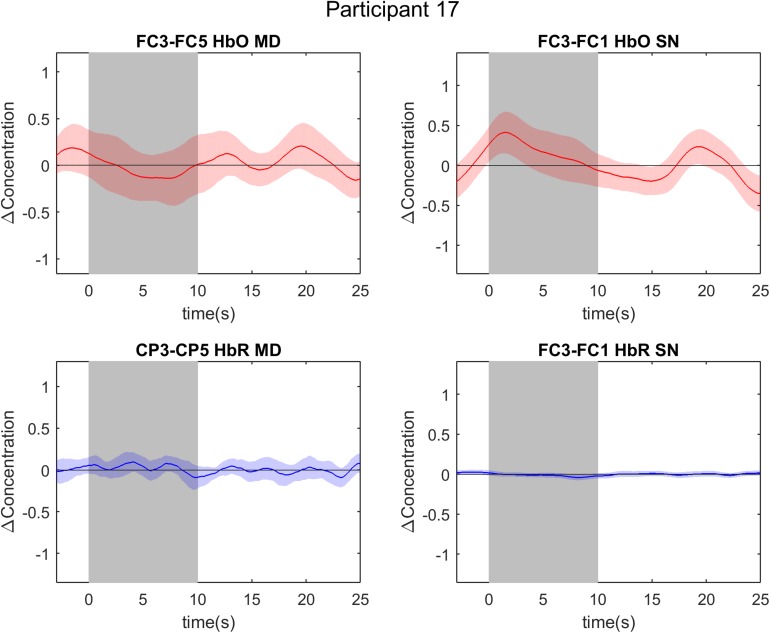
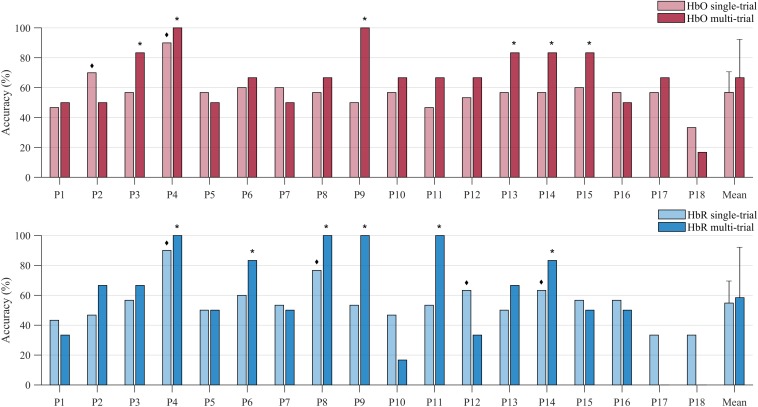
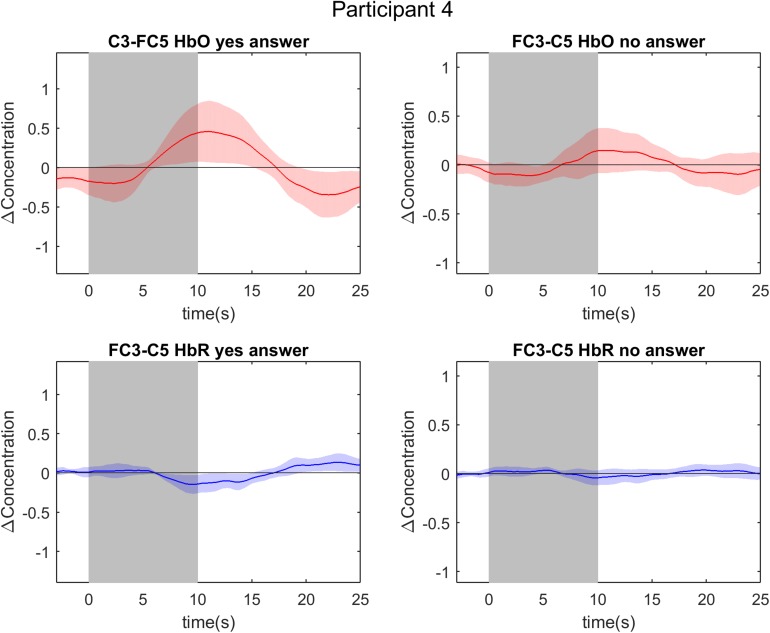
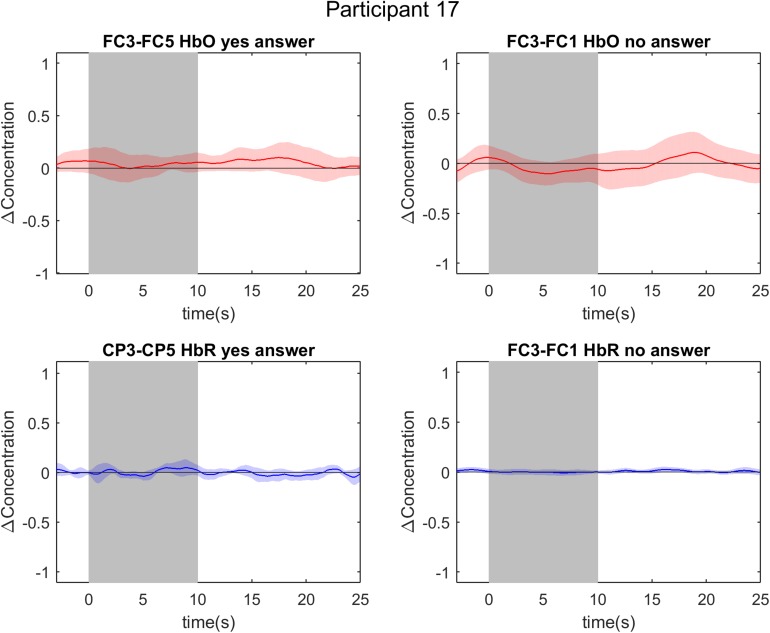
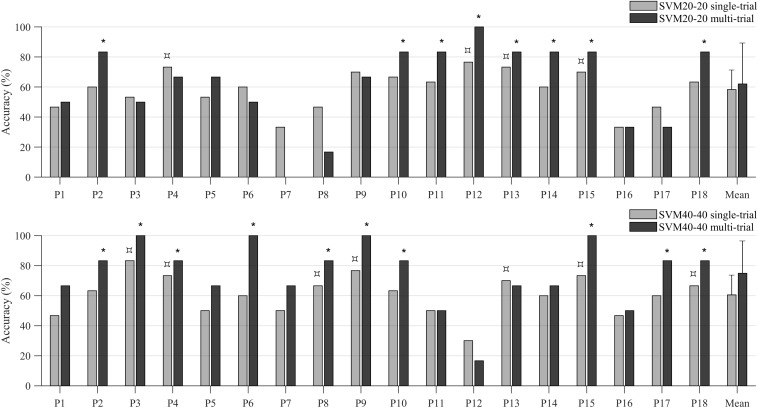
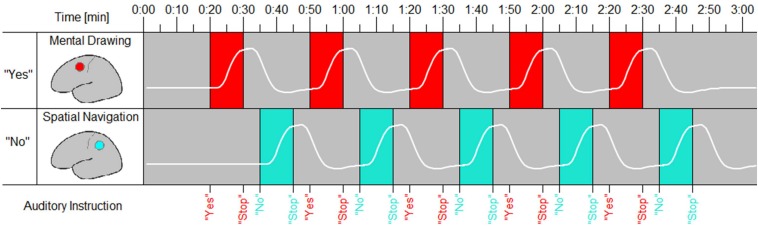
"Locked-in" patients lose their ability to communicate naturally due to motor system dysfunction. Brain-computer interfacing offers a solution for their inability to communicate by enabling motor-independent communication. Straightforward and convenient in-session communication is essential in clinical environments. The present study introduces a functional near-infrared spectroscopy (fNIRS)-based binary communication paradigm that requires limited preparation time and merely nine optodes. Eighteen healthy participants performed two mental imagery tasks, mental drawing and spatial navigation, to answer yes/no questions during one of two auditorily cued time windows. Each of the six questions was answered five times, resulting in five trials per answer. This communication paradigm thus combines both spatial (two different mental imagery tasks, here mental drawing for "yes" and spatial navigation for "no") and temporal (distinct time windows for encoding a "yes" and "no" answer) fNIRS signal features for information encoding. Participants' answers were decoded in simulated real-time using general linear model analysis. Joint analysis of all five encoding trials resulted in an average accuracy of 66.67 and 58.33% using the oxygenated (HbO) and deoxygenated (HbR) hemoglobin signal respectively. For half of the participants, an accuracy of 83.33% or higher was reached using either the HbO signal or the HbR signal. For four participants, effective communication with 100% accuracy was achieved using either the HbO or HbR signal. An explorative analysis investigated the differentiability of the two mental tasks based solely on spatial fNIRS signal features. Using multivariate pattern analysis (MVPA) group single-trial accuracies of 58.33% (using 20 training trials per task) and 60.56% (using 40 training trials per task) could be obtained. Combining the five trials per run using a majority voting approach heightened these MVPA accuracies to 62.04 and 75%. Additionally, an fNIRS suitability questionnaire capturing participants' physical features was administered to explore its predictive value for evaluating general data quality. Obtained questionnaire scores correlated significantly ( = -0.499) with the signal-to-noise of the raw light intensities. While more work is needed to further increase decoding accuracy, this study shows the potential of answer encoding using spatiotemporal fNIRS signal features or spatial fNIRS signal features only.

摘要

“闭锁综合征”患者由于运动系统功能障碍而失去自然交流的能力。脑机接口通过实现不依赖运动的通信,为他们无法交流的问题提供了解决方案。在临床环境中,直接便捷的会话内通信至关重要。本研究介绍了一种基于功能近红外光谱(fNIRS)的二元通信范式,该范式所需的准备时间有限,仅需九个光极。18名健康参与者执行了两项心理意象任务,即心理绘图和空间导航,以便在两个听觉提示的时间窗口之一中回答是/否问题。六个问题中的每一个都被回答了五次,每个答案产生五次试验。因此,这种通信范式结合了空间(两种不同的心理意象任务,这里心理绘图表示“是”,空间导航表示“否”)和时间(用于编码“是”和“否”答案的不同时间窗口)fNIRS信号特征进行信息编码。使用一般线性模型分析在模拟实时中对参与者的答案进行解码。对所有五次编码试验的联合分析分别使用氧化血红蛋白(HbO)和脱氧血红蛋白(HbR)信号,平均准确率分别为66.67%和58.33%。对于一半的参与者,使用HbO信号或HbR信号达到了83.33%或更高的准确率。对于四名参与者,使用HbO或HbR信号实现了100%准确率的有效通信。一项探索性分析仅基于空间fNIRS信号特征研究了这两项心理任务的可区分性。使用多变量模式分析(MVPA),每组单次试验的准确率分别为58.33%(每个任务使用20次训练试验)和60.56%(每个任务使用40次训练试验)。使用多数投票方法合并每次运行的五次试验将这些MVPA准确率提高到62.04%和75%。此外,还发放了一份记录参与者身体特征的fNIRS适用性问卷,以探索其对评估一般数据质量的预测价值。获得的问卷分数与原始光强度的信噪比显著相关(=-0.499)。虽然需要更多工作来进一步提高解码准确率,但本研究显示了使用时空fNIRS信号特征或仅使用空间fNIRS信号特征进行答案编码的潜力。
https://cdn.ncbi.nlm.nih.gov/pmc/blobs/f490/7174771/ff9c17323458/fnhum-14-00113-g010.jpg
https://cdn.ncbi.nlm.nih.gov/pmc/blobs/f490/7174771/f0acdc657f73/fnhum-14-00113-g001.jpg
https://cdn.ncbi.nlm.nih.gov/pmc/blobs/f490/7174771/368b6c227f57/fnhum-14-00113-g002.jpg
https://cdn.ncbi.nlm.nih.gov/pmc/blobs/f490/7174771/f9161f961744/fnhum-14-00113-g003.jpg
https://cdn.ncbi.nlm.nih.gov/pmc/blobs/f490/7174771/f0e445b45ae3/fnhum-14-00113-g004.jpg
https://cdn.ncbi.nlm.nih.gov/pmc/blobs/f490/7174771/6d754e332d8d/fnhum-14-00113-g005.jpg
https://cdn.ncbi.nlm.nih.gov/pmc/blobs/f490/7174771/093d17590d51/fnhum-14-00113-g006.jpg
https://cdn.ncbi.nlm.nih.gov/pmc/blobs/f490/7174771/0c2b95878568/fnhum-14-00113-g007.jpg
https://cdn.ncbi.nlm.nih.gov/pmc/blobs/f490/7174771/f2bd0cff5719/fnhum-14-00113-g008.jpg
https://cdn.ncbi.nlm.nih.gov/pmc/blobs/f490/7174771/98bd38f20687/fnhum-14-00113-g009.jpg
https://cdn.ncbi.nlm.nih.gov/pmc/blobs/f490/7174771/ff9c17323458/fnhum-14-00113-g010.jpg
https://cdn.ncbi.nlm.nih.gov/pmc/blobs/f490/7174771/f0acdc657f73/fnhum-14-00113-g001.jpg
https://cdn.ncbi.nlm.nih.gov/pmc/blobs/f490/7174771/368b6c227f57/fnhum-14-00113-g002.jpg
https://cdn.ncbi.nlm.nih.gov/pmc/blobs/f490/7174771/f9161f961744/fnhum-14-00113-g003.jpg
https://cdn.ncbi.nlm.nih.gov/pmc/blobs/f490/7174771/f0e445b45ae3/fnhum-14-00113-g004.jpg
https://cdn.ncbi.nlm.nih.gov/pmc/blobs/f490/7174771/6d754e332d8d/fnhum-14-00113-g005.jpg
https://cdn.ncbi.nlm.nih.gov/pmc/blobs/f490/7174771/093d17590d51/fnhum-14-00113-g006.jpg
https://cdn.ncbi.nlm.nih.gov/pmc/blobs/f490/7174771/0c2b95878568/fnhum-14-00113-g007.jpg
https://cdn.ncbi.nlm.nih.gov/pmc/blobs/f490/7174771/f2bd0cff5719/fnhum-14-00113-g008.jpg
https://cdn.ncbi.nlm.nih.gov/pmc/blobs/f490/7174771/98bd38f20687/fnhum-14-00113-g009.jpg
https://cdn.ncbi.nlm.nih.gov/pmc/blobs/f490/7174771/ff9c17323458/fnhum-14-00113-g010.jpg

相似文献

1
Brain-Based Binary Communication Using Spatiotemporal Features of fNIRS Responses.基于脑功能近红外光谱(fNIRS)响应时空特征的二进制通信
Front Hum Neurosci. 2020 Apr 15;14:113. doi: 10.3389/fnhum.2020.00113. eCollection 2020.
2
See, Hear, or Feel - to Speak: A Versatile Multiple-Choice Functional Near-Infrared Spectroscopy-Brain-Computer Interface Feasible With Visual, Auditory, or Tactile Instructions.看、听或感觉——说话:一种通过视觉、听觉或触觉指令实现的多功能多项选择功能性近红外光谱脑机接口
Front Hum Neurosci. 2021 Nov 25;15:784522. doi: 10.3389/fnhum.2021.784522. eCollection 2021.
3
It takes two (seconds): decreasing encoding time for two-choice functional near-infrared spectroscopy brain-computer interface communication.只需两秒:缩短二选一功能性近红外光谱脑机接口通信的编码时间。
Neurophotonics. 2023 Oct;10(4):045005. doi: 10.1117/1.NPh.10.4.045005. Epub 2023 Nov 2.
4
Toward more intuitive brain-computer interfacing: classification of binary covert intentions using functional near-infrared spectroscopy.迈向更直观的脑机接口:使用近红外光谱技术对二进制隐蔽意图进行分类。
J Biomed Opt. 2016 Sep;21(9):091303. doi: 10.1117/1.JBO.21.9.091303.
5
Another kind of 'BOLD Response': answering multiple-choice questions via online decoded single-trial brain signals.另一种“大胆的回应”:通过在线解码的单次脑信号回答多项选择题。
Prog Brain Res. 2009;177:275-92. doi: 10.1016/S0079-6123(09)17719-1.
6
A hybrid BCI based on EEG and fNIRS signals improves the performance of decoding motor imagery of both force and speed of hand clenching.一种基于脑电图(EEG)和功能近红外光谱(fNIRS)信号的混合脑机接口(BCI)提高了对手部紧握力和速度的运动想象解码性能。
J Neural Eng. 2015 Jun;12(3):036004. doi: 10.1088/1741-2560/12/3/036004. Epub 2015 Apr 2.
7
An Augmented-Reality fNIRS-Based Brain-Computer Interface: A Proof-of-Concept Study.一种基于增强现实的功能性近红外光谱脑机接口:概念验证研究。
Front Neurosci. 2020 Apr 28;14:346. doi: 10.3389/fnins.2020.00346. eCollection 2020.
8
Multimodal assessment of the spatial correspondence between fNIRS and fMRI hemodynamic responses in motor tasks.运动任务中功能近红外光谱与功能磁共振成像血流动力学响应的空间对应关系的多模态评估。
Sci Rep. 2023 Feb 8;13(1):2244. doi: 10.1038/s41598-023-29123-9.
9
Assessing Time-Resolved fNIRS for Brain-Computer Interface Applications of Mental Communication.评估用于脑机接口心理交流应用的时间分辨功能近红外光谱技术
Front Neurosci. 2020 Feb 18;14:105. doi: 10.3389/fnins.2020.00105. eCollection 2020.
10
Synchronizing Motor Imagery Cue in fNIRS Brain-Computer Interface to reduce confounding effects of respiration.在功能近红外光谱脑机接口中同步运动想象提示以减少呼吸的混杂效应。
Annu Int Conf IEEE Eng Med Biol Soc. 2023 Jul;2023:1-4. doi: 10.1109/EMBC40787.2023.10340679.

引用本文的文献

1
From lab to life: challenges and perspectives of fNIRS for haemodynamic-based neurofeedback in real-world environments.从实验室到现实生活:基于血流动力学的神经反馈的近红外光谱在真实环境中的挑战与展望。
Philos Trans R Soc Lond B Biol Sci. 2024 Dec 2;379(1915):20230087. doi: 10.1098/rstb.2023.0087. Epub 2024 Oct 21.
2
Novel Feature Generation for Classification of Motor Activity from Functional Near-Infrared Spectroscopy Signals Using Machine Learning.利用机器学习从功能近红外光谱信号中生成用于运动活动分类的新特征
Diagnostics (Basel). 2024 May 13;14(10):1008. doi: 10.3390/diagnostics14101008.
3
Boosting brain-computer interfaces with functional electrical stimulation: potential applications in people with locked-in syndrome.

本文引用的文献

1
The difference in cortical activation pattern for complex motor skills: A functional near- infrared spectroscopy study.复杂运动技能皮质激活模式的差异:一项功能近红外光谱研究。
Sci Rep. 2019 Oct 1;9(1):14066. doi: 10.1038/s41598-019-50644-9.
2
The difference in hemodynamic responses between dominant and non-dominant hands during muscle contraction and relaxation: An fNIRS study.优势手和非优势手在肌肉收缩和放松时的血液动力学反应差异:一项近红外光谱研究。
PLoS One. 2019 Jul 19;14(7):e0220100. doi: 10.1371/journal.pone.0220100. eCollection 2019.
3
Electroencephalography-based endogenous brain-computer interface for online communication with a completely locked-in patient.
功能性电刺激增强脑机接口:在闭锁综合征患者中的潜在应用。
J Neuroeng Rehabil. 2023 Nov 18;20(1):157. doi: 10.1186/s12984-023-01272-y.
4
It takes two (seconds): decreasing encoding time for two-choice functional near-infrared spectroscopy brain-computer interface communication.只需两秒:缩短二选一功能性近红外光谱脑机接口通信的编码时间。
Neurophotonics. 2023 Oct;10(4):045005. doi: 10.1117/1.NPh.10.4.045005. Epub 2023 Nov 2.
5
Positive Prospective Mental Imagery Characteristics in Young Adults and Their Associations with Depressive Symptoms.青年成年人积极的前瞻性心理意象特征及其与抑郁症状的关联。
Cognit Ther Res. 2023 Apr 28:1-12. doi: 10.1007/s10608-023-10378-5.
6
Interdisciplinary views of fNIRS: Current advancements, equity challenges, and an agenda for future needs of a diverse fNIRS research community.功能近红外光谱技术(fNIRS)的跨学科视角:当前进展、公平性挑战以及多元化fNIRS研究群体未来需求议程
Front Integr Neurosci. 2023 Feb 27;17:1059679. doi: 10.3389/fnint.2023.1059679. eCollection 2023.
7
See, Hear, or Feel - to Speak: A Versatile Multiple-Choice Functional Near-Infrared Spectroscopy-Brain-Computer Interface Feasible With Visual, Auditory, or Tactile Instructions.看、听或感觉——说话:一种通过视觉、听觉或触觉指令实现的多功能多项选择功能性近红外光谱脑机接口
Front Hum Neurosci. 2021 Nov 25;15:784522. doi: 10.3389/fnhum.2021.784522. eCollection 2021.
8
The mapping of cortical activation by near-infrared spectroscopy might be a biomarker related to the severity of fibromyalgia symptoms.近红外光谱皮层激活图可能是与纤维肌痛症状严重程度相关的生物标志物。
Sci Rep. 2021 Aug 3;11(1):15754. doi: 10.1038/s41598-021-94456-2.
9
The Potential Role of fNIRS in Evaluating Levels of Consciousness.功能近红外光谱技术在评估意识水平方面的潜在作用。
Front Hum Neurosci. 2021 Jul 8;15:703405. doi: 10.3389/fnhum.2021.703405. eCollection 2021.
10
Guiding functional near-infrared spectroscopy optode-layout design using individual (f)MRI data: effects on signal strength.使用个体功能磁共振成像(fMRI)数据指导功能近红外光谱光极布局设计:对信号强度的影响
Neurophotonics. 2021 Apr;8(2):025012. doi: 10.1117/1.NPh.8.2.025012. Epub 2021 Jun 17.
基于脑电图的内源性脑机接口,用于与完全闭锁的患者进行在线交流。
J Neuroeng Rehabil. 2019 Jan 30;16(1):18. doi: 10.1186/s12984-019-0493-0.
4
A Review on the Use of Wearable Functional Near-Infrared Spectroscopy in Naturalistic Environments.关于可穿戴式功能近红外光谱技术在自然环境中的应用综述。
Jpn Psychol Res. 2018 Oct;60(4):347-373. doi: 10.1111/jpr.12206. Epub 2018 Jul 19.
5
Optimizing fMRI experimental design for MVPA-based BCI control: Combining the strengths of block and event-related designs.基于 MVPA 的脑机接口控制的 fMRI 实验设计优化:结合块和事件相关设计的优势。
Neuroimage. 2019 Feb 1;186:369-381. doi: 10.1016/j.neuroimage.2018.10.080. Epub 2018 Nov 1.
6
Online classification of imagined speech using functional near-infrared spectroscopy signals.使用功能近红外光谱信号进行想象语音的在线分类。
J Neural Eng. 2019 Feb;16(1):016005. doi: 10.1088/1741-2552/aae4b9. Epub 2018 Sep 27.
7
A Ternary Hybrid EEG-NIRS Brain-Computer Interface for the Classification of Brain Activation Patterns during Mental Arithmetic, Motor Imagery, and Idle State.一种用于在心算、运动想象和空闲状态期间对大脑激活模式进行分类的三元混合脑电-近红外光谱脑机接口。
Front Neuroinform. 2018 Feb 23;12:5. doi: 10.3389/fninf.2018.00005. eCollection 2018.
8
Signal Processing in Functional Near-Infrared Spectroscopy (fNIRS): Methodological Differences Lead to Different Statistical Results.功能近红外光谱(fNIRS)中的信号处理:方法学差异导致不同的统计结果。
Front Hum Neurosci. 2018 Jan 8;11:641. doi: 10.3389/fnhum.2017.00641. eCollection 2017.
9
Single-session communication with a locked-in patient by functional near-infrared spectroscopy.通过功能近红外光谱技术与闭锁综合征患者进行单次会话交流。
Neurophotonics. 2017 Oct;4(4):040501. doi: 10.1117/1.NPh.4.4.040501. Epub 2017 Dec 23.
10
A Comparative Study on the Detection of Covert Attention in Event-Related EEG and MEG Signals to Control a BCI.用于控制脑机接口的事件相关脑电图和脑磁图信号中隐蔽注意检测的比较研究
Front Neurosci. 2017 Oct 16;11:575. doi: 10.3389/fnins.2017.00575. eCollection 2017.