Santos Maria Luísa Cordeiro, de Brito Breno Bittencourt, da Silva Filipe Antônio França, Botelho Anelise Costa Dos Santos, de Melo Fabrício Freire
Instituto Multidisciplinar em Saúde, Universidade Federal da Bahia, Vitória da Conquista 45029094, Bahia, Brazil.
World J Clin Oncol. 2020 Apr 24;11(4):190-204. doi: 10.5306/wjco.v11.i4.190.
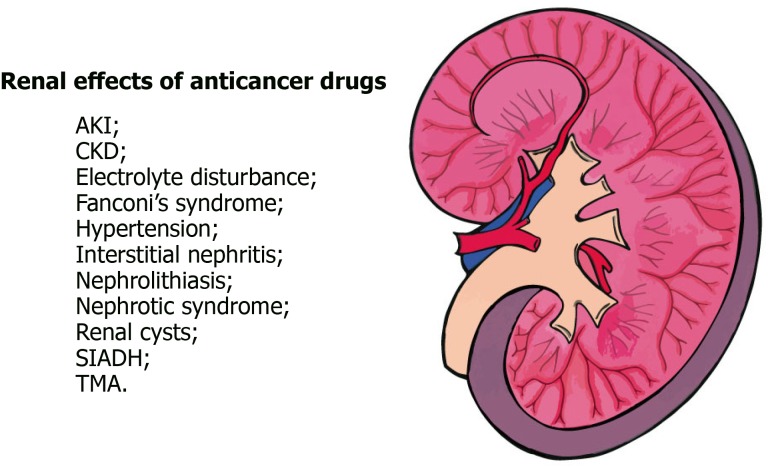
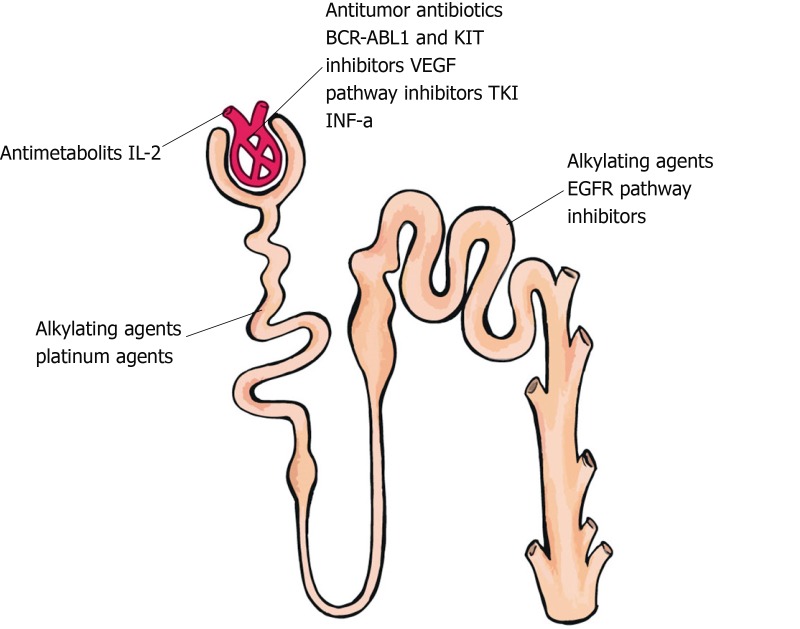
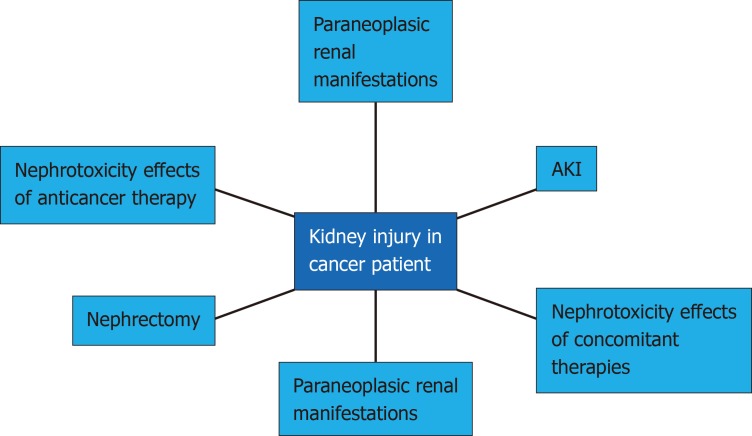
Anticancer drug nephrotoxicity is an important and increasing adverse drug event that limits the efficacy of cancer treatment. The kidney is an important elimination pathway for many antineoplastic drugs and their metabolites, which occurs by glomerular filtration and tubular secretion. Chemotherapeutic agents, both conventional cytotoxic agents and molecularly targeted agents, can affect any segment of the nephron including its microvasculature, leading to many clinical manifestations such as proteinuria, hypertension, electrolyte disturbances, glomerulopathy, acute and chronic interstitial nephritis, acute kidney injury and at times chronic kidney disease. The clinician should be alert to recognize several factors that may maximize renal dysfunction and contribute to the increased incidence of nephrotoxicity associated with these drugs, such as intravascular volume depletion, the associated use of nonchemotherapeutic nephrotoxic drugs (analgesics, antibiotics, proton pump inhibitors, and bone-targeted therapies), radiographic ionic contrast media or radiation therapy, urinary tract obstruction, and intrinsic renal disease. Identification of patients at higher risk for nephrotoxicity may allow the prevention or at least reduction in the development and severity of this adverse effect. Therefore, the aim of this brief review is to provide currently available evidences on oncologic drug-related nephrotoxicity.
抗癌药物肾毒性是一种重要且日益增多的药物不良事件,它限制了癌症治疗的疗效。肾脏是许多抗肿瘤药物及其代谢产物的重要排泄途径,通过肾小球滤过和肾小管分泌来实现。化疗药物,包括传统的细胞毒性药物和分子靶向药物,可影响肾单位的任何节段,包括其微血管,从而导致许多临床表现,如蛋白尿、高血压、电解质紊乱、肾小球病、急性和慢性间质性肾炎、急性肾损伤,有时还会导致慢性肾病。临床医生应警惕识别一些可能使肾功能障碍最大化并导致这些药物相关肾毒性发生率增加的因素,如血管内容量耗竭、非化疗性肾毒性药物(镇痛药、抗生素、质子泵抑制剂和骨靶向治疗药物)的联合使用、放射造影剂或放射治疗、尿路梗阻以及内在性肾病。识别肾毒性高危患者可能有助于预防或至少减少这种不良反应的发生和严重程度。因此,本简要综述的目的是提供目前关于肿瘤药物相关肾毒性的现有证据。